Experts Name the Top 5 Fashion Trends of May 2026
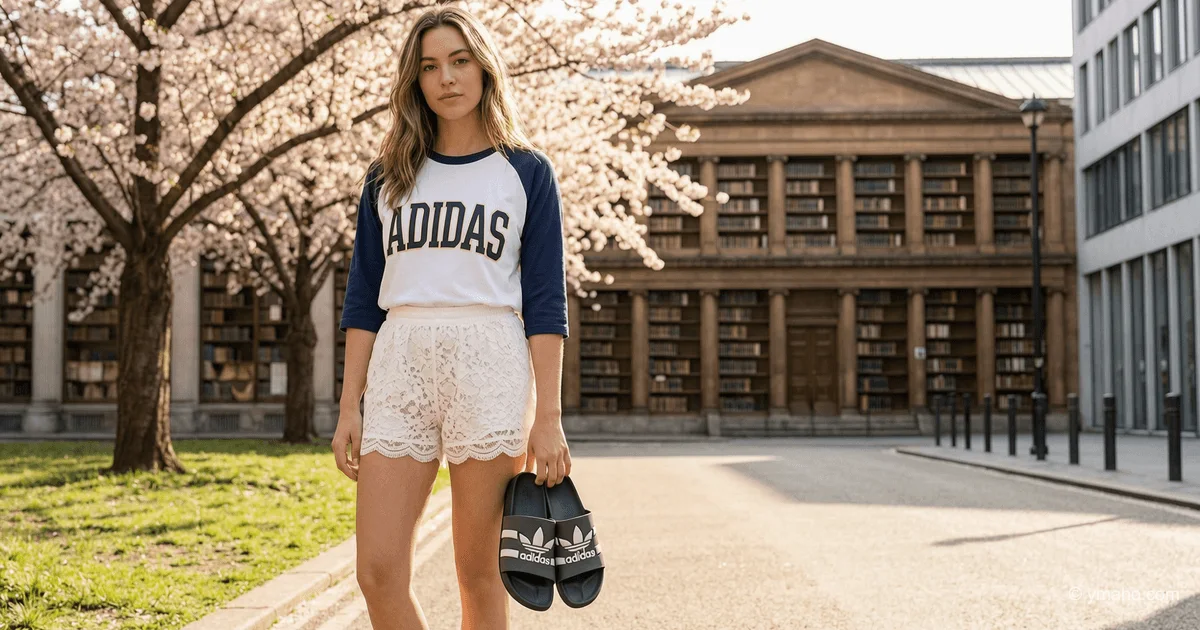
Among the key trends: shorts with lace trim, slide sandals, the return of baseball-style raglan tees, the 'dark academia' aesthetic, and the evolution of sportswear in bold color schemes and layering.
The hidden code of May trends: why fashion is flirting with escapism again instead of reality
The Gist: What's Really Happening
Fashion media have synchronously released a roundup of five May trends: lace shorts, slide sandals, baseball raglan tees, the 'dark academia' aesthetic, and sportswear in aggressive color palettes. At first glance, it's a harmless seasonal digest. In reality, it's a diagnostic snapshot of the industry's state. All five trends are united not by 'ease of wear,' as experts claim, but by a radical departure from reality. This isn't fashion reacting to the world. It's fashion building parallel worlds.
Lace shorts are a reincarnation of boudoir aesthetics, where the bedroom becomes a legitimate public space. Slide sandals are the finalization of the sloppiness trend started by Crocs. Baseball tees are nostalgia for an America that no longer exists. 'Dark academia' is an escape into a fictional campus where the only currency is intellect. And sportswear in 'bold color choices' is sport without sport, form without function. It's the case where adidas Adilette for $35 is worn with a $980 dress, and that's considered style. Fashion has finally turned into a costume shop for personal fantasies.
Timeline and Context
The timeline here is tricky. Media present these trends as 'monthly novelties,' but each has been brewing for at least a year. Dôen's lace shorts went viral last summer when the Iona model was swept off shelves, and by spring 2026, the brand re-released them in butter yellow. Emily Ratajkowski wore baseball tees in 2025 with capris and patent leather mules; Zoe Kravitz was spotted in a blue-and-white version with a sheer Auralee skirt late last year. 'Dark academia' as an aesthetic took shape on TikTok a few years ago, and in 2026, Pinterest simply rebranded it as 'Poetcore' and declared it a trend.
What actually happened in the last 2-3 days is a synchronization of the narrative. Several outlets, from Russia's MK to Yahoo Shopping, almost simultaneously published pieces on 'the five main trends of May.' This is classic pool work: brands and their PR agencies sent out press releases, and media, suffering from talent shortages after another wave of layoffs, eagerly repackaged them. There's no organic trend—just a well-organized commercial campaign timed to the start of the spring-summer sale season.
Who Wins and Who Loses
The predictable players win. Miu Miu, which launched its own book club and seated writers like Ottessa Moshfegh in the front row, directly capitalizes on the 'dark academia' trend. Celine, with its jodhpurs and silk scarves at the spring-summer 2026 show, is right there. Zara and H&M instantly clone lace shorts and baseball tees in the $20-40 price range. Adidas creams off the slide trend—the Adilette model, once $40, now sells for $35 and appears in fashion roundups alongside designer pieces. Viscose and recycled polyester manufacturers ramp up production: lace shorts from cellulosic fiber by Reformation and & Other Stories require miles of fabric.
Losing are luxury brands that bet on 'quiet luxury.' When the market demands lace shorts for £50, investments in $3,000 cashmere cardigans look like betting on the wrong trend. Independent designers who spent years building aesthetics on intellectual references also lose: when Pinterest declares Poetcore mainstream, niche brands lose their uniqueness in one season. Sustainable fashion loses: five trends that are 'must-haves for May' create a spike in micro-seasonal consumption, after which 80% of purchases end up in landfills by September.
What the Media Isn't Saying
The first non-obvious insight: there's a conflict among the five trends that no one highlights. Lace shorts and baseball tees belong to different aesthetic universes that don't intersect in a real wardrobe. The former is escapist romanticism, the latter is masculine nostalgia. A consumer who buys both will face cognitive dissonance when trying to put together an outfit. This isn't a capsule—it's a set of signals to different audiences, bundled under the guise of a unified trend report. Media create an illusion of universality where none exists.
The second insight is economic. The average margin on lace shorts made of polyester with a cotton gusset is 70-80% at a recommended retail price of $45-60. A baseball tee made of knitwear costs about $4-5 to produce and sells for $35-40. These are the highest-margin categories in fast fashion. That's why they made the 'top 5'—not for aesthetic value, but because buyers bet on them back in August 2025 when placing orders for spring-summer 2026. People think trends are born on runways. In reality, they're born in buyers' Excel spreadsheets, calculating margins eight months before media declare them 'monthly novelties.'
Third: the Asian market, barely mentioned in Western roundups. The growth in demand for women's sport sandals and slides in 2026 is driven primarily by the Asia-Pacific region, which leads in both production and consumption. North America and Europe chase innovation, but the mass consumer already lives in the logic of Asian trend cycles. What Western fashion presents as 'the return of slides' has been discussed on Asian platforms like Xiaohongshu for three seasons already.
Forecast: Next 30 Days and 90 Days
30 days (by June 7, 2026). Lace shorts will peak in virality on Instagram and TikTok, after which a reactive phase will begin: articles like 'How to Stop Wearing Lace Shorts and Keep Your Style' will appear. Baseball tees will migrate into men's collections—the trend will expand its audience. Adilette slides will sell out to zero on Amazon, eBay will be flooded with resellers offering them for $70-80. 'Dark academia' will get a new boost thanks to the release of another classic novel adaptation—studios are already planning cross-promotions with fashion houses. Celine and Miu Miu will report Q2 revenue growth, and the numbers will confirm the bet on literary aesthetics.
90 days (by August 7, 2026). The purge begins. Lace shorts will appear in mass-market in such quantities that the trend will die in three weeks—by August, they'll be sold for $9.99 in checkout bins. Baseball tees will survive the season and smoothly transition into fall collections in darker palettes—this is the most durable trend of the five. Sportswear in bright colors will transform into ski aesthetics for winter 2026/2027: brands are already preparing collaborations. 'Dark academia' will mutate into a darker 'gothic academia'—with leather briefcases and chunky oxfords. Slides will finally return to the beach segment, and influencers will start promoting 'the return of elegant sandals'—because new inventory needs to be sold.
The main takeaway: we've entered an era where trends don't reflect reality but actively replace it. In a world of economic instability and geopolitical turbulence, fashion offers five parallel escapist routes—to the bedroom, the stadium, the library, the beach, and the gym. There's no room for the real world in this list. And that, perhaps, is the most honest trend signal of all.
— Editorial Team









