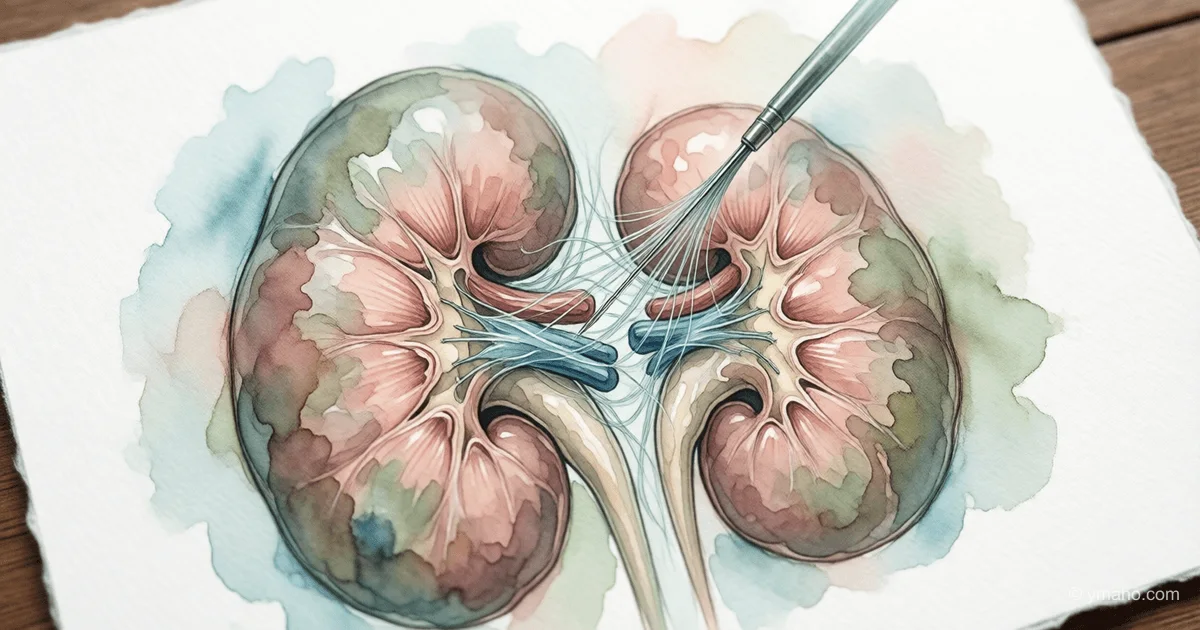
NIH Reports Development of Dissolvable Microneedles for Continuous Organ Monitoring During Surgery
Researchers supported by NIH have developed a programmable array of biodegradable electrochemical microneedle sensors. The device can track electrolytes, metabolites, and oxygen in real time for early detection of ischemia or graft rejection.
The news about dissolvable microneedles from Dartmouth and NIH instantly spread across tech media, but I see this development differently. While headlines tout a "device that disappears without a trace," within the industry there's a growing realization: we are witnessing not just an evolution of sensors, but the death of secondary surgical intervention as routine practice. This microneedle array is a Trojan horse that shifts postoperative monitoring from reactive to proactive, and it will change the game for transplantology.
The Core: What's Really Happening
Researchers led by Wei Ouyang at Dartmouth College have created not just a sensor, but a full platform for real-time spatial mapping of organ biochemistry. The core of the technology is that the microneedle array is 3D-printed without expensive and complex photolithography. This is a critical manufacturing point: eliminating clean rooms and complex equipment means a potentially explosive reduction in device cost.
The needles themselves are equipped with reverse barbs mimicking biomechanics, allowing them to firmly anchor in soft tissues even with peristalsis or organ pulsation. Sensors at the needle tips simultaneously track oxygen levels, electrolytes, and metabolites such as glucose and lactate for at least 7 days. But the main engineering breakthrough here is electrically programmable self-destruction. When a voltage above 1.95 V is applied, the microneedle coating undergoes rapid oxidative corrosion, exposing the biodegradable polymer PLGA, which the body metabolizes into carbon dioxide and water. This is not passive dissolution, but a controlled detonation on a timer.
Timeline and Context
Until now, monitoring deep organs after transplantation or complex abdominal surgeries remained the Achilles' heel of surgery. The gold standard was blood draws, which provide only a delayed and general snapshot, or implantation of bulky wired devices requiring a second surgery for removal. These removals added an average of $5,000 to $15,000 USD to treatment costs and created additional infection risk.
In February 2026, a paper by Li and colleagues was published in Nature Biomedical Engineering. They tested the arrays on rat models of kidney ischemia and intestinal disorders. The result: stable signal for a week and complete device degradation within 2–3 weeks without provoking fibrosis. This was the first practical proof that it is possible to simultaneously measure electrical, chemical, and metabolic parameters in deep parenchymal layers and then safely "dissolve" the lab inside the patient.
Who Wins and Who Loses
Transplant surgery wins. Graft rejection is often detected by blood tests only after the immune cascade has started and the organ is significantly damaged. A microneedle array sensitized to inflammatory cytokines can detect local metabolic overheating 24–48 hours before clinical symptoms. This is a window to save an organ worth hundreds of thousands of dollars (a kidney transplant in the US costs an average of $442,500 USD). The medical materials market also wins: PLGA is FDA-approved, and the precedent of mass use of "smart" PLGA opens the door for other startups.
Classic medical startups that invested in permanent implants lose. Their equipment now looks like a "bridge to nowhere." Surgeons whose income depends on scheduled operations to remove diagnostic devices lose—this niche will collapse.
A hidden loser: chemical battery developers. Ouyang's device uses radio-frequency wireless data and power transmission, but to trigger the coating's explosion, an energy pulse is needed. This stimulates demand for safe, fully biodegradable power sources, which is currently a bottleneck for the entire technology.
What the Media Isn't Saying
Most outlets focused on "disappearing needles" but missed the signal problem. In comments on announcements, practicing engineers point out that the main challenge is not anchoring the sensor, but maintaining long-term stability of the multi-parameter electrochemical signal in a moving environment. Wet, shifting organ tissue creates artifacts and calibration drift. In lab conditions on rats, this was mitigated, but human peristalsis or respiratory excursion of the kidney creates a much more aggressive mechanical environment.
There is also an insider ethical nuance: controlled self-destruction is both a feature and an Achilles' heel in terms of safety. Theoretically, a protocol failure or hacker attack generating a false oxidation signal could turn the monitor into a pile of junk right during a critical postoperative period. Several rounds of cybersecurity auditing will be needed, which will delay FDA certification for years unless a mechanical emergency override for the degradation command is proposed.
Forecast: Next 30 Days and 90 Days
In the next 30 days, Ouyang's lab will start receiving requests from major transplant centers (Cleveland Clinic, Mayo Clinic) to form research consortia. We won't see loud announcements because everyone will quietly start licensing patents. Also in the next month, startups developing specialized PLGA analogs with longer degradation times will ramp up—to meet demand for monitoring over months, not weeks.
In 90 days, a race for sensitization will begin. Current sensors measure oxygen, glucose, and pH. But the real value is in graft rejection, where key markers are cytokines. I expect Dartmouth or competitors from MIT to announce a functionalized coating capable of detecting interleukin-6 or tumor necrosis factor directly on the liver or kidney surface. Once that happens, this device will cease to be just a monitoring tool and become a standard of insurance medicine: hospitals will be required to implant such sensors to avoid massive lawsuits for missed rejection. The industry is moving toward a point where a retrievable implant will become archaic, and a second surgery to remove it will be considered a medical error.
— Editorial Team









