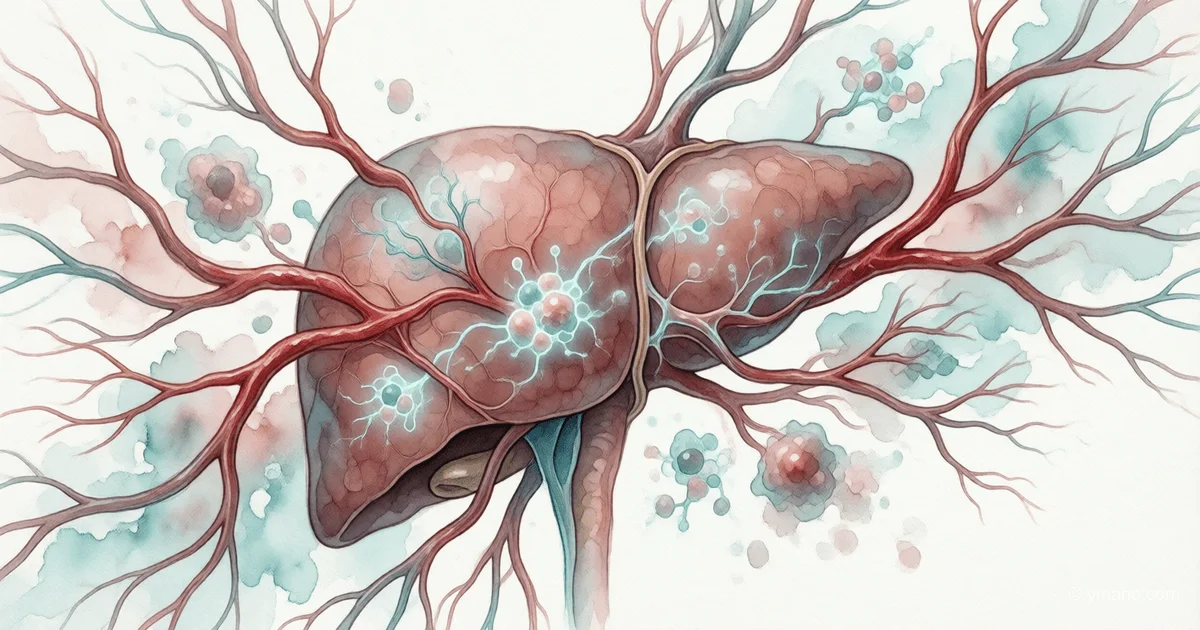
Large-Scale Cell Study Reveals 'Aging Clock' and the Role of Blood Coagulation Factors
Scientists from the Chinese Academy of Sciences and Tongji University published a study in Cell featuring 'multimodal clocks' for assessing human aging. The key finding is that blood coagulation factors accumulating with age are drivers of systemic inflammation and accelerated organ aging.
Betting on Coagulation: Why the Discovery of 'Aging Factors' in Cell Is Not About Longevity, but About Reshaping the Anticoagulant Market
The Essence: What's Really Happening
On May 8, 2026, a research team led by Liu Guanghui and Pei Gang published a paper in Cell that mainstream media has already dubbed a 'breakthrough in measuring aging.' Formally, it's correct: the scientists built multimodal clocks capable of predicting biological age with an error of about 3.87 years and mapped asynchronous organ aging. But reading between the lines—and I do, because I consult for several biotech funds—the real sensation is deeper and more pragmatic.
The real headline should read: 'A specific, measurable, and already pharmacologically manageable driver of systemic aging has been identified—blood coagulation factors.'
This is not about passive biomarkers. For the first time, a causal link is shown: with age, the liver ramps up production of coagulation factors (F13B, F9, F10); these proteins directly induce endothelial aging and trigger an inflammatory cascade in all organs. Injecting F13B into mice accelerated aging of the liver, heart, aorta, and kidneys—this is not correlation, it's a mechanism.
The anti-aging industry has been searching for a 'reset button' for decades. Instead, it found a lever that can already be turned with existing molecules.
Timeline and Context
The study is part of a Chinese national project codenamed 'X-Age Project' (formerly 'Maoshe'). This is not a one-off but a systematic attempt to create a Chinese standard for aging assessment. Why this matters: until now, all clocks—Horvath, PhenoAge, DunedinPACE—were calibrated on Western cohorts. Asian populations had systematic bias in predictions. Now China has its own reference base: the mCAS cohort of 2,019 individuals aged 18 to 91, collected in Beijing, Ningbo, Quzhou, and Nanchang.
Key milestones:
- May 8, 2026 — Publication in Cell.
- May–September 2026 — NUS Medicine (Singapore) launches validation of the LinAge3 clock on 150 participants in partnership with MitoQ. This is important: independent verification of the clock is already underway outside China, on other populations.
- May 2026 — Sheba Longevity Center in Israel began recruiting 1,500 participants for the SHARP study, where biological age is measured by epigenetic clocks, and the primary endpoint is change in biological age after 12 months of personalized interventions.
Context: 2026 is the moment when 'aging clocks' transform from an academic toy into a regulatorily significant surrogate endpoint for clinical trials. If the FDA or EMA recognize change in biological age as a valid endpoint, the anti-aging therapy market will explode.
Who Wins and Who Loses
Winners:
- BioAge Labs (NASDAQ: BIOA) — The company already reported in May 2026 on Phase 1 for an NLRP3 inhibitor (BGE-102) that lowers hsCRP, a key inflammation marker directly linked to the 'coagulation-inflammation' axis uncovered by Liu's group. Their asset is a molecule capable of breaking the vicious cycle of 'thrombin → inflammation → more thrombin.' With the anti-aging market projected to reach $6.39 billion by 2030, any company with a validated target in this cascade is an acquisition target.
- Holders of patents on next-generation anticoagulants. Old molecules like warfarin are too crude. But FXI inhibitors, being developed by Bristol Myers Squibb and Bayer, gain a new indication: not just thrombosis prevention in atrial fibrillation, but systemic slowing of vascular aging. This expands the market from a few million patients to billions of healthy people over 50.
- Chinese CROs and diagnostic companies. The study showed that a small panel of plasma proteins can approximate the full clock. This paves the way for a $100–200 test sold as a 'biological age check-up' in Asia. Whoever gets NMPA approval first will cash in.
Losers:
- Players in the 'magic anti-aging supplement' market. When a specific, measurable biological target emerges, the era of '$50 resveratrol jars' ends. Affluent consumers will go where the effect can be measured.
- Insurance companies with long-term annuities. If people start genuinely slowing aging by 5–10 years through coagulation profile management, actuarial calculations will go haywire. This is not science fiction—the SHARP trial in Israel is already testing exactly this concept: personalized interventions to reduce biological age.
What the Media Isn't Saying
Non-obvious insight: The link between coagulation and inflammation has been known since 2011—the term 'inflamm-ageing' and the concept of 'thrombo-inflammation' are described in the literature. The novelty is not in discovering the 'coagulation-inflammation' axis, but in proving directionality: coagulation is primary, inflammation is secondary.
Most anti-aging companies have been banging their heads against the wall of 'how to eliminate chronic inflammation.' NLRP3 inhibitors, senolytics, anti-inflammatory cytokine traps—all worked poorly because they treated the symptom. Liu's group showed that the source of inflammation is hepatic coagulation factors that accumulate after age 40–50 and spike after 60–70. This means the intervention strategy flips 180 degrees: not to quell inflammation, but to prevent it by controlling the coagulation cascade at the liver level.
Second point that is missed: Organs age asynchronously, with the liver ahead of the brain. This explains why neurological manifestations of age-related diseases (Alzheimer's, Parkinson's) often go hand in hand with vascular disorders. The liver 'ages' first, releases coagulation factors, which damage brain vascular endothelium—and only then do we see cognitive symptoms. This is a cascade model, and the entry point is the hepatocyte.
Forecast: Next 30 Days and 90 Days
30 days (by June 22, 2026):
- Expect a pre-IND meeting by at least one biotech company with the FDA for using existing anticoagulants for the indication 'slowing vascular aging.' Information will go to investor newsletters, not mainstream media.
- MitoQ and NUS Medicine will release interim data from Phase 1 validation of LinAge3. If the clock shows reproducibility on a non-Chinese Asian population, confidence in the methodology will multiply.
- Chinese authorities may announce inclusion of the aging biomarker panel in the national health screening program—a political move long in preparation, and the Cell publication provides scientific justification.
90 days (by August 20, 2026):
- A wave of M&A will begin. A major pharma (my candidate: Roche, given their interest in anti-aging through Genentech and RG6501) will start negotiations to acquire companies holding IP on F13B or FIX/FX inhibitors. Deal size: $500 million to $2 billion, depending on clinical trial stage.
- BioAge Labs will announce expansion of Phase 2 for BGE-102, including an endpoint for change in biological age, not just hsCRP. This will set a precedent for using 'clocks' as a regulatory endpoint.
- Expect at least one retrospective analysis of databases (like UK Biobank) showing that people on long-term anticoagulant therapy have lower biological organ age than controls. If such a signal is confirmed, it will change clinical guidelines.
Bottom line: The Cell paper from May 8 is not about clocks or 'digital twins.' It's about the fact that a target for slowing aging has been found, is measurable, and is already 'drug-accessible.' For those investing in longevity, it's time to stop fantasizing about telomeres and epigenetic reprogramming. The money is in the hepatocyte producing F13B. The game has begun.
— Editorial Team









