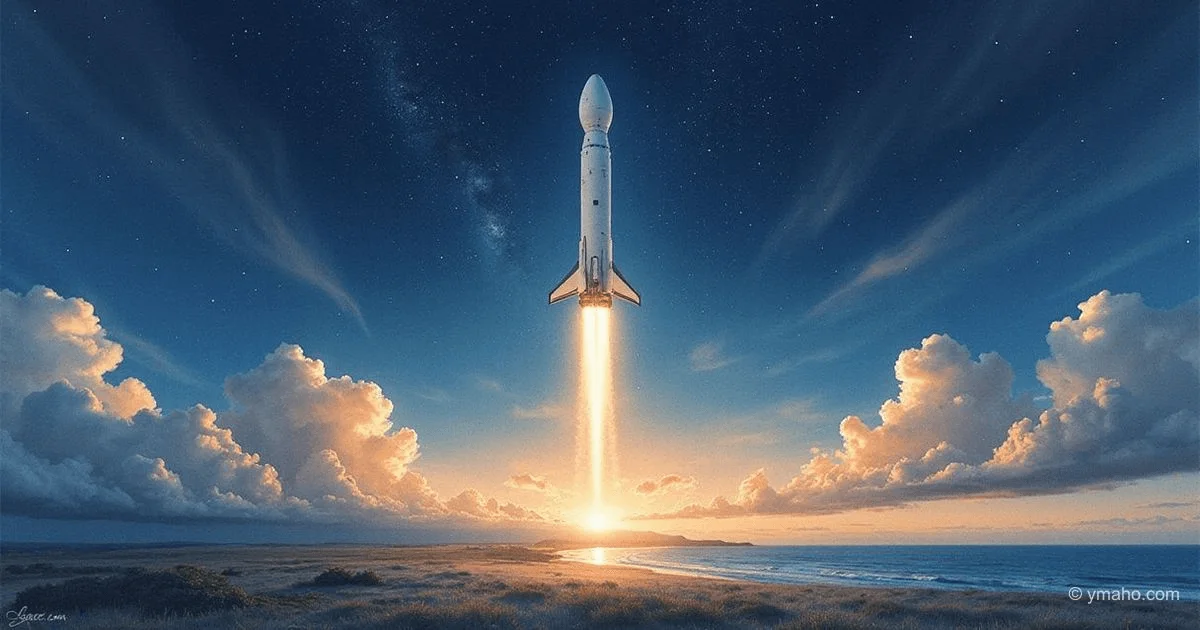
Atlas V Rocket Lifts Record Payload of Amazon Internet Satellites Into Orbit
A powerful rocket just carried the heaviest load in its history into space — 29 internet satellites built by Amazon, all headed for low Earth orbit. If you’ve ever struggled with slow or spotty internet in a rural area or while traveling, this mission is part of a bigger effort to change that.
Why This Launch Matters
On April 4, 2026, at 1:46 a.m. EDT, the United Launch Alliance’s Atlas V rocket blasted off from Cape Canaveral, Florida, with a record-breaking payload weighing 18 tons — about as much as three adult elephants. All 29 satellites were successfully placed into their planned orbit, marking a major step forward for Amazon’s plan to build a global internet network from space.
Amazon’s project, now called Amazon Leo (formerly Project Kuiper), aims to launch around 3,200 small satellites that will beam high-speed internet to homes, schools, and businesses anywhere on Earth — even remote islands or mountain towns where laying cables isn’t practical. Think of it like building a floating cell tower network in space, but for broadband instead of phone calls.
How Satellites Deliver Internet From Space
Unlike traditional internet that travels through underground fiber-optic cables, satellite internet bounces signals between your dish and spacecraft zooming overhead. These satellites orbit much closer to Earth than older communication satellites — only about 370 miles up, compared to the 22,000 miles of geostationary ones. That shorter distance means faster speeds and lower delays, making video calls and online gaming actually usable.
To put it simply: imagine shouting across a quiet room versus trying to talk to someone across a football field. Low Earth orbit satellites are like being in that quiet room — close enough for clear, quick conversation.
So far, Amazon has launched 241 operational satellites across nine missions. This latest flight, dubbed LA-05, was special not just for its weight but because it used an upgraded version of the RL10C engine on the rocket’s upper stage. That improvement allowed engineers to squeeze two extra satellites onto the rocket — a small change that adds up fast when you’re building a constellation of thousands.
The Race to Blanket Earth in Broadband
Amazon isn’t alone in this effort. SpaceX’s Starlink already has over 10,000 satellites circling Earth and serves more than 4 million customers worldwide. But competition is good: it pushes companies to improve service, lower prices, and reach more people.
Here’s what makes Amazon’s approach different:
- Focus on reliability: Amazon is designing its system to integrate with existing cloud services, potentially offering smoother performance for businesses.
- Global partnerships: The company is working with local providers in dozens of countries to make installation easier.
- Sustainability efforts: Each satellite has propulsion to avoid collisions and deorbit itself at end-of-life, reducing space junk.
What Does This Mean for Regular People?
If Amazon Leo succeeds, millions of people who currently have no internet — or only slow, expensive options — could get affordable, high-speed access within this decade. That could mean students in remote villages joining online classes, farmers checking weather forecasts in real time, or travelers staying connected on road trips through deserts or mountains.
It won’t replace your home Wi-Fi if you live in a city, but it could be a lifeline where traditional infrastructure doesn’t exist. And as more companies join the race, the cost is likely to drop, making space-based internet a realistic option for more households.
Key Takeaways
- The Atlas V rocket set a new record by launching 18 tons of Amazon internet satellites — its heaviest payload ever.
- Amazon Leo (formerly Project Kuiper) plans to deploy ~3,200 satellites to deliver global broadband from low Earth orbit.
- Low Earth orbit satellites reduce signal delay, making internet feel faster and more responsive than older systems.
- This mission used an upgraded rocket engine, allowing two extra satellites per launch — a small engineering win with big scaling potential.
- Competition between Amazon, SpaceX, and others could expand internet access to underserved areas worldwide.
— Editorial Team









