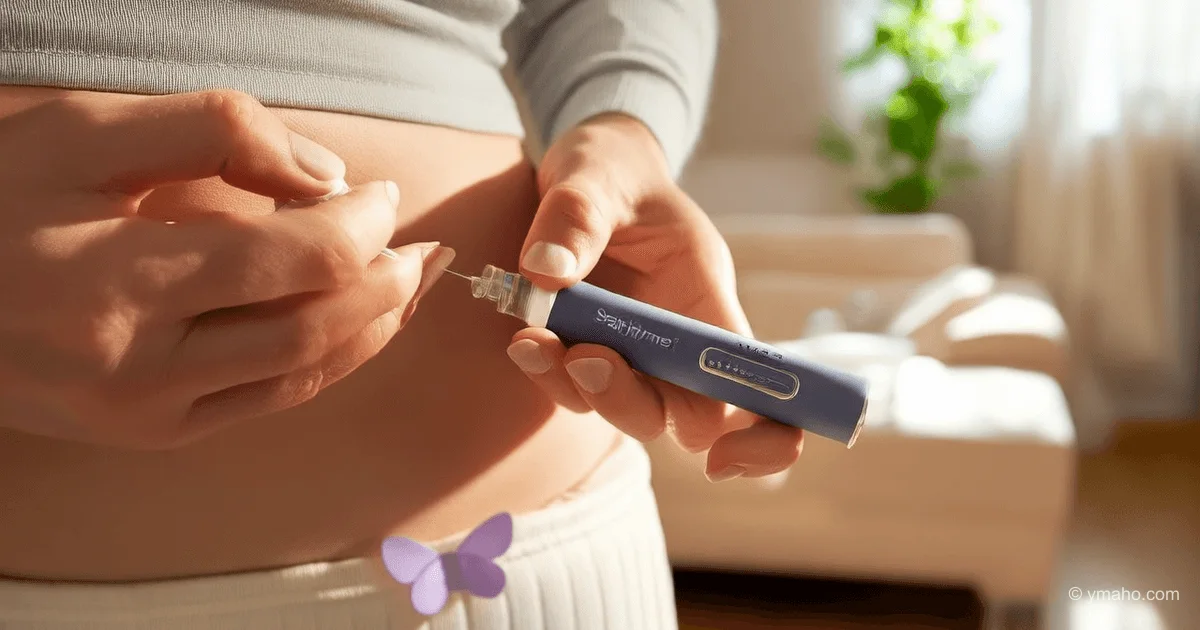
FDA Approves Anifrolumab Auto-Injector for Home Lupus Treatment
The new formulation of Saphnelo allows patients with systemic lupus erythematosus to self-administer therapy at home, enhancing treatment convenience alongside standard care.
The approval of the Saphnelo Pen may seem like routine news about a new drug formulation. Formally, that is the case: the FDA has authorized the use of an already known drug in an auto-injector. But digging deeper, this event closes a key feedback loop in the treatment of systemic lupus erythematosus—a loop that has remained broken for decades.
The Core: What's Really Happening
The real breakthrough is not the needle but the removal of the "infusion ceiling." Since 2021, anifrolumab has only been available as an intravenous infusion that patients must receive at a clinic every month. This meant that a drug with a unique mechanism of action—blocking the type I interferon receptor, a key driver of inflammation in lupus—was physically inaccessible to a significant portion of patients. Those living far from rheumatology centers, working multiple jobs, or unable to afford transportation costs simply fell out of the equation, even with insurance.
The Saphnelo Pen does two things at once. First, it moves therapy to the home. Second, it changes the regimen from monthly to weekly. This is more important than it seems: more frequent administration creates a steady drug concentration and reduces peak loads associated with some infusion reactions.
But the main story lies hidden in the TULIP-SC data: 29% of patients achieved remission by DORIS criteria, and 40.1% achieved low disease activity status. This means the subcutaneous form is not just non-inferior to the intravenous form—it allows serious discussion of a treat-to-target strategy where the goal is not "improvement" but remission. And patients can achieve this goal at home.
Timeline and Context
The story developed slowly but methodically. Anifrolumab received its first FDA approval as an intravenous formulation in 2021. Since then, the drug has accumulated a substantial body of long-term data—TULIP-LTE showed four-year remission results, making it the first biologic with such data in lupus.
The subcutaneous form has already been approved in the European Union and Japan, so the US approval is a catch-up step rather than a leading one. But the US market is critical: it has the highest cost of biologic therapy and the most aggressive insurers. The FDA decision came on April 27, 2026, and notably, the regulator did not expand the indication—it simply approved a new dosage form. This means the efficacy data were deemed equivalent without additional caveats.
Who Wins and Who Loses
AstraZeneca wins. The company gains a tool to protect its patent position. When the exclusivity period for the intravenous form expires, the subcutaneous form with an auto-injector creates a new barrier for biosimilars—a classic "life cycle management" strategy.
Lupus patients win, especially those from minority communities. Lupus disproportionately affects Asian, African American, and Hispanic populations, who face higher barriers to accessing specialized care. The auto-injector removes some of these barriers. Shivani Garg from the Yale Lupus Program put it bluntly: "For years, I've seen patients who refused anifrolumab simply because they couldn't balance regular infusion visits with work and life."
Infusion centers lose. Every patient who switches from intravenous to subcutaneous administration represents lost revenue for clinics. Given that the annual cost of lupus therapy can reach $40,000–$50,000 per patient, even a small migration to home treatment will hit institutional revenue.
An implicit loser is GSK with its drug Benlysta (belimumab). Benlysta is also available in subcutaneous form, but it targets a B-cell mechanism. Anifrolumab blocks the interferon pathway—a different, complementary mechanism. Now that both drugs are available for home use, competition will shift to comparative efficacy and tolerability rather than convenience.
What the Media Isn't Saying
Press releases mention safety that "is consistent with the known profile of the intravenous form." But no one focuses on the herpes zoster numbers. In TULIP-SC, the frequency of herpes zoster was higher in the anifrolumab group compared to placebo. This is not a new signal—it has been known since TULIP-1 and TULIP-2—but with home use, patients must self-monitor for symptoms that a doctor might have noticed during infusion.
Now for a non-obvious insight. AstraZeneca is not just registering a new formulation. The company is building a platform for combination therapy. Anifrolumab blocks type I interferon, but lupus is multifaceted: in some patients, the B-cell pathway dominates. AstraZeneca's portfolio lacks its own B-cell drug for lupus, but it has studies on combinations. The subcutaneous form is the key to a "one injection per week" regimen, to which a second agent can be added without needing to visit a clinic.
The second point is steroids. TULIP-SC showed the possibility of reducing corticosteroid doses with anifrolumab. This sounds like a medical detail, but it is actually a pharmacoeconomic anchor. Long-term steroid use causes cataracts, osteoporosis, diabetes, and avascular necrosis. Each such case costs the healthcare system tens of thousands of USD. AstraZeneca is preparing an argument for insurers: "Saphnelo Pen reduces costs from steroid-related complications, even if the drug's price is high."
Forecast: Next 30 Days and 90 Days
30 days (by June 13, 2026):
Rollout will begin in specialty pharmacies. The key question is whether the distribution network is ready. The auto-injector requires a cold chain and patient training. In the first weeks, there will be reports of confusion with insurance codes—the subcutaneous form has a separate NDC and may require a new prior authorization even for patients already receiving the intravenous form. AstraZeneca will likely launch a patient support program with home nurses for the first injections—this is standard practice for biologic auto-injectors and will eat into margins in the early months.
90 days (by August 13, 2026):
The first real-world adherence data will emerge. This is the main risk: with infusion, the doctor guarantees the patient received the dose. With home use, some patients will miss injections. If data show adherence below 85%, it will create a narrative that "the subcutaneous form is less reliable," which could slow adoption.
By this time, GSK will likely respond with new Benlysta data or even announce its own combination therapy program. Competition will move to a new level, where Saphnelo Pen sets the convenience standard, but Benlysta has a longer track record and a safety profile familiar to rheumatologists.
The most interesting development will come in six months, when the question of pediatric lupus arises. The subcutaneous form is an ideal candidate for adolescents who find it difficult to spend hours on infusion. If AstraZeneca initiates a pediatric study, it will create a long-term market for decades. Saphnelo Pen is not just a new route of administration—it is a strategic bridge to the next generation of lupus therapy.
— Editorial Team









