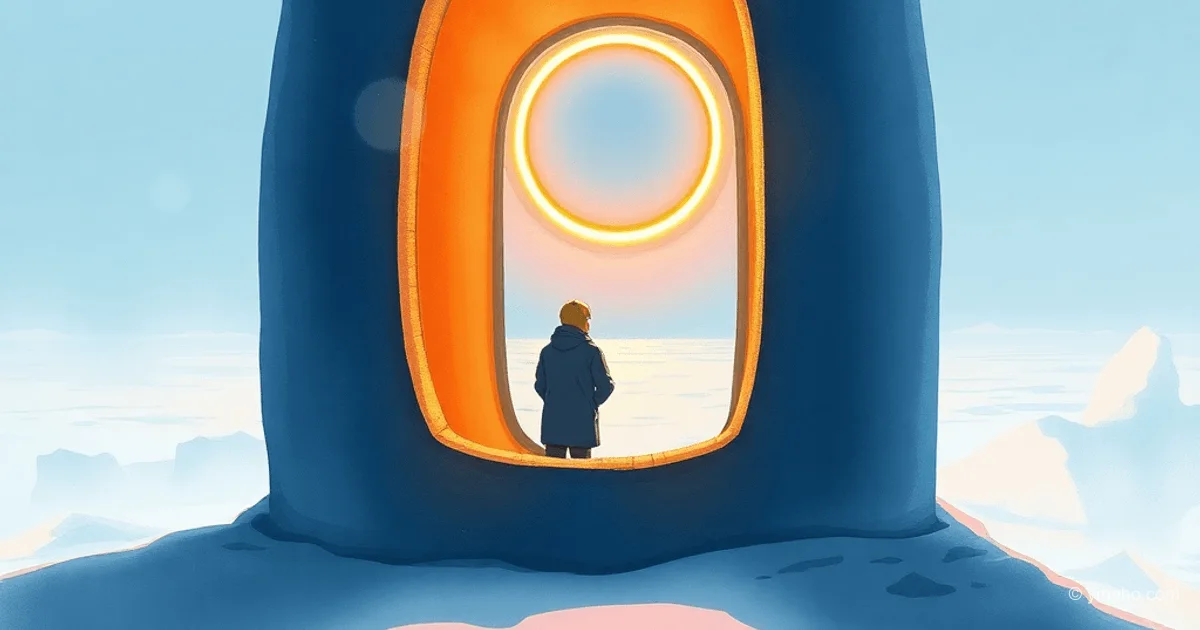
The Only People on Earth to See a ‘Ring of Fire’ Eclipse—And How One Scientist Captured It
On February 17, 2026, just 12 people on the entire planet witnessed a rare “ring-of-fire” solar eclipse—and they were all huddled in one of the most isolated places on Earth: Antarctica’s Concordia Research Station. For anyone who’s ever wondered what it’s like to experience a cosmic event with no audience but your closest colleagues, this story offers a glimpse into solitude, improvisation, and the quiet awe of space.
What Is a ‘Ring-of-Fire’ Eclipse?
An annular solar eclipse—often called a “ring-of-fire” eclipse—happens when the moon passes directly in front of the sun but is too far away in its orbit to completely cover it. Because the moon’s orbit isn’t a perfect circle, sometimes it appears slightly smaller in our sky. When that happens during an eclipse, a bright ring of sunlight remains visible around the moon’s silhouette, like a fiery halo.
Unlike a total solar eclipse—which plunges the landscape into eerie twilight and reveals the sun’s wispy outer atmosphere—an annular eclipse never fully darkens the sky. You still need special eye protection to look at it safely, because that glowing ring is intensely bright.
The Loneliest Eclipse Viewers on Earth
The path where this ring-of-fire was visible crossed only two inhabited spots in Antarctica: Concordia Research Station (a joint French-Italian base) and Russia’s Mirny Station. But thick clouds blanketed Mirny that day, blocking the view entirely.
That left the 12-person winter crew at Concordia as the sole human witnesses to the full spectacle.
Concordia sits 750 miles inland from the Antarctic coast, at an altitude higher than Denver. Temperatures there regularly drop below -50°C (-58°F), and for four months each year, the sun doesn’t rise at all. It’s so dry and stable that scientists use it to simulate conditions on Mars—and to study everything from Earth’s magnetic field to how humans cope with extreme isolation.
One of those scientists, Andrea Traverso, happened to be at a window perfectly aligned with the eclipse’s path. He didn’t plan for it—he didn’t even know it was coming until it was almost time.
Improvising in Extreme Conditions
To photograph the eclipse safely, you need a solar filter—a special material that blocks almost all of the sun’s light while letting just enough through for a clear image. But no one at Concordia had prepared for this event.
So Traverso got creative. He dug up old sheets of mylar film—used years earlier for solar observations—and fashioned a makeshift filter using cardboard and glue. Then, standing inside the heated station, he opened a window to avoid glare from the glass and began snapping photos.
The result? A stunning image of the sun as a perfect golden ring, later shared by the European Space Agency as the only known ground-based photo of the eclipse.
It wasn’t until afterward, when Traverso checked in with other Antarctic bases, that he realized no one else had seen it clearly. “I became aware of the uniqueness of my observation,” he said.
In a heartfelt social media post, he called the eclipse a gift from his “wonderful white lady”—his poetic nickname for Antarctica—and noted that only he and his 11 companions got to enjoy it live.
Why This Matters Beyond the Photo
This moment highlights something profound about scientific exploration: sometimes the most significant observations happen not with billion-dollar telescopes, but with curiosity, resourcefulness, and being in the right place at the right time.
It also reminds us that Earth is still full of remote corners where natural wonders unfold unseen. In an age of constant connectivity, it’s humbling to know that a celestial event visible from only a few square miles went unnoticed by the rest of humanity—except for a dozen people living at the edge of the world.
Key takeaways:
- An annular (“ring-of-fire”) solar eclipse occurs when the moon is too far from Earth to fully cover the sun, leaving a bright ring visible.
- On February 17, 2026, only the crew at Concordia Research Station in Antarctica saw the full eclipse due to cloud cover elsewhere.
- Scientist Andrea Traverso improvised a solar filter from old mylar film and captured the only known ground-based photo.
- The event underscores how isolation, preparation, and luck can converge in scientific discovery.
- Despite modern technology, some cosmic events still remain private—seen by just a handful of humans.
What Does This Mean for Regular People?
You don’t need to travel to Antarctica to appreciate eclipses—but this story shows how special they are. Eclipses connect us to the rhythms of the solar system in a visceral way. And while most of us will watch them in crowds or through livestreams, knowing that some are witnessed in total solitude adds a layer of wonder. Plus, it’s a reminder: sometimes the best science happens not with perfect plans, but with quick thinking and whatever’s in the supply closet.
— Editorial Team









