Artemis 2 Astronauts Aim to Capture a New 'Earthrise'—And Why It Still Matters
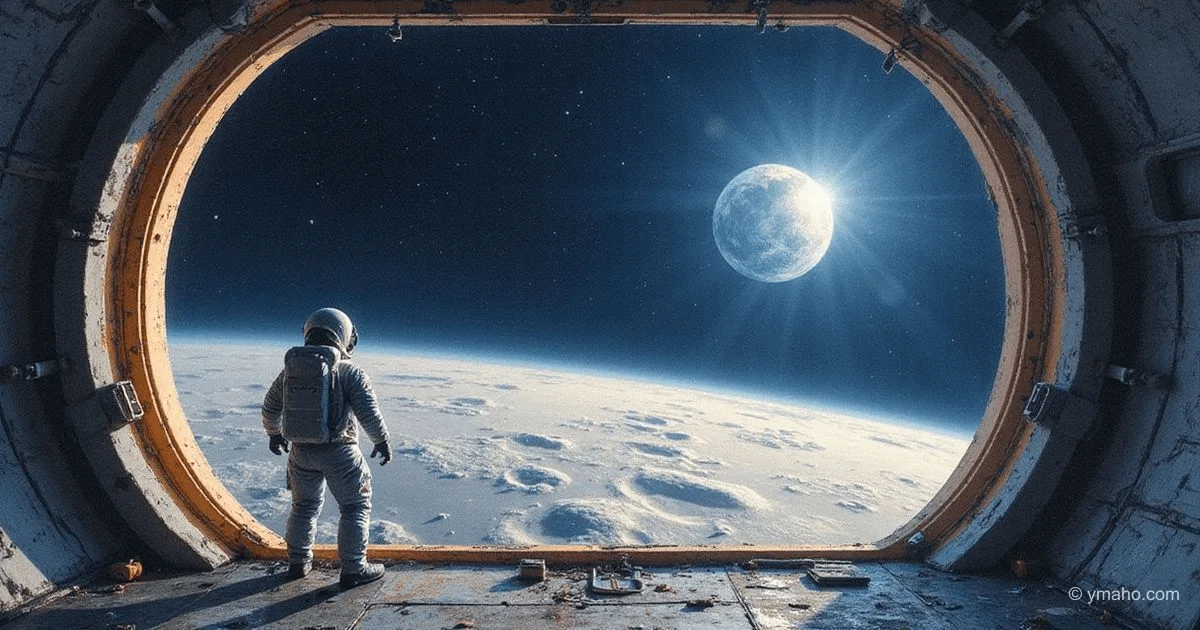
More than half a century after the iconic Earthrise photo stunned the world, a new crew of astronauts will try to recreate it during their flyby of the Moon on April 6. This time, they’re not just capturing a pretty picture—they’re offering us all a fresh reminder of how small, fragile, and shared our planet really is.
A Photo That Changed How We See Ourselves
In 1968, as Apollo 8 circled the Moon for the first time with humans aboard, astronaut Bill Anders snapped an unplanned shot: Earth rising over the Moon’s barren horizon. The image—now known as “Earthrise”—wasn’t on the mission checklist. But it became one of the most powerful photographs ever taken.
Think of it like this: imagine you’ve never seen your home from outside before. Suddenly, you’re floating far away and catch a glimpse of it—a tiny blue marble glowing against the black void. That’s what Earthrise showed humanity. At a time of war, social unrest, and growing environmental worries, it reminded people that borders vanish from space—and we all live on the same fragile world.
Artemis 2’s Planned Moment of Wonder
Unlike Apollo 8, which orbited the Moon ten times, Artemis 2 will make just one quick loop around the far side. But NASA has scheduled time specifically for the crew—Reid Wiseman, Victor Glover, Christina Koch, and Jeremy Hansen—to photograph both “Earthrise” and “Earthset.”
Earthset? That’s when Earth appears to dip below the Moon’s edge as the spacecraft heads into radio silence behind the lunar far side. These moments will last only minutes, so timing and lighting are critical.
Here’s what makes their view different:
- Altitude: Apollo 8 was just 60 miles above the Moon. Artemis 2 will be up to 6,000 miles away—about 100 times higher.
- Perspective: From that distance, the Moon will look about the size of a basketball held at arm’s length, not a landscape rushing beneath them.
- Lighting: The lunar surface won’t be fully sunlit. Instead, long shadows will highlight craters and ridges, adding dramatic depth.
- Cameras: They’ll use modern digital Nikons instead of film Hasselblads—giving them more control but also more variables to manage in real time.
Why a New Earthrise Could Resonate Today
The original Earthrise arrived during the Vietnam War and amid early environmental movements. Today, we face climate crises, geopolitical tensions, and deep divisions. A new image might not solve these problems—but it could reframe them.
Seeing Earth from the Moon strips away politics, nationality, and conflict. What’s left is a single, life-filled sphere suspended in darkness. That perspective hasn’t lost its power—it may even be more urgent now.
NASA’s visualization team has already created mock-ups of what the Artemis 2 Earthrise might look like under different lighting. But no simulation can replace the real thing: human eyes witnessing our planet from deep space, then sharing that awe with everyone back home.
What Does This Mean for Regular People?
You don’t need to be an astronaut to feel the impact of Earthrise. These images help us zoom out—literally and emotionally—from daily noise to remember what truly matters. They’re not just space photos; they’re mirrors showing us our shared home. And in a world that often feels fractured, that reminder is priceless.
Key takeaways:
- The original 1968 Earthrise photo shifted global consciousness by showing Earth’s fragility.
- Artemis 2 astronauts will intentionally photograph Earthrise and Earthset during their April 6 lunar flyby.
- Their view will be from much farther away, with different lighting and modern cameras.
- The new image could offer a timely symbol of unity in today’s divided world.
- Unlike Apollo 8, this moment is planned—but the emotional impact may be just as profound.
— Editorial Team









