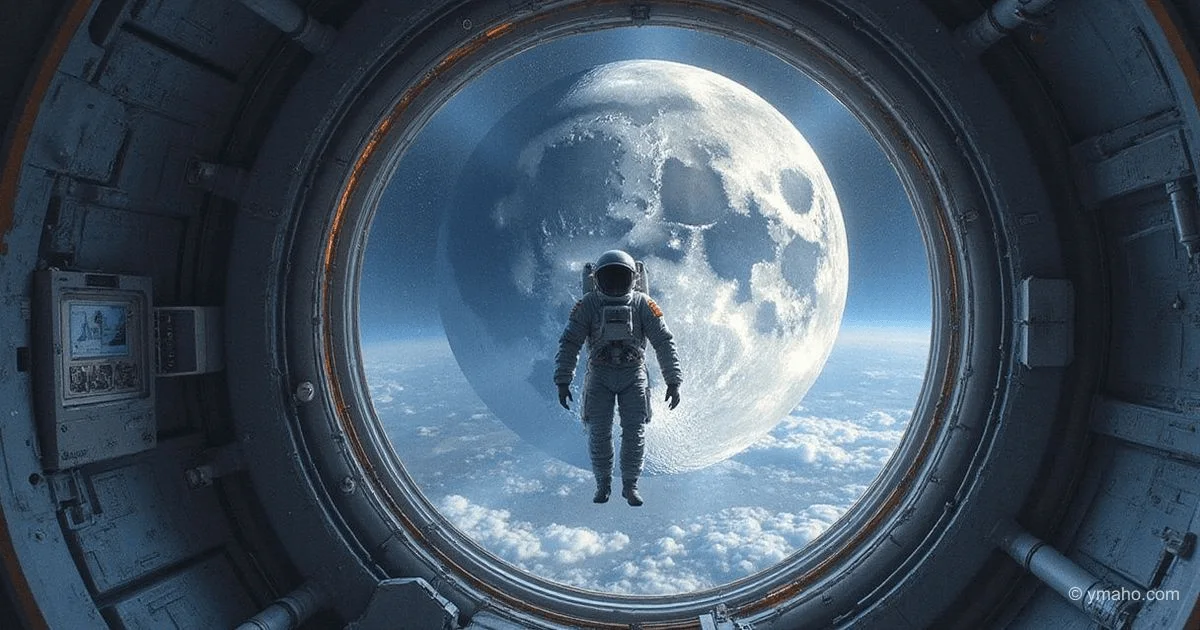
Artemis 2 Astronauts Capture First Human Views of the Moon’s Hidden Side in Decades
For the first time since 1972, humans are seeing parts of the moon up close with their own eyes — and snapping photos that could reshape lunar science. The Artemis 2 mission isn’t landing, but its crew is flying closer to the moon than any people have in over 50 years, offering a rare chance to observe features never before seen by human eyes.
Why this flyby matters
The Artemis 2 mission launched on April 1, 2026, carrying four astronauts: NASA’s Christina Koch, Reid Wiseman, Victor Glover, and Canada’s Jeremy Hansen. Their spacecraft, Orion, won’t touch down on the moon, but it will skim just beyond the lunar surface during a carefully choreographed flyby. This maneuver uses the moon’s gravity like a slingshot to fling the capsule back toward Earth — but along the way, the crew gets an unprecedented view.
What makes this special? While satellites have mapped the moon for years, human eyes notice things machines miss: subtle color shifts, unexpected glints, or odd textures. Think of it like comparing a weather app’s forecast to actually stepping outside — sometimes you just need to see it yourself.
Eyes, cameras, and cue cards
The crew isn’t just sightseeing. They’re part of a structured science campaign led by NASA’s lunar team. Each astronaut carries a Nikon D5 camera with a powerful zoom lens (80–400mm) to photograph specific regions. They also use tablets to jot notes and record voice observations in real time.
To help them spot key features, NASA gave them “lunar cue cards” — simple visual guides showing what to look for, like crater patterns or hints of ancient lava flows. Back on Earth, scientists in Houston’s Mission Control monitor their reports from a dedicated Science Evaluation Room, marking the first time such a room has been integrated into a crewed lunar mission since Apollo.
Hunting for moon flashes — and your help
One of the most exciting goals? Catching tiny flashes caused when space rocks slam into the moon. These “impact flashes” are brief but tell scientists how often the moon gets hit — crucial info for future bases.
Here’s where you come in: Researchers are asking amateur astronomers to point their telescopes at the moon during the flyby window (April 6–7). If both astronauts and backyard observers see the same flash, it’s likely real — not a glitch from cosmic rays. This citizen science effort, called Impact Flash!, is run by NASA’s GEODES team.
Key tasks the crew is tackling:
- Scanning for color variations that hint at different rock types
- Watching the dark side of the near moon for impact flashes
- Studying the boundary between day and night (the “terminator”) where shadows reveal surface texture
- Observing Earth from deep space — a perspective few humans have ever had
Training like geologists
Before launch, the crew didn’t just study textbooks. They trekked through Iceland’s volcanic fields and visited Canada’s Kamestastin Impact Crater — places that mimic the moon’s harsh, rocky terrain. These field trips trained them to think like planetary geologists, not just pilots.
Iceland, in fact, has been a stand-in for the moon since the Apollo era. Its black sand, jagged lava flows, and sparse vegetation offer a surprisingly accurate rehearsal ground.
What does this mean for regular people?
This mission is a dress rehearsal for Artemis 3, which aims to land humans on the moon again. The photos and notes from Artemis 2 will help pick safer, more scientifically rich landing spots. Plus, involving the public in flash-hunting turns space science into something anyone can join — no rocket required. And every new image reminds us that exploration isn’t just about technology; it’s about human curiosity.
Key takeaways
- Artemis 2 is the first crewed lunar flyby since 1972, offering fresh human observations of the moon’s far side.
- Astronauts are using cameras, voice notes, and cue cards to document features satellites might overlook.
- Citizen scientists can help confirm meteoroid impacts by watching for flashes during the flyby.
- Field training in places like Iceland prepared the crew to read the moon’s geology like experts.
- This mission paves the way for future landings by testing how humans can contribute uniquely to lunar science.
— Editorial Team









