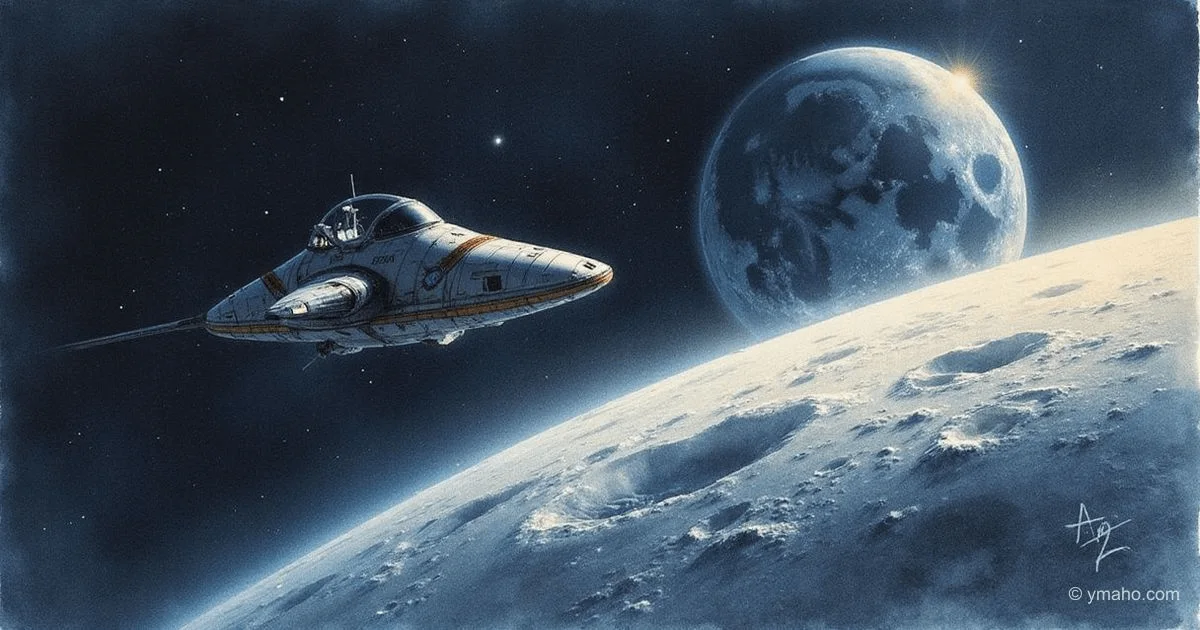
Artemis 2 Breaks Human Distance Record — Here’s Why That Matters
For the first time in over 50 years, humans have traveled farther from Earth than ever before. On April 6, 2026, NASA’s Artemis 2 crew reached a peak distance of 252,757 miles from our planet—surpassing the Apollo 13 record set in 1970. This isn’t just about setting a new milestone; it’s proof that we’re finally returning to deep space with safer, smarter technology.
A New Record Built on Old Lessons
The previous farthest distance any human had traveled from Earth was 248,655 miles, achieved by the Apollo 13 astronauts during their emergency lunar flyby. That mission was meant to land on the moon—but after an oxygen tank exploded, survival became the only goal. Their looping path around the moon, called a “free-return trajectory,” used the moon’s gravity like a slingshot to fling them safely back home without needing extra fuel.
Artemis 2 uses that same clever trick—but this time by design. The Orion spacecraft won’t land or even orbit the moon. Instead, it’s flying past it on a carefully calculated path that ensures the crew can return even if something goes wrong. Think of it like testing a lifeboat before sailing across an ocean: you want to know it works before you commit.
How Far Is 252,000 Miles, Really?
To picture this distance, imagine stacking nearly 32 Earths end-to-end between the spacecraft and home. Or think of it this way: if you drove nonstop at highway speed (60 mph), it would take you over 175 days—almost six months—to cover that distance. Light, which zips along at 186,000 miles per second, still takes over 1.3 seconds to make the trip.
This journey matters because it’s not just about distance—it’s about capability. Orion is carrying four astronauts (including Canada’s first-ever deep space traveler) in a capsule designed for longer, more complex missions than Apollo ever attempted.
What Made This Possible Now?
The key moment came on April 2, when Orion’s main engine fired for nearly six minutes in what’s called the translunar injection (TLI) burn. This maneuver pushed the spacecraft out of Earth’s orbit and onto its moon-bound path. Once that burn succeeded, NASA could calculate the exact peak distance with confidence.
Unlike earlier estimates, this number comes from real flight data—not simulations. It confirms that Orion’s systems, navigation, and timing are working as planned. And because the free-return trajectory is built into the mission from the start, no additional engine burns are needed to come home. In essence, the TLI burn also acts as the deorbit maneuver—a clever efficiency Apollo didn’t have.
What Does This Mean for Regular People?
- You’re witnessing the beginning of a new era of human spaceflight—one that could lead to sustainable lunar bases and eventually trips to Mars.
- Technologies tested on Artemis 2 (like radiation shielding and life support) may one day protect future astronauts on long missions—and even inspire safer air travel or medical monitoring on Earth.
- International collaboration (like Canada’s role) shows space exploration is becoming a shared human effort, not just a race between superpowers.
Key Takeaways
- Artemis 2 reached 252,757 miles from Earth, breaking the 1970 Apollo 13 record.
- The mission uses a free-return trajectory—a gravity-assisted path that ensures safe return without extra fuel.
- This is a test flight: no landing, but full validation of Orion’s ability to carry humans to deep space.
- Success paves the way for Artemis 4, which aims to land astronauts on the moon in late 2028.
- The achievement blends proven physics with modern engineering for safer, more reliable space travel.
— Editorial Team









