Artemis 2 Astronauts Witness Rare Solar Eclipse from Deep Space — Here’s Why It Matters
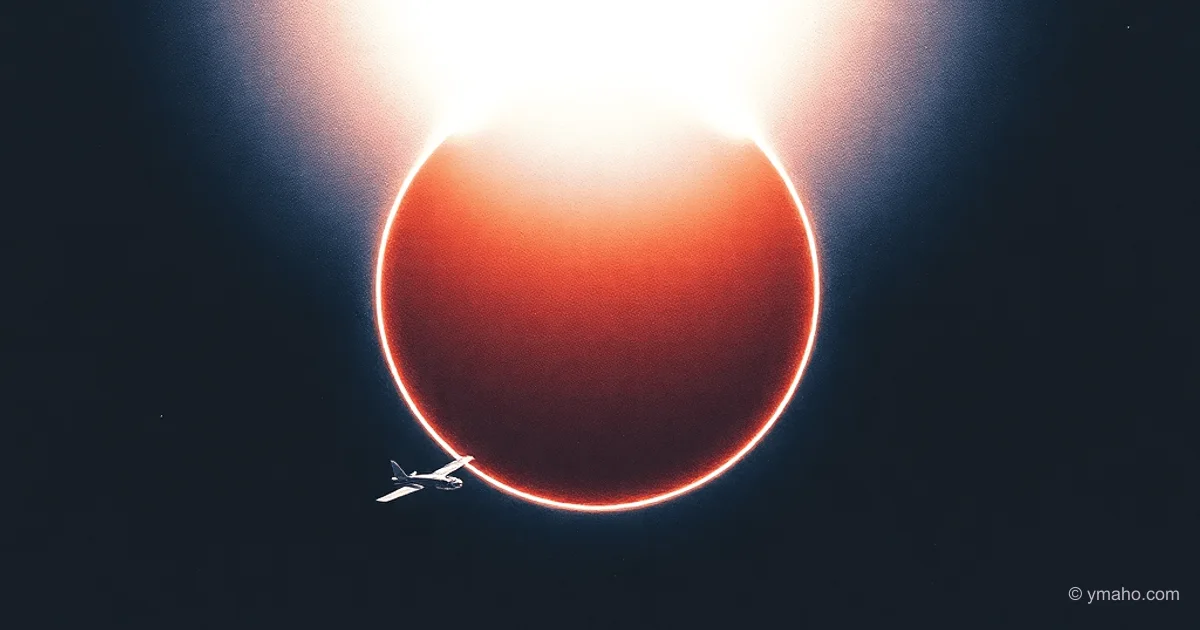
For the first time in over 50 years, humans have watched a total solar eclipse not from Earth—but from beyond the Moon. During the Artemis 2 mission on April 6, 2026, four astronauts aboard NASA’s Orion spacecraft saw the Moon completely block the Sun while flying around the lunar far side. This wasn’t just a stunning sight; it offered scientists a uniquely clear view of the Sun’s outer atmosphere, something usually drowned out by daylight or distorted by Earth’s air.
A View No One on Earth Can Get
On Earth, total solar eclipses last just a few minutes because our planet spins quickly and the Moon’s shadow races across the surface. But Artemis 2’s path around the Moon was slower and farther out, letting the crew experience 53 minutes of total darkness—more than ten times longer than typical Earth-based eclipses. That extra time isn’t just nice for photos; it gives researchers a rare chance to study faint details of the Sun’s corona, its super-hot outer layer that’s normally invisible.
Because they were outside Earth’s atmosphere, the astronauts didn’t have to deal with sky glow, clouds, or atmospheric blurring. The result? Sharper, higher-contrast images that reveal structures in the corona and even background stars usually washed out by sunlight.
What Exactly Is the Corona?
The corona is the Sun’s outer atmosphere—a wispy, million-degree halo of plasma that extends millions of miles into space. It’s so faint compared to the Sun’s bright surface (called the photosphere) that we only see it clearly during a total solar eclipse, when the Moon acts like a perfect natural filter.
Scientists care deeply about the corona because it drives space weather—bursts of charged particles that can disrupt satellites, power grids, and communications on Earth. Understanding its shape, temperature, and behavior helps us predict solar storms before they hit.
More Than Just Stars and Shadows
During the eclipse, the Orion cameras also captured something magical: earthshine—sunlight bouncing off Earth and softly lighting up the dark side of the Moon. And floating in the blackness beside the eclipsed Sun? The bright dot of Venus, clearly visible without atmospheric haze.
NASA’s science team is now analyzing whether the glowing ring around the Moon is purely the solar corona, or if it includes zodiacal light—sunlight scattered by dust floating between planets. Untangling these signals helps calibrate future deep-space observations.
Why This Changes How We Explore Space
This moment highlights a key advantage of missions beyond low Earth orbit: stable, extended observation windows. Unlike satellites in Earth orbit that zip around every 90 minutes, a spacecraft on a lunar flyby can linger in shadow long enough to collect high-quality data.
Future missions could use similar geometries to study other celestial events—like planetary transits or comet flybys—with unprecedented clarity. Artemis 2 proves that human-tended platforms far from Earth aren’t just about flags and footprints; they’re powerful scientific outposts.
Key takeaways:
- Artemis 2 astronauts observed a 53-minute total solar eclipse from behind the Moon—far longer than possible on Earth.
- The view was crystal-clear due to no atmospheric interference, revealing fine details of the Sun’s corona and background stars.
- Extended totality allows better study of space weather drivers, which affect technology we rely on daily.
- Earthshine and Venus were visible, adding context to the cosmic alignment.
- Deep-space human missions offer unique scientific opportunities beyond what robots or Earth-based telescopes can achieve.
What does this mean for regular people?
While you won’t see this eclipse yourself, the data gathered helps improve forecasts of solar storms that can knock out GPS, radio signals, and even cause blackouts. Plus, it reminds us that sending humans farther into space isn’t just symbolic—it unlocks new ways to understand our place in the solar system. Every time we get a clearer look at the Sun, we get better at protecting our tech-dependent lives here on Earth.
— Editorial Team









