Why NASA’s Moon Mission Toilet Became the Unexpected Hero of Artemis 2
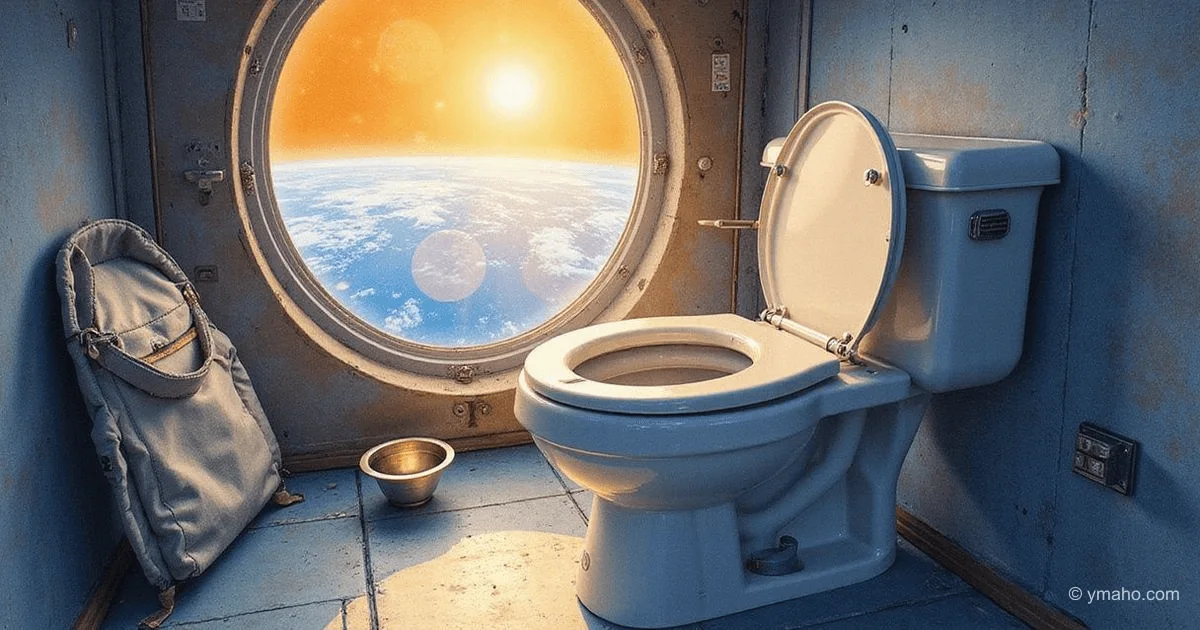
On a historic trip around the moon—the first with astronauts in over 50 years—one piece of equipment has stolen the spotlight: the space toilet. It might sound funny, but when you’re 240,000 miles from Earth with no bathroom breaks possible, a working toilet isn’t just convenient—it’s essential for safety, health, and morale.
Unlike on Earth, where plumbing is invisible and reliable, space toilets must work in zero gravity, handle waste without leaks, and survive extreme temperatures. And during NASA’s Artemis 2 mission, this high-stakes loo hit a few snags—making it the most talked-about system aboard the Orion spacecraft.
A $23 Million Throne in Zero Gravity
The Orion spacecraft’s toilet cost $23 million to design—a price that reflects how hard it is to build something that works reliably in space. On the International Space Station (ISS), astronauts use a toilet that relies on airflow to pull waste away from the body (since water doesn’t “flow down” without gravity). The Orion version is smaller, lighter, and built for deep space, where help is days or weeks away.
Think of it like upgrading from a home bathroom to a portable camping toilet—but one that must function flawlessly while orbiting the moon. Every seal, hose, and fan has to work perfectly, or things get messy fast.
When the Toilet Breaks Down… in Deep Space
Early in the Artemis 2 mission, the urine system stopped working. Astronaut Christina Koch, with guidance from Mission Control, fixed the initial issue—earning her the nickname “space plumber.” But soon after, a strange burning smell appeared in the hygiene bay, the tiny bathroom compartment about the size of a private jet’s lavatory.
Engineers suspect the odor came from materials “off-gassing”—releasing trapped air or vapors when warmed up for the first time in space, similar to the new-car smell you get when you turn on a car heater in winter. While not dangerous, it added to the crew’s discomfort.
Then came another problem: the system couldn’t vent stored urine into space. In the freezing vacuum outside the spacecraft, moisture can freeze instantly, blocking vents with ice. To fix it, flight controllers pointed the urine nozzle toward the sun for hours—a “bake out”—to melt any ice and clear the line.
Plan B: The Collapsible Urinal
While the main toilet was offline, the crew switched to backup devices called Collapsible Contingency Urinals (CCUs). These are simple plastic cylinders with caps and drainage ports—reusable, sealable, and designed to manage liquid using capillary forces (the same physics that lets a paper towel soak up a spill).
As astronaut Don Pettit noted, these CCUs replace about 25 pounds of adult diapers—proving that even on cutting-edge missions, practicality wins. Each of the four astronauts carries two, ensuring they can stay comfortable and hygienic during the 10-day journey.
Why This Matters More Than You Think
It’s easy to laugh at space toilet drama, but reliable waste management is critical for long missions. On future trips to Mars—which could last two to three years—astronauts will need systems that never fail. A broken toilet could mean infection risk, ammonia buildup, or even mission abort.
NASA’s focus on this issue shows how human-centered spaceflight really is. As Orion deputy manager Debbie Korth put it: “Everybody pees and poops. It’s something everyone understands.” Solving these problems builds confidence for longer, farther journeys.
What does this mean for regular people?
- Space tech often leads to everyday innovations (like memory foam or water filters).
- Learning to live sustainably in extreme environments helps us improve life on Earth—especially in remote or resource-limited places.
- Human spaceflight isn’t just about rockets and flags—it’s about solving real, messy, human problems far from home.
Key takeaways
- The Artemis 2 mission’s space toilet faced multiple issues: a urine system failure, mysterious odors, and ice-blocked vents.
- Backup urinals (CCUs) kept the crew functional while engineers worked on fixes from Earth.
- Space toilets must work in zero gravity, extreme cold, and total isolation—making them engineering marvels.
- Reliable waste systems are non-negotiable for future moon bases or Mars missions.
- Public fascination with the toilet reflects how human spaceflight connects to universal experiences.
— Editorial Team









