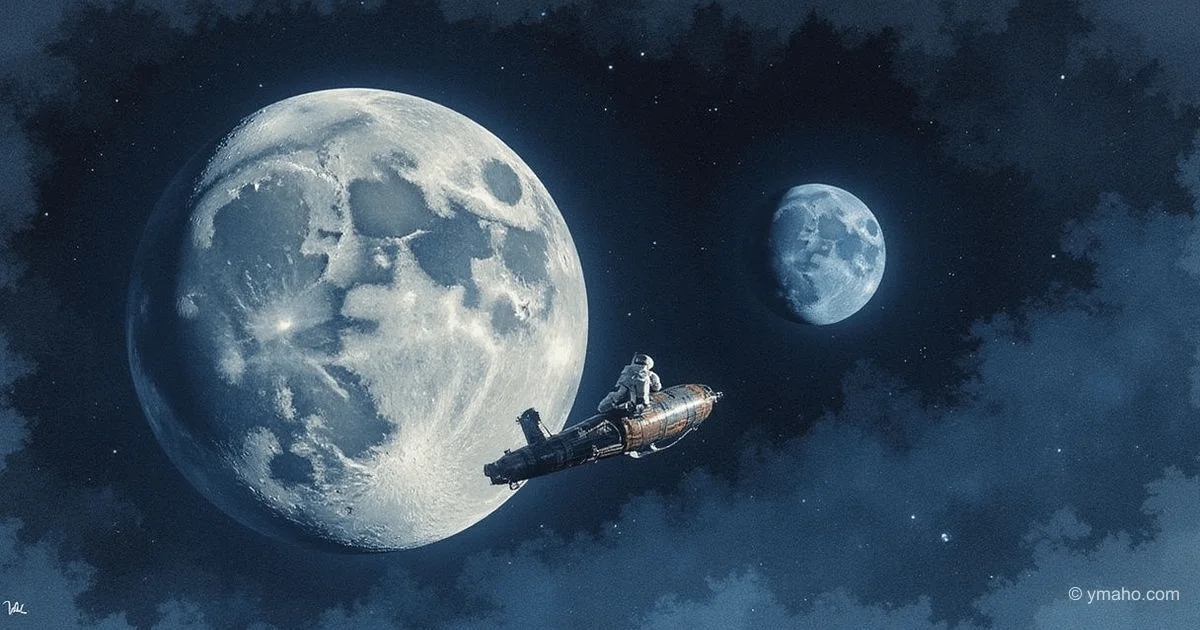
Artemis II Astronauts Break Distance Record on Historic Moon Flyby
Four astronauts aboard NASA’s Artemis II mission have traveled farther from Earth than any humans in over 50 years—surpassing the Apollo 13 record. This isn’t just about setting a new milestone; it’s a crucial rehearsal for returning people to the moon’s surface, possibly within the next few years.
Why This Record Matters
On Monday, the Orion spacecraft carrying the Artemis II crew zoomed past 400,171 kilometers (248,655 miles) from Earth—the distance reached by Apollo 13 in 1970 during its emergency return from a failed moon landing. By late evening GMT, they’ll hit their peak distance of roughly 406,788 kilometers (252,760 miles), looping around the far side of the moon before heading home.
Think of this mission like a dress rehearsal for a play: no one steps onto the stage yet (that’s Artemis III’s job), but everyone practices entrances, lighting, and timing. Getting this flyby right helps NASA test life-support systems, navigation, and communication—all while pushing human spaceflight farther than it’s gone since the 1970s.
Eyes Over Cameras
One surprising fact? NASA still trusts human eyes more than even the best cameras. As the crew flew past the moon’s hidden side, they described features like the Orientale basin—a giant crater rarely seen up close—to scientists back on Earth.
“The human eye is basically the best camera that could ever or will ever exist,” said Kelsey Young, lead scientist for Artemis II. Our eyes can pick up subtle shadows, textures, and contrasts that digital sensors often miss—especially when studying geology from orbit.
During the flyby, the team spent over six hours observing and narrating what they saw. A room full of lunar experts at NASA’s Johnson Space Center took notes in real time, comparing astronaut descriptions with satellite data.
A Crew of Firsts
This mission also marks historic firsts:
- Christina Koch is the first woman to travel this far from Earth.
- Victor Glover is the first person of color to orbit the moon.
- Jeremy Hansen, from Canada, is the first non-American to join a lunar flyby.
Their presence reflects a broader shift: future moon missions won’t just be American or male—they’re designed to include diverse perspectives from the start.
For about 40 minutes, as Orion passed behind the moon, all radio contact went silent—a natural blackout caused by the moon blocking signals. It’s a moment of total isolation, reminding us how fragile our connection to Earth really is out there.
What Does This Mean for Regular People?
You might wonder: why should anyone care about astronauts flying around the moon? Here’s the thing—this mission tests technologies that could eventually support lunar bases, deep-space travel, and even better satellite systems that affect GPS, weather forecasting, and communications back home. Plus, every successful step builds confidence that humans can safely explore farther into space, opening doors for science, innovation, and maybe even new industries.
Key Takeaways
- Artemis II broke the 54-year-old record for farthest human distance from Earth.
- The crew conducted critical observations of the moon’s far side using human vision, not just cameras.
- This uncrewed landing flyby is a vital test before Artemis III attempts a moon landing in 2027.
- The diverse crew includes the first woman, first person of color, and first non-American on a lunar mission.
- Real-time communication blackouts and life-support checks help prepare for longer future missions.
— Editorial Team









