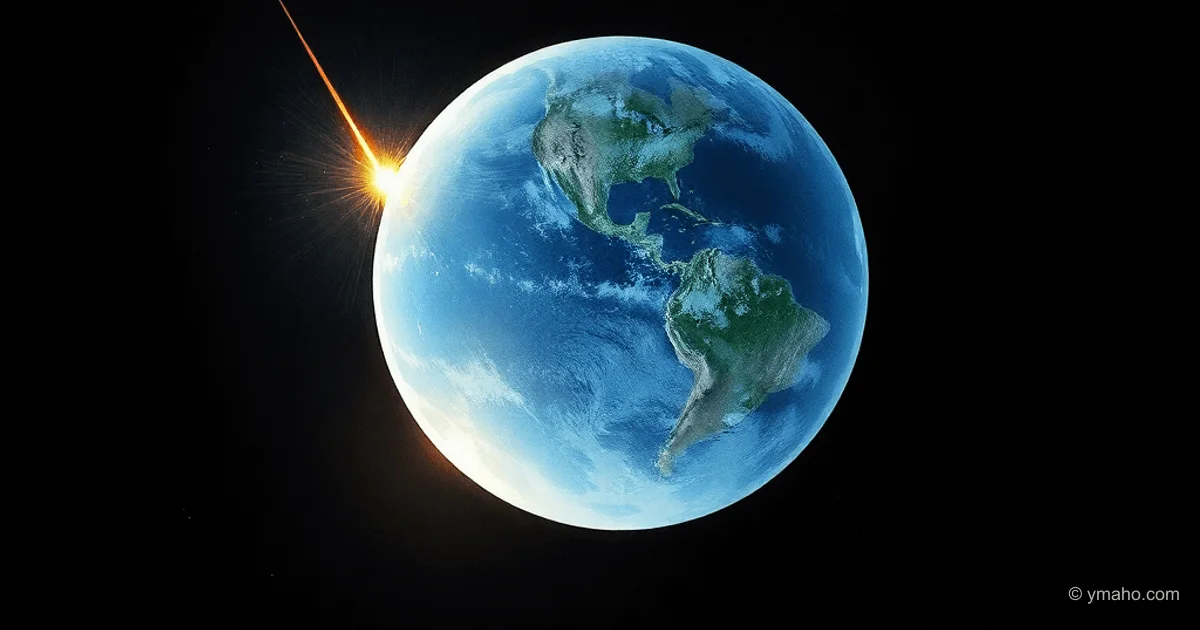
Astronauts Capture Meteor Shower From Space: A Unique View of Earth's Shield
Astronauts on the International Space Station have captured a stunning photo of a meteor shower from above, giving us a rare top-down view of how our planet's atmosphere protects us. This isn't just a beautiful picture; it’s a reminder that the thin layer of air around Earth is our home's vital security blanket.
NASA astronaut Jessica Meir shared the image as the Lyrid meteor shower peaked. From her unique vantage point orbiting 250 miles above the ground, she watched a piece of comet debris—a meteor—streak through the atmosphere below her. It’s like watching a security guard from outside the building, seeing them stop an intruder at the door.
What Makes This View So Special?
Most of us watch meteor showers by looking up at the night sky. Astronauts on the ISS get to look down. Their perspective turns the event inside out. Instead of seeing a shooting star come down toward you, you see it slam into the planet's protective shell from the outside.
The atmosphere is often compared to a blanket. But from space, astronauts can see how incredibly thin that blanket really is. The vibrant streak of light in Meir’s photo marks the moment a tiny piece of ancient comet, traveling at tremendous speed, collided with this thin layer and burned up safely. It’s a real-time demonstration of our planet’s defense system.
The Science Behind the Streak
The Lyrid meteor shower happens every April. It’s caused by Earth plowing through the dusty trail left by a comet named Thatcher. A comet is like a dirty snowball orbiting the sun, leaving a mess of tiny rocks and ice behind it.
When our planet crosses this trail, those tiny bits of comet debris hit our atmosphere at over 100,000 miles per hour. The friction from hitting the air is so intense it heats them up until they glow brightly and vaporize—creating the ‘shooting star’ we see. From the ISS, this glow appears as a bright line against the dark backdrop of Earth.
- The Comet Source: The debris comes from Comet C/1861 G1 Thatcher, discovered over 150 years ago.
- The Annual Event: Earth’s orbit guarantees we pass through this debris field every year.
- The Safe Outcome: The atmosphere burns up most debris completely, protecting the surface.
A New Perspective on Our Planet
This photo does more than document a meteor. It highlights the fragile, life-giving nature of our atmosphere. Astronauts often describe the view of Earth from space as profoundly moving, seeing the planet as a whole, vibrant ball suspended in blackness. Watching a meteor interact with it adds a layer of dynamic, real-time science to that experience.
It connects the vast, ancient cycles of comets orbiting the sun with the immediate, local shield that allows life to thrive here. It’s a cosmic connection made visible.
Key Takeaways
- Astronauts on the ISS captured a unique ‘top-down’ view of a meteor shower, seeing debris burn up in Earth’s atmosphere from above.
- The Lyrid shower is an annual event caused by Earth passing through the dust trail of an ancient comet.
- The photograph visually demonstrates how our relatively thin atmosphere acts as a protective shield, burning up incoming space debris.
- This perspective reinforces the fragility and importance of our planet’s life-supporting envelope.
- It blends human exploration with natural cosmic cycles, offering a new way to appreciate both.
What Does This Mean for Regular People?
This image reminds us that the air around us, which we often don’t even notice, is actively working to keep us safe from countless tiny impacts from space. It also shows how human ingenuity—building a space station and living there—allows us to see familiar natural events in completely new ways, deepening our understanding of our home planet.
— Editorial Team









