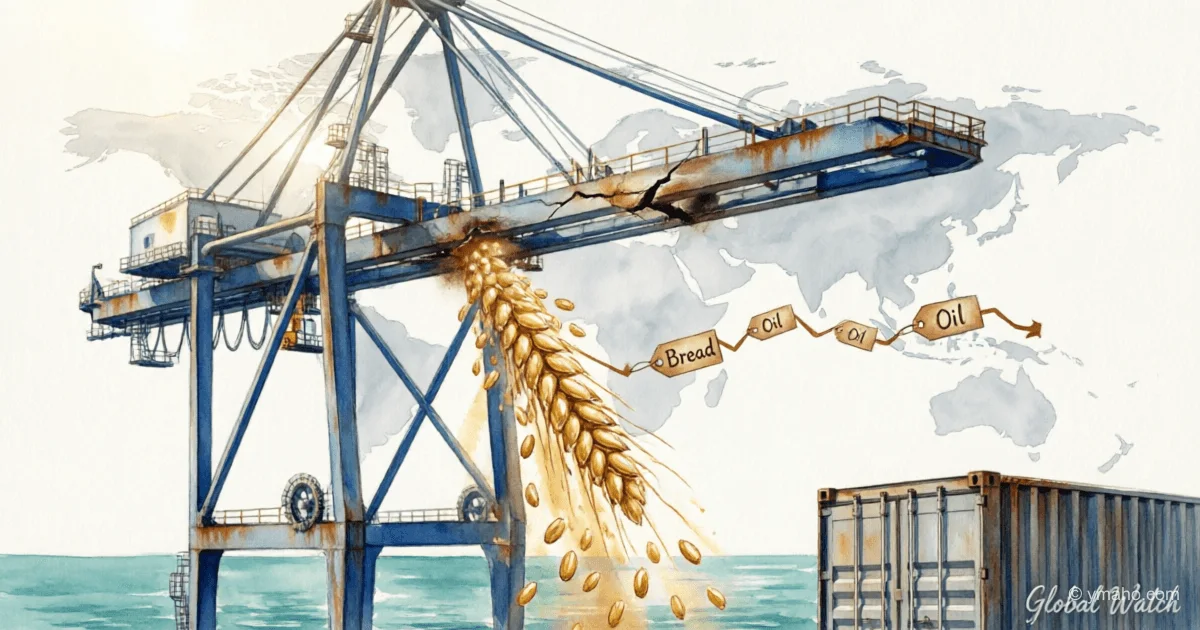
How an Attack on a Ukrainian Port Could Hit Your Wallet
Yesterday, Russian drones struck the port of Odesa. At first glance, it might seem like a localized incident, but it could lead to higher prices for bread and sunflower oil at your local grocery store. Here’s why.
Why Ukrainian Ports Are Your Business
Ukraine supplies nearly a third of the world’s barley, along with significant amounts of wheat and corn. Imagine you run a bakery that feeds ten neighboring towns. If your ovens break down for just one day, there won’t be enough bread for anyone. The same goes for Ukraine: its Black Sea ports are the primary “ovens” supplying the global market. Damage to this infrastructure cuts off shipments, turning grain into a scarce commodity.
In the early hours of April 18, drones hit the port of Odesa. According to Ukrainian authorities, while infrastructure was damaged, there were no casualties. This isn’t the first strike; over the past few months, several key ports have come under fire. Russia is deliberately targeting these “gateways,” which handle a third of global barley exports and a substantial share of wheat.
How It Impacts the Entire World
When Ukrainian ports take a hit, commodity prices soar. Following the March attack on Odesa, wheat prices jumped 5% within a week. Why? Because markets operate like a pump: when supply drops but demand stays steady, prices climb. And demand for grain never really falls—we need it to feed both people and livestock.
Don’t overlook the energy sector either. On the same day, Russian drones targeted power facilities in Chernihiv, leaving 380,000 people without electricity. Ukraine is tightly integrated into Europe’s power grid. Damage to its energy infrastructure could trigger a domino effect: less natural gas exported to Europe → higher fuel costs → increased expenses for transportation and manufacturing.
What Matters
- Ukraine accounts for 10% of global wheat exports and 15% of corn exports
- Black Sea ports handle 90% of these shipments
- A single major strike can drive global bread prices up by 3–5%
- Energy strikes in Ukraine disrupt supply stability across Europe
- Markets typically react to such events within 1–3 days
What Does This Mean for Everyday Consumers?
If attacks on Ukrainian ports continue, expect to see price hikes for bread, pasta, and vegetable oils in the coming weeks. You may also notice fluctuations in fuel prices due to instability in the energy sector. Keep an eye on news from Ukraine—it directly impacts your wallet, even if you live thousands of miles away.
— Editorial Team









