Strike on Tuapse: How an Attack on Russia’s Oil Port Is Reshaping Global Trade Flows
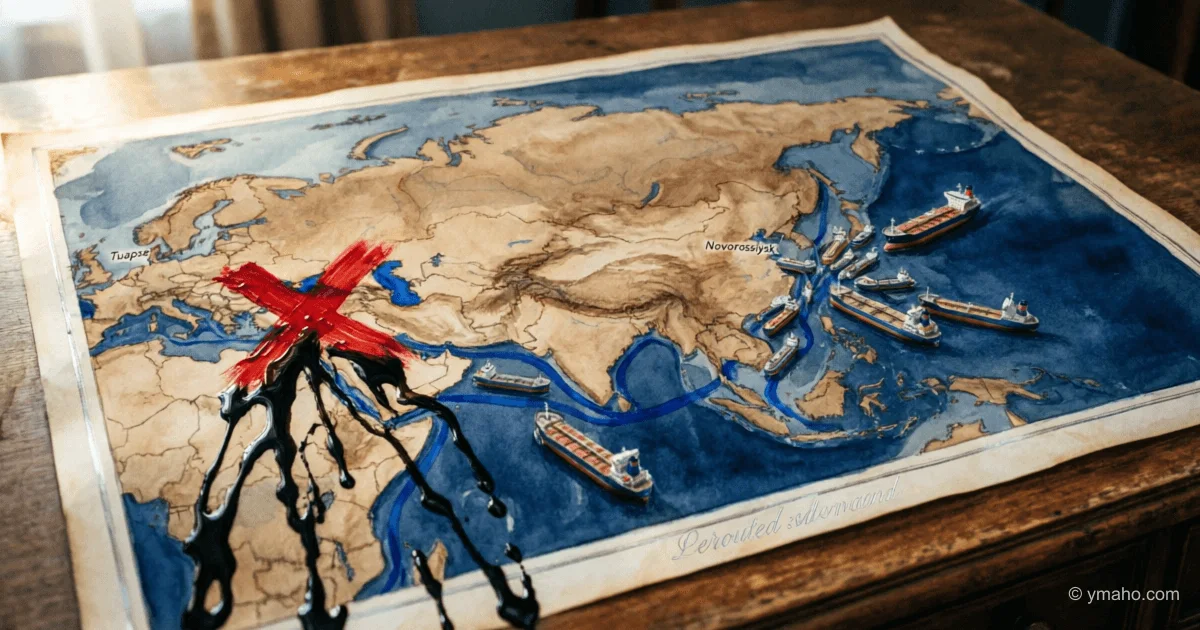
Ukrainian strikes on the key oil terminal in Tuapse didn’t just trigger fires—they instantly rerouted hundreds of commercial vessels across the globe. This event illustrates how a localized military incident can send ripples through the global economy, affecting prices, delivery timelines, and international trade routes.
Shifts in Trade Flows
Immediately after the attack, the number of ships entering Tuapse dropped by half. Instead of their usual activity, vessels began streaming toward Novorossiysk, located roughly 160 kilometers away. In the past 24 hours, Novorossiysk received around 26 ships—20% above its normal volume. The bulk consisted of oil tankers, bulk carriers, and container ships.
This is akin to a major highway between two cities suddenly closing: all vehicles immediately divert to a detour, causing congestion and longer travel times. In maritime trade, such "bottlenecks" lead to extended delivery windows and potentially higher transportation costs.
What Is an Oil Terminal—and Why Does It Matter?
An oil terminal is a specialized port facility where crude oil is transferred from pipelines or tankers to other tankers for shipment to customers worldwide. The Tuapse terminal was part of an integrated complex alongside an oil refinery. Its damage doesn’t just cause a localized fire—it temporarily disrupts Russia’s supply chain for global oil markets.
When such a critical "transshipment node" is compromised, oil physically cannot be shipped to buyers at normal volumes or speeds. This creates a short-term supply shortage—even if oil remains broadly available.
Global Consequences Beyond the War
- Impact on Energy Prices: Any disruption in the logistics of a major supplier like Russia adds uncertainty to global oil and gas markets. Traders and buyers begin factoring in higher delivery risks, which can sustain or push prices upward.
- Changes in Global Trade Routes: Ships originally headed for Tuapse are now rerouted to Novorossiysk or other ports. This alters shipping schedules, concentrates vessel traffic at alternative terminals, and may cause delays in other regions awaiting these cargoes.
- Increased Focus on Infrastructure Security: International companies reliant on shipments through such chokepoints are now reassessing the risks in their logistics chains. This could lead to long-term shifts in how global trade is organized.
Key Takeaways
The main insights from this situation:
- The modern global economy is deeply interconnected. A strike at a single port can trigger operational changes thousands of kilometers away.
- Transportation and energy infrastructure has become not just an economic, but a strategic asset. Its security directly impacts price stability and supply reliability for consumers worldwide.
- Such events underscore that, even in the digital age, physical logistics—the movement of ships, cargo, and oil—remains the foundation of the global market.
What This Means for Ordinary People
In the short term, such events may indirectly affect fuel and commodity prices in various countries due to temporary supply disruptions. In the long term, they compel major corporations to rethink their supply chains, potentially altering the availability and cost of many products in the future. For everyone, it’s a reminder of how fragile and interconnected the system delivering our daily needs truly is.
— Editorial Team









