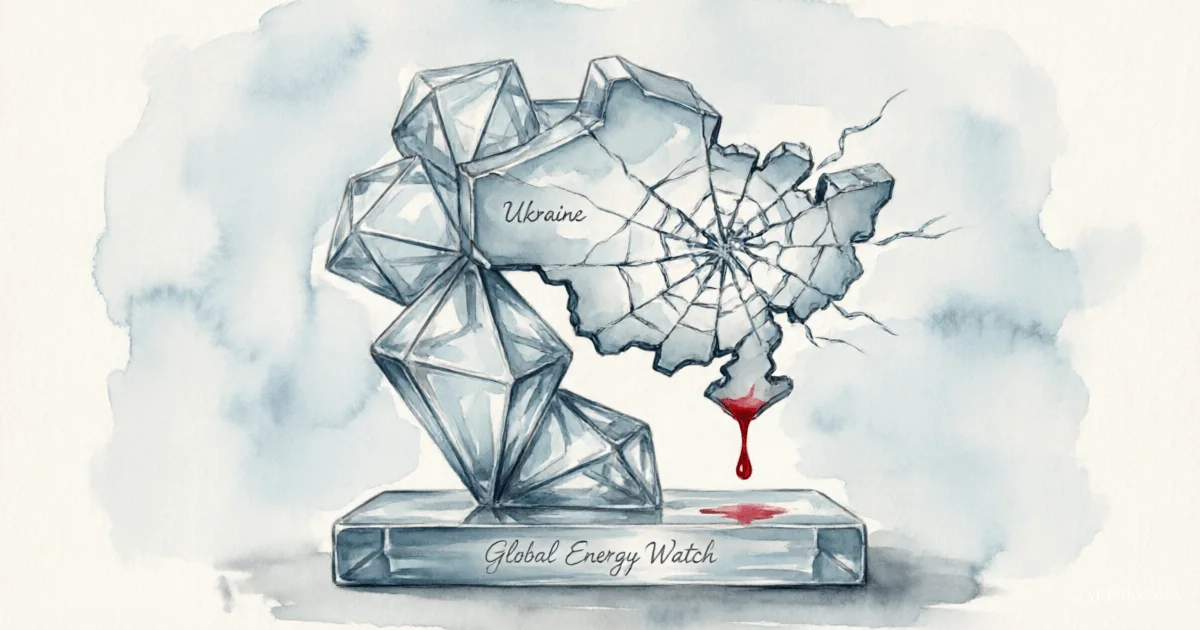
Why Attacks on Ukraine’s Power Grid Are Worrying the Whole World
Early Sunday morning, six regions across Ukraine experienced another round of power outages due to hostile strikes. But this isn’t just a regional issue—every bomb hitting a Ukrainian power plant sends ripples through global energy markets. If you pay for electricity or natural gas, this story hits close to home.
How Local Outages Become a Global Crisis
Imagine Europe’s power grid as one massive, interconnected reservoir. Every country is a drop in that system. When a breach occurs in Ukraine (one corner of the reservoir), water starts draining away. To keep the rest of the system stable, other nations must urgently pump in more resources—meaning they have to buy more natural gas and coal. And that drives up energy costs for everyone.
That’s exactly what’s happening right now. Due to damage inflicted on Ukrainian power facilities:
- Europe is forced to cover its energy shortfall by purchasing liquefied natural gas
- Wholesale electricity prices are climbing even in countries far removed from the conflict
- Investors are recalculating risk profiles for energy projects worldwide
Colder weather in Ukraine is making things worse. As residents turn on heaters, the already compromised grid struggles to handle the surge. It’s like having every kettle and washing machine in your house running simultaneously—the wiring simply can’t cope. That’s why authorities are forced to implement rolling blackouts.
What the “Local” Outage Reports Don’t Tell You
Official statements only list six affected regions: Dnipro, Mykolaiv, Sumy, Kharkiv, Kherson, and Chernihiv. But the fallout from strikes on energy infrastructure extends far beyond Ukraine’s borders.
The reason is simple: Ukraine is integrated into the broader European transmission system, ENTSO-E. Think of it as a giant power strip where every European nation is plugged in. When voltage fluctuations hit one section (Ukraine), the entire continent’s grid stability is put at risk. Just last year, similar surges triggered alerts about potential widespread blackouts in Germany and Poland.
Additionally, Ukraine remains a critical transit route for energy supplies. Even minor disruptions here force Europe to scramble for alternative routes, which always comes at a premium. Picture your daily commute suddenly blocked—you’re left taking a longer detour, burning extra fuel and wasting time.
Key Takeaways
- Energy security is now a global concern: Infrastructure attacks in one nation can destabilize an entire region
- Price hikes aren’t just from sanctions: Physical damage to grids adds a fresh layer of market volatility
- Consumers will foot the bill: Fortifying networks against attacks requires heavy investment, which ultimately gets passed down through higher rates
- The world is reevaluating energy dependence: Nations are rushing to build backup capacity, but those projects will take years to come online
What Does This Mean for Everyday People?
If strikes on energy infrastructure continue, European household utility bills could jump another 10–15%. Even if you live in Asia or the Americas, the global spike in energy costs will inevitably drive up the price of everyday goods. Most importantly, grid vulnerability is no longer a distant problem—it’s a universal one. Modern cyber and kinetic threats can originate from anywhere, and any country could be next.
— Editorial Team









