BABOR Revamps Professional Anti-Aging Skincare Line
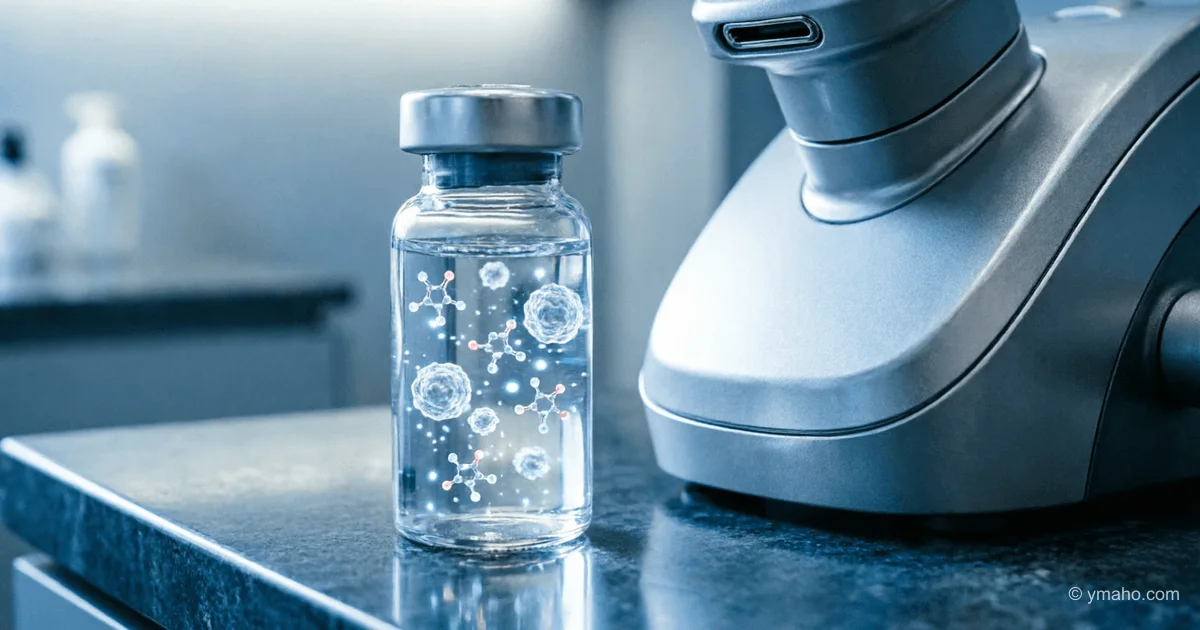
To mark its 70th anniversary, the brand has introduced treatments with exosomes, sirtuins, and coenzyme NAD⁺ for accelerated cellular regeneration. The line, available in clinics and salons, is designed to prep skin for procedures and provide powerful post-procedure recovery.
At first glance, BABOR's launch looks like a technological breakthrough, but I see behind it a clash of two worlds: the old school of professional skincare and the new biotech reality, where a cosmetologist without a biologist on staff risks being left behind.
The Core: What's Really Happening
BABOR isn't just updating its line for the anniversary. The brand is urgently reassembling its expert identity to avoid losing a war on two fronts. On one side, aggressive mass-premium "pharmacy" brands with retinol for $30 are advancing; on the other, luxury boutiques like Biologique Recherche and L'Oréal's luxury sub-brands with exosomes and personalized protocols.
Betting on the triad "exosomes + sirtuins + NAD⁺" is not a random set of trendy molecules. It's a strategic response to a demographic collapse: the 45+ generation no longer wants "just an anti-aging cream"—they're willing to pay for cellular regeneration. But the problem is that this audience has already tried injections and devices. Now a professional brand must prove that its jar works at the same cellular level as a $10,000 salon device.
Timeline and Context
Summer 2024. The global professional skincare market starts to shake. Clinics report a client outflow from expensive course treatments in favor of home devices and "weekend injectables." Insiders at L'Oréal and Clarins note a 40–60% increase in sales of home LED masks and microcurrent devices.
Fall 2025. Biologique Recherche and other niche players begin offering spa protocols with exosomes, explaining to clients that this is "cellular communication." The exosome trend in skincare becomes mainstream in the US and Asia, but Europe is cautious due to regulatory restrictions.
January 2026. BABOR approves the concept for a new launch. The choice falls on sirtuins and NAD⁺—a direct strike into the "skin longevity" niche where startups like OneSkin are already active. BABOR's differentiator is the professional channel: you can't buy this at Sephora, only through a cosmetologist.
May 2026. For its 70th anniversary, the brand presents the line in the professional channel. The focus on pre-procedure skin preparation and post-procedure rehabilitation is an attempt to close the "clinic + home" loop, which until now only medical dermatology brands like SkinCeuticals and ZO Skin Health have successfully implemented.
Who Wins and Who Loses
Winners:
- Salon cosmetologists and dermatologists. BABOR's line gives them an up-sell tool: "You've had the procedure, now take home this NAD⁺ booster to maintain the results." The margin on professional lines for salons is 40–50%; for clients, it's a premium for exclusivity.
- BABOR itself. Dr. Babor holds about 16.54% of the professional skincare market, making it the second-largest player after Dermalogica. Strengthening in the anti-aging segment helps maintain this position and justify the premium price.
- Active ingredient manufacturers—if the exosomes and NAD⁺ in the formula are truly effective and stable, this opens the market for new contracts.
Losers:
- Pharmacy and luxury mass retail brands. They can't replicate this narrative: "clinical recovery" requires professional authority that mass-market products simply don't have.
- Medical cosmeceuticals (SkinMedica, Obagi). These brands have built an "almost a drug" image for decades, but their formulas start to look conservative against BABOR's biotech innovations. The problem is that medical brands can't quickly iterate formulas due to strict internal protocols, while professional cosmetics are more flexible.
What the Media Isn't Saying
First insight: exosomes in cosmetics are a gray regulatory area. In Europe, the use of exosomes in cosmetic products is not fully regulated. If BABOR uses plant-derived exosomes or engineered synthetic analogs, that's one thing. If animal-derived, that's another. The press release uses the phrase "exosomal complex," but what's inside is a big question. That's precisely why the launch goes through the professional channel, where the cosmetologist takes responsibility for application.
Second insight: NAD⁺ in a cream is a marketing challenge. The NAD⁺ molecule is too large to penetrate the stratum corneum without enhancers or encapsulation. Most likely, the formula uses precursors—nicotinamide riboside or nicotinamide mononucleotide—which the skin can use to synthesize its own NAD⁺. But the phrase "contains NAD⁺" sounds more impressive than "contains NAD⁺ precursor."
Forecast: Next 30 Days and 90 Days
30 days. BABOR will start aggressive training of cosmetologists. Expect closed webinars and conferences where doctors are taught how to integrate exosomal care into protocols. Simultaneously, first publications will appear in professional journals (Aesthetic Medicine, Spa Business). The European cosmetic community will begin debating the ethics of using exosomes in skincare.
90 days. Within three months, I expect two events. Competitors in the top 5 (Dermalogica, Guinot) will announce "response" products with cellular technologies to avoid losing positioning. Second, the European regulator (European Commission, DG SANTE) will send initial signals about the need to clarify the status of exosomes in cosmetic products. This could create a window of opportunity for BABOR if the brand manages to stake its claim before regulations tighten.
In the end: BABOR is making a smart move, shifting from the "quality professional cosmetics" niche to the "biotech partner for cosmetologists" niche. But this shift comes with risks. Crossing the line between cosmetics and biohacking always attracts regulator attention. If the brand can prove clinical efficacy and navigate regulatory hurdles, it will establish itself as a pioneer. If not, the costly launch will remain a beautiful anniversary gesture.
— Editorial Team









