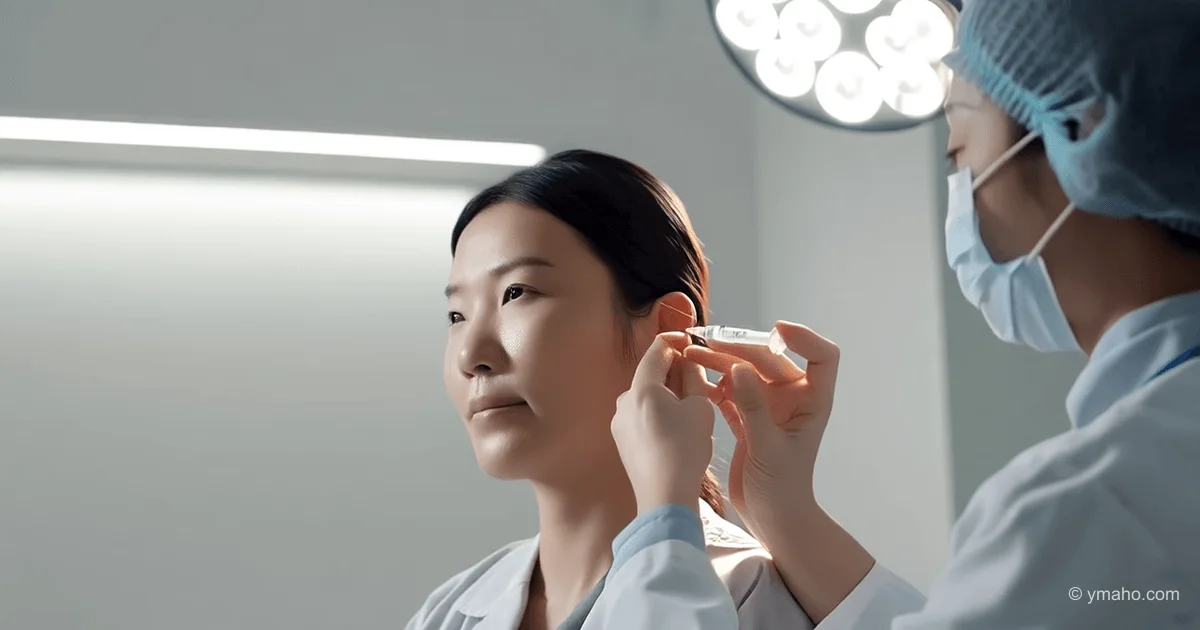
Microdoses of 'Baby Botox' and Natural Plastic Surgery: The Trend Toward Invisible Procedures
In aesthetic medicine, the trend toward 'invisible' interventions has taken hold. Instead of radical plastic surgery, affluent clients prefer micro-injections (20–40 units of Botox instead of 60) and reject overly plump lips and fox-eye lifts.
A quiet revolution in aesthetic medicine: why the $16.79 billion market is rewriting the rules of the game in 2026
What's Really Happening
At first glance, it seems the world has simply grown tired of 'overfilled' faces and has thus switched to 'baby Botox.' But the reality is much harsher: we are witnessing not a shift in aesthetic preferences, but a fundamental redistribution of power in medicine. The aesthetic medicine market will grow from $14.93 billion in 2025 to $16.79 billion in 2026—a 12.5% increase. However, the key lies in where exactly this money is going.
Previously, the industry made money on radical transformations. A client would come in asking for a 'new face,' pay $10,000–$30,000 for comprehensive work, and leave. Now the model has flipped: clients come for 'invisible' procedures every 2–3 months for life, creating a stable, predictable cash flow.
That's why venture capital funds are pouring $25 million into platforms like Moxie, which provide independent practitioners with operational infrastructure—financial analytics, regulatory compliance, inventory management. When such investments enter the industry, it means that 'quiet luxury' is not just a passing trend, but a calculated business model with a planning horizon of decades.
Timeline and Context
The transformation came in waves, each one cutting off part of the old guard.
First wave (2022–2023): Consumer fatigue with 'frozen' faces. Aggressive techniques from the 2010s—lip hypercorrection, complete forehead immobilization—sparked a wave of fear of the 'pillow face' effect. Surgeons report that patients come in asking, 'I don't want to look like I've had anything done.'
Second wave (2024–2025): Technological leap. The emergence of Micro-Botox—a technique of intradermal injection of microscopic doses that does not paralyze the muscle but works on skin texture, pores, and sebum production. Concurrently, biostimulators are developing—products that don't add volume but stimulate the body to produce its own collagen. This completely changes the economics: instead of buying synthetic filler every six months, the client invests in 'biological restoration' that accumulates with each session.
Third wave (2026): Institutionalization of the trend. The American Academy of Facial Plastic and Reconstructive Surgery reports a 20% increase in patients seeking 'subtle, strategic interventions.' Non-invasive procedures account for 80% of all aesthetic procedures. But the key shift is in demographics: 75% of facial plastic surgeons report an increase in requests from clients under 30.
Who Wins and Who Loses
Winners — aggregator platforms and clinic operators that have managed to pivot from a 'transformation conveyor belt' to a 'subscription model of care.' Moxie supports over 700 aesthetic practices that grow 60% faster than the industry average and have 10% higher margins. Each of these clinics saves over $5,000 per month on products and consumables through centralized purchasing.
Winners are biostimulator and peptide manufacturers. While the traditional filler market stagnates, the 'regenerative aesthetics' segment is growing at an accelerated pace. Peptides, exosomes, PDRN (polydeoxyribonucleotide from salmon milk)—these components are becoming the foundation for 'tweakments' that clients repeat for years.
Winners are specialist doctors who can work with micro-injection techniques. Baby Botox is a more complex procedure than standard injection. Less product means less margin for error; it requires surgical precision. This creates a barrier to entry, weeding out low-skilled injectors.
Losers — traditional plastic surgeons who built their business on aggressive transformations. Demand for radical rhinoplasty, skin-tightening lifts, and filler hypercorrection is declining. The 2026 client asks for the 'well-rested look,' not a new face.
Losers are beauty salons without a medical license. The trend toward Micro-Botox, SkinTox, and exosomes requires clinical education, FDA certification, and access to prescription drugs. Estimates suggest that up to 30% of new medspas close within 18–24 months because their owners don't know how to manage profits and comply with regulations.
What the Media Isn't Saying
Insight: 'Baby Botox' is not a dose reduction but a fundamentally different business model that turns the patient into a lifelong subscriber.
Baby Botox at a dosage of 20–40 units instead of 60 costs the client less per session. But—and this is the key 'but'—because of the lower dose, it metabolizes faster. Standard injections last 3–4 months; Baby Botox requires correction every 2 months. Over a year, the client makes 6 visits instead of 3–4. At $400 per procedure, that's $2,400 per year versus $1,400 for the standard approach. The economics favor 'invisible' procedures.
This is the same model as subscription software: lower entry threshold, higher touch frequency, greater customer lifetime value. Venture capital funds investing $25 million in platforms like Moxie understand this better than anyone.
Insight number two: The market is splitting into 'preventive aesthetics' for Gen Z and 'restorative' for older clients.
75% of facial plastic surgeons report an increase in requests from patients under 30. But this doesn't mean young clients come for 'rejuvenation.' They come for preventive 'freezing': start at 25–28 to look 30 at 40. Medspa medical directors note that clients now 'plan monthly visits like routine teeth cleaning.'
For the older age group (40+), the same technology is marketed differently: not 'stop aging' but 'restore skin health.' SkinTox—microdoses of botulinum toxin to tighten pores, reduce redness in rosacea, and control oiliness—transforms botulinum therapy from an 'anti-wrinkle treatment' into a 'skin quality treatment.' This radically expands the addressable market.
Insight number three: The term 'prejuvenation' is dead, replaced by a 'wellness approach with internal and external tweakments.'
Experts note that the trendy word 'prejuvenation' from 2023–2025 has virtually disappeared from use by 2026. Clients no longer perceive it as a separate concept. Now it's simply 'preventive health': hormone therapy, gut health, peptide integration—all bundled with microdoses of neuromodulators. The line between wellness and aesthetics has dissolved completely.
Forecast
Next 30 days (through mid-June 2026):
Expect announcements from large medspa chains about launching 'wellness packages' combining internal and external therapy: hormone analysis + SkinTox + nutraceuticals in one subscription. Exosome and PDRN manufacturers will intensify efforts to obtain FDA approval—these components are not yet certified, but demand is growing exponentially.
Simultaneously, expect a wave of exposés about 'underground Micro-Botox': as the technique's popularity grows, an influx of unqualified practitioners working without proper training is inevitable. Negative reviews of 'burned brows' and 'droopy eyelids' from inept micro-injections may temporarily slow the trend in the mid-price segment.
Next 90 days (through mid-August 2026):
By the end of summer, the market will see an M&A deal: one of the major players (Allergan/AbbVie, Merz, or Galderma) will acquire a biotech startup developing transdermal peptide patches. The reason is that injections as a delivery method remain the main barrier to mass adoption. Microneedle patches are an alternative that could scale 'invisible tweakments' to an audience that would never go for injections.
Key risk: the emergence of a 'gray zone' between cosmetology and medicine. Micro-Botox and SkinTox technically don't require the same qualification as standard injections. But with intradermal injection, the cost of a medical error is higher. Expect tighter regulation in certain US states and EU countries—and that's good for the industry in the long run.
Strategic conclusion: by August 2026, 'quiet luxury' in aesthetics will cease to be an option and become the standard. A clinic that doesn't offer Micro-Botox, SkinTox, biostimulators, and peptide protocols will look like a restaurant without a vegetarian menu. The paradox is that 'invisible' aesthetics requires the highest qualification—and that will make the market more professional, shutting down thousands of incompetent practices that built their business on aggressive transformations.
— Editorial Team









