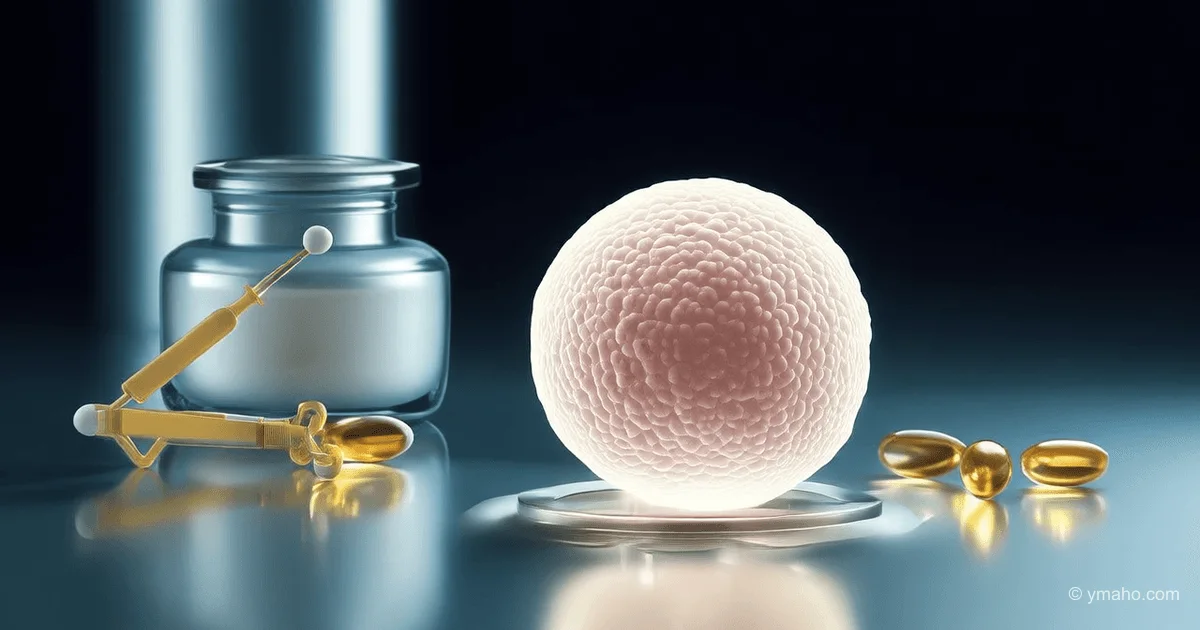
Beauty Optimizers: Where Aesthetics Meets Biohacking and Cellular Health
In 2026, a new type of consumer emerged—the "optimizers." They don't just apply makeup; they blend premium skincare with clinical procedures and longevity supplements. For them, beauty is neuroscience and inner well-being, not just luxury packaging.
When Beauty Goes Beyond Skin Deep: 15 Million Americans Rewrote the Rules in 2026
15 million American adults no longer buy cosmetics—they program them. BCG and Women's Wear Daily surveyed 5,000 consumers in April 2026 and identified a shift that breaks the traditional "cream-serum-foundation" routine: a new segment analysts call "optimizers." These individuals spend an average of $3,000 per year, spreading it across three realms simultaneously—classic skincare, aesthetic procedures, and longevity supplements. They see no boundary between a retinol jar, an IPL therapy session, and NAD+ for breakfast.
6% of the Population Set to Disrupt a $30 Billion Market
"Optimizers" are not wealthy idlers dabbling in biohacking. They represent about 6% of the U.S. adult population. But their share of spending is disproportionately huge. If this segment doubles—and trends suggest it will—the industry will gain an additional $30 billion. The beauty market was already worth $498 billion in 2025 and is projected to reach nearly $800 billion by 2035. Optimizers are the fuel for this acceleration.
Jenny Fine, editor-in-chief of Beauty Inc and WWD, describes the phenomenon: "Skincare, makeup, and hair are still the anchor of routines, but consumers are layering on procedures, wellness, and longevity-focused solutions." The key word is "layering." No one is giving up foundation. They simply add a course of microneedling RF lifting and a jar of NMN.
Ozempic Face and a Tectonic Shift in Demand
About 30% of optimizers have taken GLP-1 drugs in the past 12 months—the same class of weight-loss medications that created the "Ozempic face" problem. Skin can't keep up with rapid volume loss and sags. This isn't age-related decline—it's a mechanical effect that cosmetics can't fix. Fillers, laser lifts, and device-based tightening do.
BCG's findings are stark: nearly 80% of those who experienced sagging after GLP-1 use sharply increased spending on injectables and contouring. These patients come to dermatologists not for "anti-aging" but for facial architectural restructuring. And this is just one driver. Simultaneously, demand is rising for solutions that work at the cellular level, preventing tissue degradation before it becomes visible.
No More Silos: The Market Breaks Down Barriers
70% of optimizers consider aesthetic procedures a regular part of their beauty regimen. But procedures don't replace traditional skincare—they enhance it. 70% invest in premium or medical-grade cosmetics, and 50% add new steps to their daily routine to prolong the effects of clinical interventions. The line between pharmacy, dermatologist's office, and serum bottle is blurring completely.
Cymbiotika's deal with Ulta Beauty is telling. This science-backed wellness brand enters the largest U.S. beauty retailer with NAD+ as its flagship product—in a cosmetics store, not a pharmacy. Consumers want to pick up "longevity in capsules" where they buy highlighter. Another sign: Tru Niagen, known for its NAD+-boosting supplements, launched Tru Niagen Beauty in November 2025, targeting skin firmness, hydration, and nail health. Dr. Andrew Shao, senior vice president at Niagen Bioscience, states: "Most beauty supplements focus on surface-level results, but we start at the source—cellular health."
AI Consultants and the Death of Blind Trust in Influencers
Optimizers gather information from everywhere but trust very few. Social media and influencers still work at the discovery stage—about 40% learn about new products through them. But when it comes to purchase decisions, social media falls short: only one in twenty optimizers considers them a trustworthy source. Decisions are made through doctors, clinical data, and brand scientific validation.
Enter artificial intelligence. 75% of optimizers already use AI to find and compare beauty solutions, and one in four calls it their primary information source. Male optimizers turn to AI for building personalized routines nearly three times more often than women—40% versus about 15%. Brands are responding swiftly: Coty partnered with Pencil for generative AI marketing, and Brenntag distributes an AI platform for R&D from Shinehigh.
The danger lies in overpromising. Seren Canal Aruoba from BRG warns: if AI-generated visuals promise results consumers can't achieve, there are risks of misleading advertising claims.
Who Loses and Who Wins Big
Losing are hollow brands. Influencer labels without clinical studies, "clean beauty" without evidence, vague promises of "glow"—all are losing ground. 75% of consumers prefer products with clinical proof and scientific backing. Claiming a "patented formula" without peer-reviewed publications is no longer enough.
On the rise are companies operating at the intersection. Ingredient suppliers have already caught the trend: in April 2026, Grant Industries and BCR introduced Bakuchiol NAD+ BCR—a hybrid of bakuchiol and niacin targeting both visible signs of aging and NAD+ cellular pathway restoration. Retailers like Ulta are building entire wellness sections. Nutraceutical manufacturers are entering beauty chains. Boundaries are crumbling, and the winners are those who stake claims across multiple territories.
AI, Biotech, and the End of "Just Cosmetics"
The forecast for the remainder of 2026 and beyond is category collapse. "Optimizer" will cease to be a niche segment and simply become "consumer." Statistics from adjacent fields confirm the trend: on Amazon, searches for NAD+ surged 7,904% year-over-year, and PDRN by 4,230%. Digestive supplements linked to skin beauty grew 51%, and those linked to hormones grew 193%. Gut health, brain activity, emotional regulation—all are becoming beauty topics.
Emily Safian-Demers, vice president of consumer insights at Front Row, sums it up bluntly: "Consumers aren't looking for promises—they want proof, relevance, and measurable results. Scientific credibility is the foundation of trust." A beauty brand that doesn't speak the language of clinical data will lose its audience in two to three years. Those that have rebuilt their lines around proven effects on cellular aging mechanisms will earn loyalty that can't be bought with ad placements. The stakes: $30 billion and the right to define beauty in a world where self-care is indistinguishable from preventive medicine.
— Editorial Team









