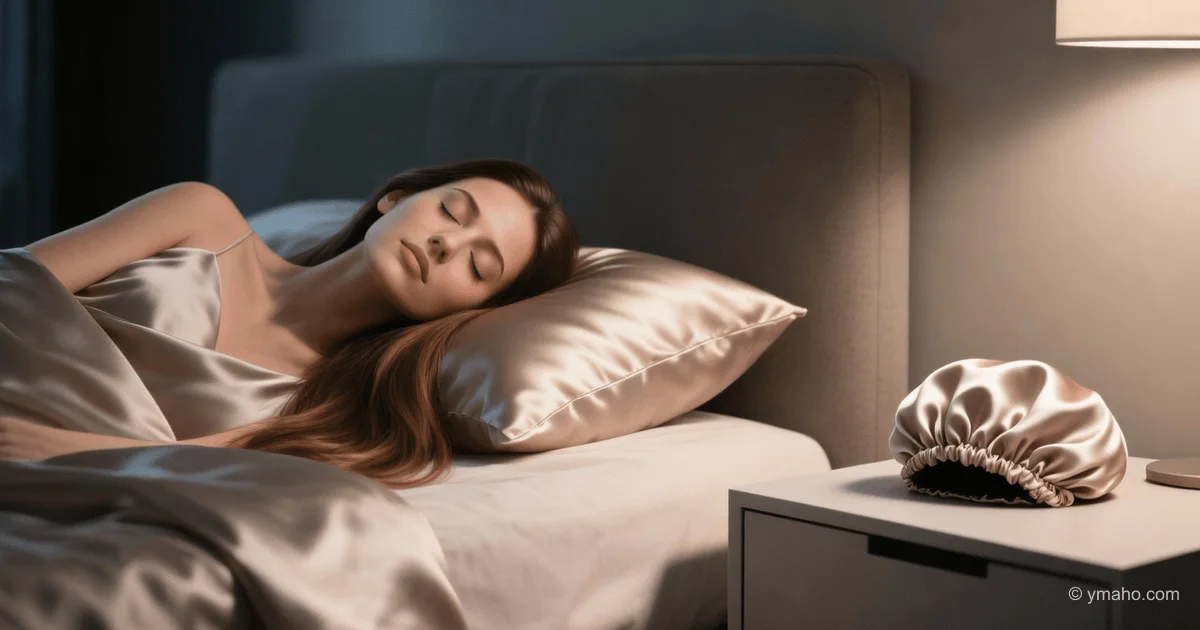
Bedtime Rituals: How to Properly Style Your Hair at Night Without Damaging Your Scalp
Trichology experts recommend avoiding tight hairstyles and switching to "soft" nighttime styling using silk accessories and loose braiding. This allows the scalp to breathe and regenerate, preventing brittleness and hair loss during sleep.
The Gist: What's Really Happening
The sleep market is becoming the main battleground for hair. What was once called "evening care" and limited to face cream is now evolving into a full-fledged nighttime haircare industry with a scientific foundation, patented accessories, and clinical data. The global "beauty pillowcases" market is valued at $964.84 million in 2024, with a projected growth to $1.38 billion by 2030 at a CAGR of 6.11%. This is not a niche segment—it's an independent category growing faster than many traditional beauty sectors.
Nighttime hair care is no longer "grandma's advice" but a science-backed ritual. Professional stylists like Leonardo Rocco state outright: many problems brought into the salon are the result of improper nighttime care. A 2026 BlueSky analytical report notes that sleep science and nighttime routines are moving from optional to essential; circadian rhythms and "beauty sleep" are becoming care standards.
Insider insight: 8 hours of sleep is a third of your life, and the beauty industry is only now starting to monetize this time. The reason for the delay is simple: there were no tools to measure nighttime care. Now they exist—and the market is catching up at an accelerated pace, turning the pillow into a beauty gadget.
Timeline and Context
2024. The beauty pillowcases market reaches $964.84 million. The Asia-Pacific region becomes the largest market, with online channels as the fastest-growing segment.
January 2026. A study published in the journal Life reveals that the scalp microbiome of young women is directly linked to lifestyle—stress, lack of sleep, and a high-sugar diet alter the Malassezia population.
March 2026. Twincraft Skincare publishes a review of hair care trends: "time-conscious routines" and "overnight formats" are the key trends of the year; consumers demand quick solutions that work while they sleep.
March 2026. Wujiang First Textile publishes an analysis: silk bonnets are a must-have accessory for 2026; demand is growing from retailers, salons, and end consumers alike.
May 2026. Here we are. Nighttime haircare is no longer advice—it's a product category with a measurable market, scientific publications, and its own supply chain.
Who Wins and Who Loses
Winners:
- Manufacturers of silk and satin accessories. The pillowcases market is nearly a billion USD in 2024 with steady growth through 2030. Add bonnets, scrunchies, scarves—the category is expanding.
- Brands of overnight formats. Masks, serums, leave-in treatments for nighttime use—products claiming 6–8 hours of effectiveness.
- Salon chains selling accessories. A silk bonnet with a salon logo is a low-risk item with high perceived value for client retention.
- Producers of bioengineered silk and eco-friendly alternatives. Demand for sustainability is rising; organic silk and peace silk are becoming the premium segment standard.
Losers:
- Cotton and synthetic pillowcases. Cotton absorbs moisture and creates friction. Once consumers learn the difference, there's no going back.
- Brands without a "nighttime" SKU. If a brand lacks a product tied to sleep, it misses 8 hours of daily contact with the customer.
- Tight hair accessories. Pulling at the roots causes traction hair loss—experts already call it a preventable cause of hair loss.
What the Media Isn't Saying
1. The scalp microbiome is disrupted during sleep—and that's a scientific fact, not a scare tactic.
A 2026 study by Guo et al. shows that lack of sleep and high stress alter the Malassezia population on the scalp. This isn't a "feeling"—it's a measurable microbiome shift. Nighttime care isn't aesthetics; it's microbiome management.
2. Silk isn't a "luxury"—it's an engineering solution.
Silk's smooth surface reduces friction, its hydrophobic properties retain natural oils and leave-in treatments on the hair, and its thermoregulation stabilizes the scalp microclimate. This is physics and materials science, not marketing.
3. Bonnets are moving from the bedroom to streetwear—the boundary between "home" and "public" is disappearing.
Silk bonnets are becoming a visible accessory: morning routine content, street fashion, designer collaborations. Nighttime care is turning into a lifestyle statement.
4. Sleeping on your back is the safest option, but no one talks about it.
Professionals acknowledge that back sleeping minimizes hair friction against the pillow. But the industry doesn't actively promote it—it's easier to sell a pillowcase than to change a sleep habit.
5. Overnight is a test of a product's real effectiveness.
If a formula can work for 6–8 hours without reapplication, it truly works. The overnight format becomes the ultimate proof of efficacy for haircare. Products that can't be used overnight will eventually lose out.
Forecast: Next 30 Days and 90 Days
30 days (by June 8, 2026)
A major mass-market retailer (Target or Boots) will dedicate a separate "Sleep Haircare" zone—silk pillowcases, bonnets, and overnight products in one place. The first DTC brand will launch a "night hair ritual" subscription with monthly delivery of a bonnet and serum.
90 days (by August 7, 2026)
The first "Smart Silk Bonnet" will appear—an accessory with a thermal sensor and Bluetooth, tracking sleep quality and scalp microclimate. Sephora will launch a "Beauty Sleep" category in its app—a separate section for nighttime care products. A scientific publication directly comparing cotton, satin, and silk in terms of hair breakage will go viral on TikTok.
The main signal by August: if a major salon brand releases a branded silk bonnet, the category will definitively move from DIY to professional haircare, and the window of opportunity for independent players will begin to close.
— Editorial Team









