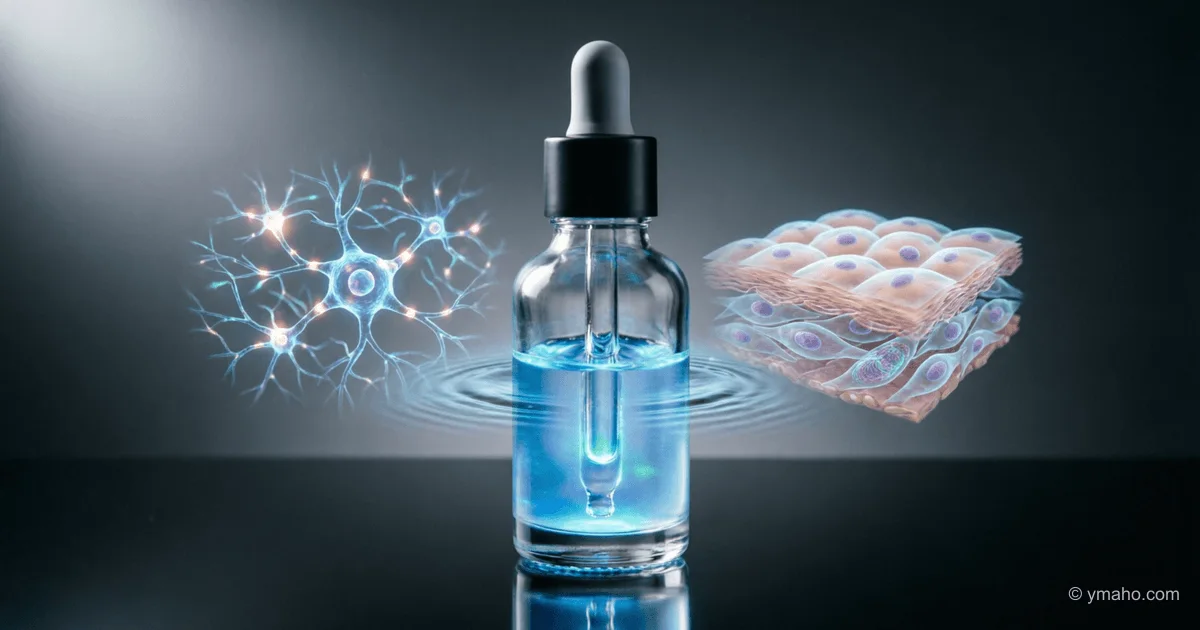
Biotechnology and Psychodermatology — The Key Trends in Cosmetics
Biotechnology is replacing simple plant extracts, and at the intersection of dermatology and psychiatry, the field of 'psychodermatology' (cosmetics with neuro-effects) is developing. Also trending is multifunctional decorative cosmetics with skincare properties.
Biotechnology and Psychodermatology: How Neuroscience and New Technologies Are Rewriting the Rules of the Beauty Industry
Introduction
Just a few years ago, skincare was built around a simple formula: plant extracts plus hydration. Today, forces of a completely different order are taking the stage. The beauty industry is undergoing a fundamental transformation: empirical recipes are being replaced by laboratory innovations, and cosmetics are no longer just a means to improve appearance — they are becoming a tool for managing the state of the nervous system. The two main trends of 2026 — biotechnology and psychodermatology — are changing the very philosophy of the beauty market, blurring the lines between cosmetics, medicine, and neurobiology.
Biotechnology is replacing plant extracts, offering fermented ingredients produced in laboratories with controlled purity. And at the intersection of dermatology and psychiatry, the field of 'psychodermatology' is developing — cosmetics with neuro-effects capable of influencing emotional state through the skin. Complementing the picture is the trend toward multifunctional decorative cosmetics with skincare properties, which responds to consumer demand for time savings and conscious consumption. Our article explores how these directions are shaping the future of the industry.
Event Details and Timeline
The formation of new trends did not happen overnight. Their roots go back to 2020–2021, when the COVID-19 pandemic heightened attention to health and well-being, and also triggered a boom in 'home beauty practices.' It was then that consumers began to take a mass interest not just in the effectiveness of cosmetics, but also in their impact on psycho-emotional state.
By 2023, the first mentions of neurocosmetics — products that affect the skin through the nervous system — appeared on the market. At that time, this direction was perceived more as marketing exoticism, but by the end of the year, major players began investing in research on the 'skin-brain' axis.
2024 was a turning point. As U magazine writes, 'the past year looks extremely fresh and pleases with news.' It turned out that fermented biotechnological extracts work even better than their 'natural' predecessors, and their production in the laboratory allows for controlled purity and independence from weather and environmental factors.
By 2025–2026, both trends had finally taken shape. Psychodermatology emerged from the shadow of experimental practices: according to ReachMD, neurocosmetics represent 'a new fusion of neuroscience, dermatology, and emotional well-being,' affecting the 'skin-brain' axis through neurotransmitters and neuroactive ingredients. All major companies have already invested in biotechnology startups, and 2026 promises to be a time of boom for the latest developments, backed by scientific research results.
In parallel, the trend toward multifunctional decorative cosmetics is developing. Tinted moisturizers with skincare effects, mascaras that stimulate lash growth, eyeshadows that care for the delicate eyelid skin — these are no longer futuristic concepts, but a reality appearing on shelves.
Impact and Significance (for the World / Industry / Society)
The transformation of the beauty industry toward biotechnology and psychodermatology has far-reaching consequences for all market participants.
For the beauty industry, this means a paradigm shift in production. As buro247 notes, 'if earlier beauty innovations were measured by new textures and ingredients, today we are talking about scientific discoveries and technologies.' Terms previously heard only in the medical field have firmly entered the lexicon of brands: exosomes, PDRN, next-generation peptides, senolytics. According to McKinsey & Company, the biotechnology market in beauty shows annual growth of over 8–10%.
Psychodermatology, on the other hand, opens up a completely new category of products — cosmetics that work not only at the skin level but also at the emotional level. As explained in a scientific publication by MDPI, neurocosmetics 'explores and creates topical products designed to interact with the skin's sensory system, modulate neuroimmune signals, and influence psychophysiological states.' This allows simultaneously addressing dermatological issues (sensitivity, inflammation, premature aging) and psychological ones (stress, anxiety, low self-esteem).
For society, these trends mean a deeper understanding of the connection between physical and mental health. As ReachMD writes, neurocosmetics 'goes beyond surface-level issues, leveraging the deep connections between our skin, our mind, and our relationships with others.' In one clinical study, 86% of participants reported increased self-confidence after using products that affect the skin's oxytocin pathways.
However, there is also a downside. Experts warn of the risk of 'science-washing' — using complex terminology without a real evidence base. 'The story with plant exosomes is a good example of how marketing distorts meaning. Essentially, these are exosome-like structures that cannot work the same way as human ones,' notes Elena Vaevskaya, an international expert in regenerative medicine.
For consumers, the main change is the transition from 'feel-based' care to data-driven care. The trend toward multifunctionality reflects a demand for simplification: people no longer want to spend time on multi-step routines and prefer '2-in-1' and '3-in-1' products. This is also linked to growing fatigue from overconsumption and a desire for a more conscious approach to beauty.
Reaction of Key Players
Major cosmetic corporations and independent brands have actively joined the race for leadership in new categories.
Shiseido became one of the pioneers of psychodermatology by launching 'Stress G Harmonizer' — a mood spray that neutralizes volatile compounds released by the skin in a state of stress. The product interrupts the negative 'smell-emotion' feedback loop, improving emotional state.
Lucas Meyer Cosmetics (Clariant) developed the ingredient GlowCytocin based on white hyacinth bulb extract, which activates oxytocin receptors in the skin. Clinical data show increased fibroblast proliferation and improved perceived well-being.
Ashland introduced Caressense — a phyto-fermented jasmine flower extract that activates PIEZO ion channels in the skin, promoting oxytocin release. Claimed effects include instant soothing and long-term anti-aging support.
In the biotechnology segment, high activity is also observed. The brand Dr. Barbara Sturm released the exosome serum Exoso-Metic Face Serum, using plant and lab-synthesized exosomes. And the brand Replere, led by Dr. Debbie Palmer, focuses on oxidative stress as a trigger for psychodermatological reactions, using coffee berry extract and antioxidant complexes.
As for decorative cosmetics with skincare properties, the mass market and premium segment are leading. For example, Clarins in its summer collection Cryo Collection 2026 presented a bronzing powder with coconut oil, white tea extract, and lampasana, as well as a lip balm with Matrixyl 3000 peptides and menthol cooling. These products not only decorate but also actively care for the skin, providing hydration, protection, and anti-aging effects.
Analysts note that investments in biotechnology have become a strategic priority for all major players, and consumer scientific literacy has turned from an option into a necessity.
Forecast and Conclusions
The next 2–3 years will be a time of final institutionalization of biotechnology and psychodermatology in the beauty industry.
First, the gap will widen between brands with a real scientific base and those engaged in 'science-washing' (simulating scientificity). Consumers, especially Generation Z, are already demonstrating high ingredient literacy. As noted in a Front Row study, 'consumers are looking not for promises, but for evidence, relevance, and measurable results. Scientific credibility is the foundation of trust.'
Second, psychodermatology will move beyond niche products and become mainstream. Current scientific research already confirms the effectiveness of some neurocosmetic ingredients. However, as the authors of the MDPI publication warn, 'current data do not support the notion that cosmeceuticals can directly modulate emotional state through topical application, since the coexistence of cosmeceutical and psychobiotic properties in a single probiotic strain is both unusual and highly specific.' This means the industry has a lot of work ahead in standardizing and validating claims.
Third, the trend toward multifunctionality will continue and intensify. Consumers are increasingly abandoning 10-step routines in favor of 2–3 products that solve multiple tasks at once. As Net-a-Porter writes, 'people want fewer products that do more. Formulas with active ingredients backed by data, in elegant, easy-to-use products are winning because they fit into real life.'
Main conclusion: the beauty industry is finally moving from the realm of marketing promises into the space of evidence-based science. Biotechnology offers solutions at the cellular level, psychodermatology links beauty to mental health, and multifunctionality makes this progress accessible and convenient. The future of cosmetics is not about fighting signs of aging, but about supporting skin health as an organ closely connected to the entire body and mind. Those brands that can offer not just a beautiful story, but real scientific value and measurable results, will become the leaders of the new era.
— Editorial Team









