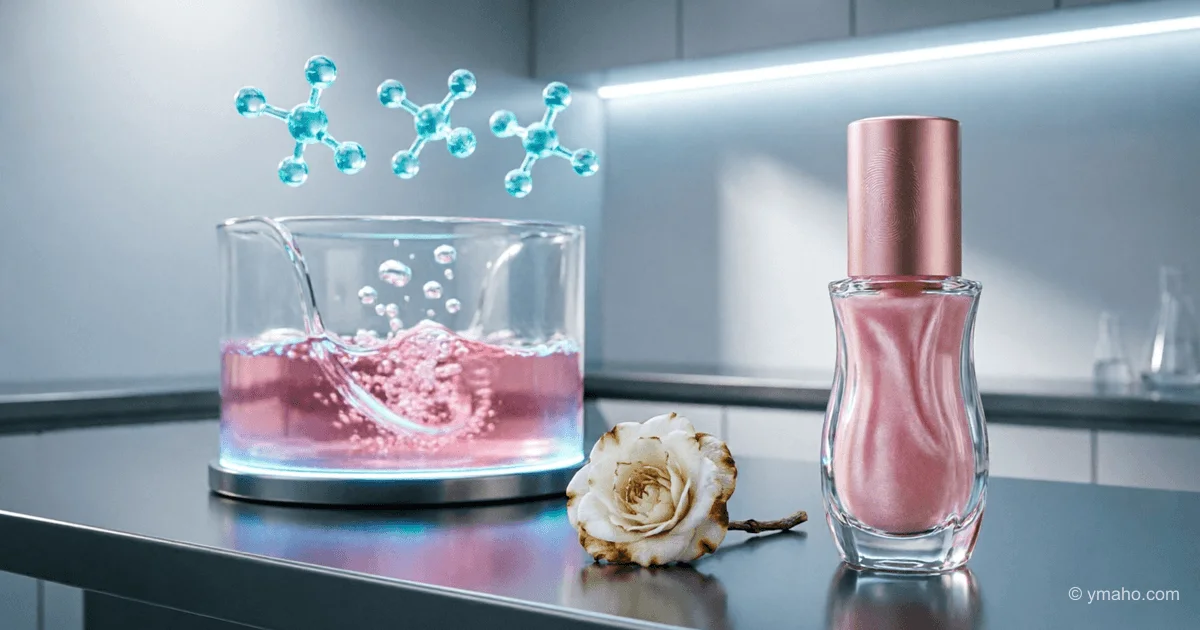
Biotech vs. Nature: Fermented Extracts at Their Peak
The trend toward natural extracts is evolving into biotechnology. Fermented ingredients created in the lab are proving more effective than their natural counterparts and are independent of environmental factors. Major corporations are actively investing in biotech startups.
Here is an in-depth analytical article based on the provided news and the global trend of biotechnology development in the beauty industry.
Biotech vs. Nature: How Fermented Extracts Kill the 'Natural Myth' and Rewrite the Rules of Cosmetology
Introduction
For decades, the beauty industry was built on a dichotomy: 'natural = safe and beneficial,' while 'synthetic = harmful and aggressive.' But in 2026, this postulate is crumbling under the onslaught of biotechnology. The trend toward fermented ingredients grown in laboratory reactors, rather than harvested from fields or the wild, is becoming the main beauty challenge. It turns out that what humans create using microorganisms and precise science can be not just an alternative to nature, but a superior version.
Key metamorphosis: ginseng extract obtained traditionally is inferior in effectiveness to its biotechnological counterpart synthesized by yeast in a sterile environment. Such ingredients are not dependent on harvest, climate, pesticides, and do not deplete natural resources. The largest cosmetic corporations have already poured billions of dollars into biotech startups, realizing that the future lies not in gathering herbs, but in fermentation in test tubes.
Consumers, tired of the dubious effectiveness of 'chamomile extract from dew-kissed fields,' are ready to hear a new story. A story about how bacteria and enzymes work for the skin's benefit more precisely than nature itself.
Event Details and Timeline
The biotech revolution in cosmetics did not happen overnight. It was a gradual but accelerating process that is now entering a decisive phase.
2015–2018 — First Steps. Isolated startups in Korea and Japan (regions where fermentation is a cultural code) begin offering serums with fermented rosehip and soy. This is perceived as exotic for geeks.
2019–2021 — Proof of Concept. Studies show that fermentation breaks down large molecules of active ingredients into smaller ones, increasing their bioavailability by 3-5 times. For example, the molecular weight of hyaluronic acid after fermentation decreases from 1.5 million Da to 50-300 thousand Da, allowing it to penetrate deeper into the skin. At the same time, climate crises (poor harvests of argan, lavender, rose) drive up prices for natural raw materials.
2022–2024 — Major Investments. L'Oréal, Estée Lauder, and Shiseido create their own biotech divisions. The term 'precision fermentation' for cosmetics emerges. Swiss startup Evolva synthesizes vanillin from yeast and tests fermented squalane (previously sourced from shark liver).
2025–2026 — Peak and Commercialization. Cosmetics with fermented extracts enter the mass market. The main stars of the market: fermented resveratrol (antioxidant, tens of times more powerful than vitamin C), exosomes from fermented bacteria (nanoparticles for active delivery), and bio-synthesized collagen (no risk of bovine spongiform encephalopathy and perfect compatibility with human collagen).
Key trigger in 2026: a UN report showing that traditional cultivation of cosmetic plants (palm oil, shea, cocoa) destroyed 15% of tropical forests over the past 20 years. Biotech emerges not just as a trendy fad, but as an ethical imperative.
Impact and Significance
For the world: Precision fermentation technology removes the cosmetic industry's dependence on agriculture and wild harvesting. This is especially important for endangered species (sandalwood, some orchids). Additionally, biotech allows ingredients to be produced locally, in any country, without being tied to climate zones. Energy costs for fermentation are 40% lower than for growing and transporting natural raw materials.
For the industry: A paradigm shift is occurring. Marketing stories about 'hand-picking in Provence' lose value. They are replaced by scientific publications about bacterial strains and purity indicators. Cosmetics become more like pharmaceuticals: strict control, reproducible results, no batch variations (the 2025 harvest may differ from the 2026 harvest; biotech always yields the same product). This attracts investors with tech backgrounds and washes out artisanal 'natural' brands unable to ensure chemical consistency.
For society: A new contradiction emerges—'bioethics vs. nature ethics.' Conservative consumers raised on the slogan 'chemicals are evil' experience cognitive dissonance. How can a lab product be more beneficial than field herbs? The battle moves to social media, where zoomers raised on popular science mock 'natural fanatics' buying expired oils. A new subculture forms—'bio-rationalists' who choose lab ingredients for environmental and efficacy reasons.
Reactions of Key Players
The market has clearly split into camps, and this divide has become the hottest in the industry.
1. Transnational Giants — Main Drivers (L'Oréal, Estée Lauder, Unilever): They are buying up biotech startups by the dozens. In 2025, L'Oréal announced a $100 million investment in the American company Debut, which creates fermented flavonoids and peptides. Estée Lauder signed an exclusive agreement with Swedish MycoWorks to use fermented mycelium for packaging. These companies launch 'Bio-Tech Future' lines with transparent formulas, where each ingredient is listed alongside its lab producer strain.
2. Traditional 'Natural' Brands (Weleda, Dr. Hauschka, Natura Siberica): They are in an identity crisis. They cannot abandon their positioning, but they also cannot ignore the effectiveness of biotech. Compromise: 'enhanced natural cosmetics'—70% natural extracts + 30% fermented biotech components to boost penetration. Labeling changes from '100% natural' to 'natural and intelligent.'
3. Asian Brands (Sulwhasoo, SK-II, Cosrx): They have a historical advantage. They have used fermented ingredients for decades (from the famous yeast filtrate Pitera to fermented red ginseng). Now Asian cosmetics are more relevant than ever, and exports to Europe and the US grew by 40% in 2025.
4. Russian Market: Biotech is still poorly represented here, but interesting players are emerging. The laboratory 'BioMimetix' produces serums with fermented birch (high betulin content). The company 'Alpika' has started testing fermented kelp. However, the lack of own bioreactor capacity hinders scaling.
Forecast and Conclusions
The next 3-5 years will be pivotal for the entire beauty industry. Biotech will inevitably displace the 'raw material model' of natural cosmetics.
Forecasts for 2027–2029:
- Disappearance of 'natural' labeling as a premium attribute. Value will be determined by the percentage of biotech engineering. Categories 'wild-grown' (for nostalgics) and 'lab-grown' (for progressives) will emerge.
- Lab squalane will replace shark and olive squalane. Bio-synthesized squalane (from yeast) will become 60% cheaper and become the standard in moisturizing creams.
- Personalized fermentation. Smart devices will analyze the user's skin microbiome, and pharmacy chains will start printing cream 'right now'—using yeast strains adapted to your microflora.
- Regulatory challenge. There will be a need to legally define what a 'biotech ingredient' is and how to certify it. The EU is already discussing a separate regulation for precision fermentation cosmetics, distinct from chemical synthesis and natural extracts.
Conclusion. The trend toward fermented extracts is not another round of 'green marketing,' but a genuine scientific revolution. The beauty industry finally acknowledges: nature is good for inspiration, but the lab is for perfection. Companies that continue to cling to the myth of 'magical wild plants' without evidence will lose the market. Those who invest in bioreactors and microbiology will create cosmetics that the previous generation could only dream of: highly effective, ethical, reproducible, and fully controlled. Humans are learning to do better than evolution. And that is both frightening and exhilarating.
— Editorial Team









