Biotech, Not Botanicals: The Future of Skincare Is Already Here
The industry is shifting from plant extracts to fermented and lab-grown ingredients. They are more effective and don't depend on weather conditions, setting the main development vector for years to come.
While business headlines are full of phrases like "biotech revolution" and "the end of the plant era," a much more cynical and pragmatic process is unfolding inside the industry. It's not about science triumphing over nature, but about plain logistics and supply chain control. Major corporations have realized that relying on a lavender harvest in Provence or shea trees in Ghana is a business risk that is no longer acceptable in an era of climate crises and geopolitical conflicts.
[The Gist]: What's Really Happening
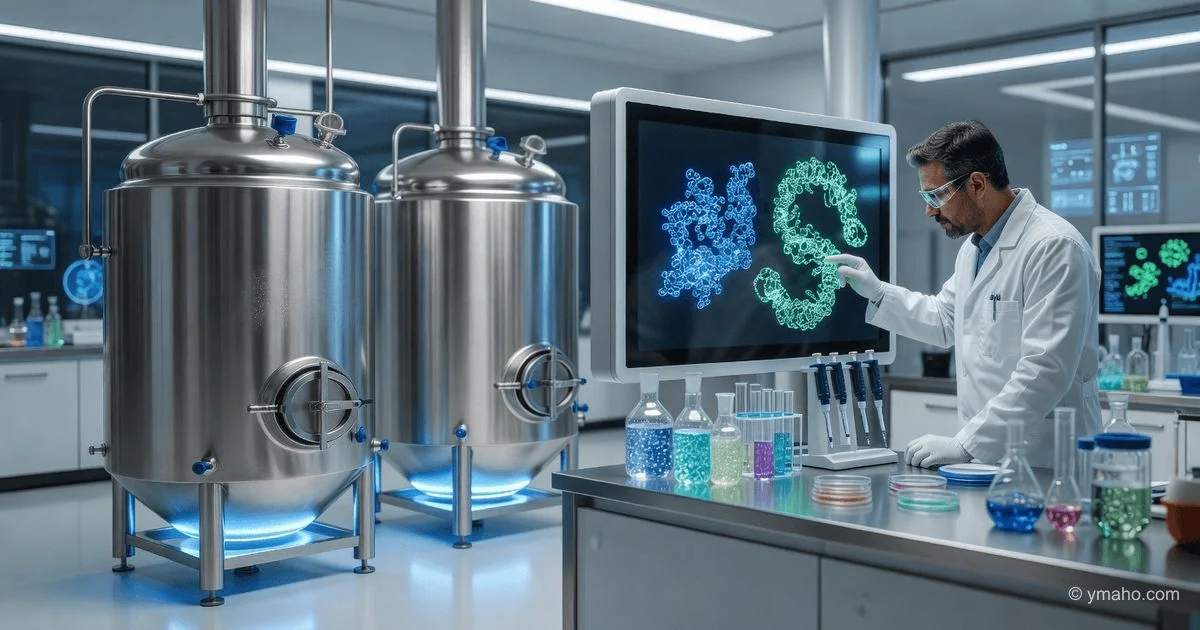
Behind the fancy term "precision fermentation" lies a harsh industrial shift: moving key active ingredients from the "agriculture" category to "industrial production." Instead of growing plants for months with the risk of crop failure, companies now program yeast and bacteria to synthesize the required molecules in steel tanks within 48–72 hours. This is not lab exoticism but a mature production process: the precision fermentation market is valued at $6.14–6.5 billion in 2026 and is projected to grow at a CAGR of 42.5–44% over the next 7–8 years.
The key turning point occurred in the last 18 months: while biotech ingredients used to be a niche premium segment (like b-silk from Bolt Threads, sold as an elite silicone alternative), they are now entering the mass market. This is driven not only by consumer demand for "clean beauty" but also by the fact that the production cost of a fermented active is 30–40% lower than extraction from plant material, considering yield fluctuations.
Timeline and Context
2024–2025: The Middle East conflict triggered a 12–15% increase in prices for mineral raw materials used in cosmetics. Peptide synthesis, dependent on chemical intermediates from Asia, faced supply delays of 15–20 days. Beauty corporations realized that geopolitics could paralyze their production lines within a month. Meanwhile, the Sustainable Cosmetics Summit recorded record investments in green chemistry and biotech.
January–March 2026: Ginkgo Bioworks, a flagship in synthetic biology, strikes a deal with Bolt Threads to scale up b-silk protein beyond one metric ton. The goal is to reduce costs to compete with silicones in the mass market. At the same time, L'Oréal and Unilever direct investments into microbiome research and postbiotics.
April–May 2026: Industry analysts note a structural shift: the fermented ingredients segment is growing at a CAGR of 8.6% within the cosmetics market. The concept of "clean beauty" is giving way to "biotech beauty." Mainstream media headlines pick up the story of the decline of plant-based cosmetics.
Who Wins and Who Loses
Winners:
- Fermentation platform manufacturers — Givaudan, Croda, Evonik, as well as specialized biotech companies like Ginkgo Bioworks. They are transforming from ingredient suppliers into holders of key infrastructure. Givaudan and Croda are already actively acquiring biotech startups.
- Large cosmetics corporations — L'Oréal, Unilever, Estée Lauder. They gain a triple advantage: 20–30% cost reduction, supply predictability (no crop failures), and a strong sustainability narrative for ESG reporting.
- Mid-range consumers — while biotech collagen or growth factors were previously only available in the luxury segment at $120–250 per bottle, scaling production promises to lower prices to $45–70 by the end of 2026.
Losers:
- Traditional plantations and farmer cooperatives. When argan oil or shea butter can be "fermented" in a tank in Lyon, thousands of Moroccan and Ghanaian farmers earning less than $2,000 a year will have nowhere to sell their harvest. The industry, which loudly proclaims ethics and sustainability, is silently creating a wave of social crisis.
- Brands built solely on the "naturalness" of plant ingredients. If a fermented retinoid or vitamin C is 2–3 times more effective than its plant-based counterpart at the same price, "natural" brands lose their main USP. They will end up either in the super-premium segment (for "authenticity") or a marginal one.
What the Media Isn't Saying
First non-obvious insight: The shift to fermentation is not about caring for the planet. It's about control over intellectual property. Anyone can make centella asiatica extract. But a patented yeast strain that synthesizes a specific molecule with certain bioactivity is a patent law asset. Corporations are turning open natural molecules into proprietary biotech assets. In five years, the market will be sharply divided: cheap generic plant extracts and expensive patented fermentation molecules.
Second non-obvious insight: Claims about "quality stability" of fermented ingredients are only partly true. Yes, batch-to-batch variability is reduced by 90%. But when scaling from 5 liters in the lab to 5,000 liters industrially, microorganism behavior changes unpredictably. Several startups have already encountered their "miracle strain" switching to synthesizing side metabolites in an industrial bioreactor, ruining the entire batch. These cases are hushed up, but losses from such incidents reach $300,000–500,000 per batch.
Third omission: Consumers are sold the narrative "lab = purity." But fermentation lines require strict sterilization and antibiotics to suppress competing microflora. Trace amounts of penicillins and streptomycin in the final product are a real problem that the industry solves with costly purification, but how thoroughly this is done by mass producers is a big question.
Forecast: Next 30 Days and 90 Days
30 days (by June 7, 2026):
- I expect an announcement from one of the giants (likely L'Oréal) about launching a line with recombinant collagen or EGF in the mid-price range ($50–80). This will signal that biotech ingredients have finally left the luxury niche.
- Social media will be flooded with TikToks and Reels from beauty influencers explaining the difference between "plant-based" and "biotech" ingredients. This will be paid for by marketing budgets.
90 days (by August 8, 2026):
- A major plant extract producer (most likely from France or Morocco) will file a lawsuit over "discrediting natural ingredients" or launch a massive PR campaign in defense of traditional plantations.
- The first journalistic investigation will appear on patent wars over microorganism strains: who owns the rights to produce next-generation hyaluronic acid, and why three dermatological brands are suing each other for the right to use the same peptide.
- Chinese contract manufacturers will announce the launch of industrial precision fermentation capacities with dumping prices—two times lower than European ones. This will cause panic among European CDMOs but will make biotech ingredients accessible to small brands worldwide.
My personal conclusion: we are witnessing not just a technological trend but a redistribution of power in the beauty industry. Whoever controls the bioreactor controls the molecule. Whoever controls the molecule dictates the price and terms for the entire chain—from lab to Sephora shelf. Plants as raw materials won't be abolished, but their role will become purely image-based, while real effectiveness will be produced by microorganisms behind closed doors in industrial zones. The consumer will just have to trust.
— Editorial Team









