Biotechnology and Regenerative Medicine: The Era of Exosomes and Peptides
Biotechnology is becoming the main driver of the beauty industry, with the market growing 8-10% annually. Innovations are shifting toward tissue regeneration using exosomes, polynucleotides, and next-generation peptides, but experts urge distinguishing real scientific breakthroughs from marketing.
From hyaluronic acid to cell reprogramming: how biotechnology is changing aesthetic medicine
Introduction
For a long time, hyaluronic acid remained the undisputed king of injectable cosmetology. It gave skin hydration, radiance, and improved firmness, becoming the gold standard of biorevitalization. However, like aesthetic medicine itself, approaches to skin care never stand still. In 2026, we are witnessing a tectonic shift: the era of "simple hydration" is giving way to the era of biotechnology and regenerative medicine.
What catalyzed the change? With age, skin loses not only moisture. Fibroblast activity—cells responsible for collagen and elastin production—slows down, intercellular communication is disrupted, and chronic inflammation and oxidative stress increase. Hyaluronic acid effectively retains water, but it does not address these fundamental problems. Moreover, in some patients, it causes pastiness and swelling. It is this mismatch between expectations and the real needs of the skin that has created demand for technologies that work at the cellular level.
In this article, we will examine which biotechnological innovations are changing the industry landscape, why experts urge caution in evaluating new products, and what awaits the regenerative cosmetology market in the coming years.
Event Details and Timeline
The transition from hyaluronic acid to biotechnological regeneration methods was not instantaneous. It occurred in several stages, each bringing us closer to today's "biorevitalization 2.0."
Stage 1: Recognizing the limitations of hyaluronic acid (2020-2023).
As clinical experience accumulated, doctors increasingly recorded cases of "overloaded" skin in patients who overused HA injections. It became clear that simple hydration does not address the fundamental mechanisms of aging—disruption of intercellular communication and depletion of the dermal matrix.
Stage 2: Introduction of polynucleotides and peptides (2023-2025).
The first wave of regenerative technologies included polynucleotides (PN) and polydeoxyribonucleotides (PDRN). These molecules, derived from salmon DNA, demonstrated the ability to activate fibroblasts, improve dermal quality, and accelerate recovery processes. By 2025, the PDRN product market reached $420 million, showing annual growth of 12.9%.
Stage 3: The era of exosomes and clinical evidence (2025-2026).
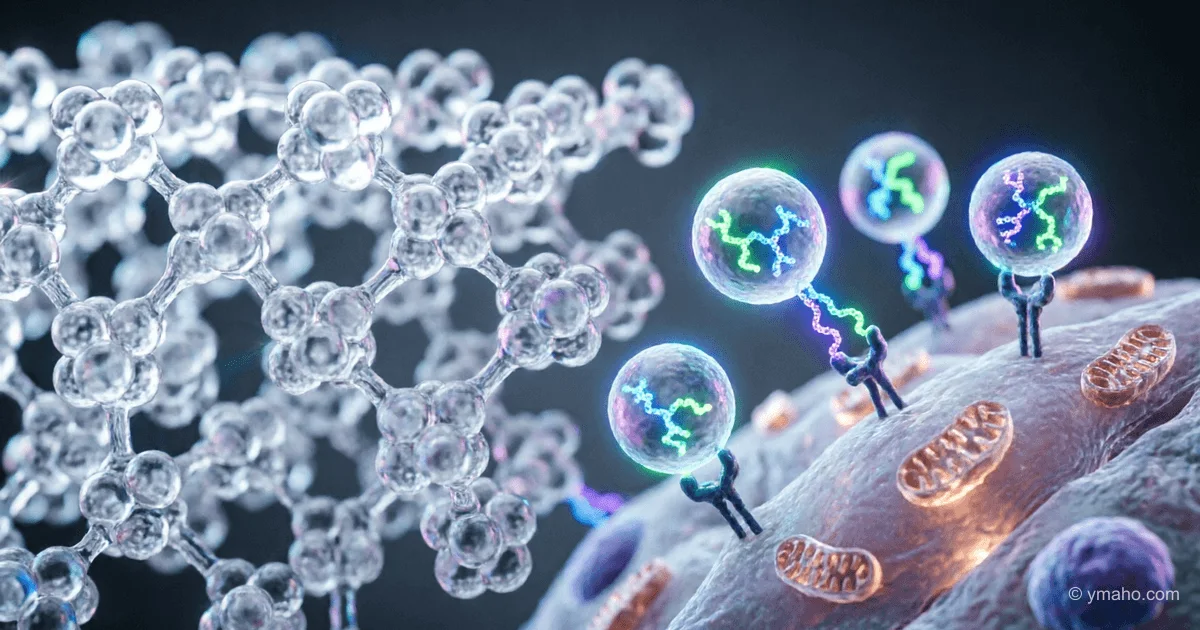
The next frontier was exosomes—microscopic extracellular vesicles that carry signaling molecules between cells. In February 2026, the authoritative Journal of Cosmetic Dermatology published results of a study by Chinese and Korean scientists comparing the efficacy of exosomes and hyaluronic acid in treating postoperative scars. The results were impressive: exosomes outperformed HA in parameters such as pigmentation, elasticity, and tightness by 30-80%.
Stage 4: Market boom and paradigm shift (2026).
According to McKinsey & Company, the biotechnology market in beauty is growing 8-10% annually. Even in Russia, despite economic difficulties, the injectable cosmetology market grew by 35.5% in Q1 2026 to 10.8 billion rubles, with demand shifting toward expensive multi-component products. A new aesthetic phenomenon has even emerged—convergence of regenerative technologies with device-based methods (microneedling, RF therapy) to enhance the effect.
Impact and Significance
Impact on the industry:
The shift from hydration to regeneration is changing the very philosophy of cosmetic product development. Previously, manufacturers competed in concentrations of active ingredients; today, the battle is at the level of cell biology. Exosomes, PDRN, next-generation peptides—these components do not just nourish the skin; they reprogram it for renewal, restoring cellular homeostasis and triggering neocollagenesis.
Economically, this is reflected in rapid market expansion. According to Data Bridge, the global PN/PDRN injection market will grow from $210 million in 2024 to $449 million by 2032. Analysts at The Business Research Company forecast the PDRN product market will reach $770 million by 2029.
Impact on the perception of aging:
Regenerative technologies are also changing patient psychology. Previously, aesthetic medicine offered "masking" signs of aging (filling a wrinkle, hydrating dry skin); today, it is about restoring the skin's biological potential. This aligns with the broader well-aging trend: people want not just to look younger, but to have healthy, functional skin at any age.
Impact on society:
Experts note another important aspect: regenerative technologies are becoming more accessible. Demand for biorevitalization 2.0 is growing not only among older patients but also among young people aged 25-35, who view these procedures as aging prevention rather than treatment of existing problems.
Reaction of Key Players
Large corporations and niche players are actively restructuring their portfolios to meet new realities.
Global corporations:
L'Oreal Group in December 2024 acquired the South Korean company Gowoonsesang Cosmetics with the brand Dr.G, specializing in PDRN therapy. This acquisition allowed the French giant to strengthen its dermatological division and gain access to advanced regenerative technologies.
Korean innovators:
South Korea remains the epicenter of regenerative innovation. In August 2025, Hugel launched Hyper PDRN Repair Ampoule with an innovative HA-PDRN formula—a combination of highly purified PDRN and 100% pure hyaluronic acid. The product is positioned as a means to strengthen skin from within, with clinically proven safety for sensitive skin.
Russian market:
The departure of foreign manufacturers has spurred active import substitution. The Russian brand Biogel, developed at the Skolkovo Technopark, entered the top ten brands in Q1 2026, capturing nearly 4% of ruble sales in the segment. Also, the domestic collagen stimulator Ellagen with 80% concentration of polylactic acid entered the market.
Shift in expert rhetoric:
It is important to note that the professional community views the boom in regenerative technologies with cautious optimism. Cosmetologist Elena Vaevskaya, an international expert in regenerative medicine, notes: "Real innovations today are cellular and biotechnologies. But it is important to understand that many of these technologies are in development or limited by legislation. Therefore, there is still a gap between scientific potential and available practice."
Adel Miftakhova, founder of the brand Don't Touch My Skin, adds: "In beauty, something truly groundbreaking happens very rarely. Most often, the industry takes already known ingredients or technologies and packages them in a new form, with a new name and a new story."
A systematic review published in the journal Cureus in early 2026 confirms this skepticism: the evidence base for exosomes is still fragmentary, studies are small, heterogeneous, and mostly short-term.
Forecast and Conclusions
What awaits us in the next 3-5 years at the intersection of biotechnology and aesthetic medicine?
- Technology integration. Regenerative products will increasingly be used not in isolation but in combination with device-based methods (microneedling, lasers, RF therapy). This will enhance the penetration of active components and achieve a synergistic effect.
- Protocol personalization. Understanding that each patient has their own aging mechanisms (genetic, hormonal, stress-induced) will lead to personalization of regenerative protocols. The future lies in combinations of different classes of drugs tailored to specific biomarkers.
- Increased regulation and standardization. The boom in the regenerative product market will inevitably attract regulatory attention. Experts predict stricter requirements for clinical evidence of efficacy, which will weed out unscrupulous players.
- Accessibility and democratization. As production scales and new competitors emerge, the cost of regenerative procedures will decrease, making them accessible to a wider audience.
Conclusion:
The era of exosomes and peptides is not just a marketing trend but a natural stage in the evolution of aesthetic medicine. Hyaluronic acid is not disappearing, but its role is changing: it now serves as a delivery system and matrix for more active molecules. However, as in any fast-growing industry, there is room for both scientific breakthroughs and marketing speculation. The task of the physician and the informed patient is to distinguish real innovations from beautiful promises, relying on clinical data and common sense. Regenerative cosmetology is the future. But this future has already arrived, although it requires a balanced and responsible approach from us.
— Editorial Team









