New Blood Test Detects Heart and Kidney Disease Years Before Symptoms
Researchers at the University of Bristol have developed a test that identifies early vascular damage by analyzing the biochemical fingerprint on red blood cells. The study was published in Nature Communications.
What was published on May 12, 2026, in Nature Communications is not just an elegant analytical method. It is the moment when endothelial dysfunction ceased to be an abstract pathophysiological concept and became a measurable, standardizable biomarker. We are witnessing the birth of a "liquid biopsy" for blood vessels. I see here not so much a clinical breakthrough as a tectonic shift in the economics of chronic diseases, one that will reshape the budgets of pharmaceutical companies and insurers.
The Core: What Is Really Happening
Formally, the team of Matthew Butler and Simon Satchell from the University of Bristol proposed a method to assess damage to the glycocalyx—the delicate sugar-protein lining of the inner surface of blood vessels—by analyzing the biochemical "fingerprint" on red blood cells. But the essence goes much deeper.
The glycocalyx is not just a lubricant. It is an active barrier that regulates vascular permeability and signal transmission to immune cells. Previously, we could only observe its state through invasive biopsy or complex microscopy. We were blind to the condition of the microcirculatory bed. Yet it is there, in millions of arterioles and capillaries, that hypertension, diabetic nephropathy, and atherosclerosis originate.
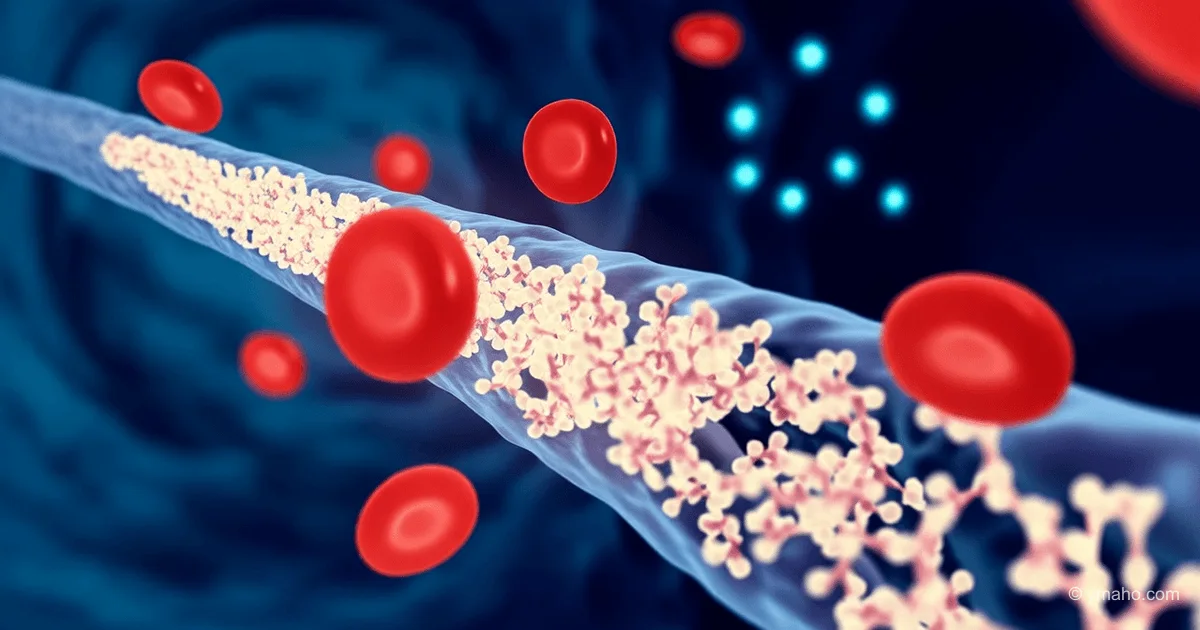
The discovery is that red blood cells and vessel walls constantly exchange glycocalyx components upon contact. It is as if cars exchanged paint particles with the road, and by analyzing the paint on the car body, we could tell how worn the road surface is. The red blood cell becomes a "flight recorder" of vascular health.
Timeline and Context
The breakthrough resulted from targeted pressure by UK research councils. Funding came directly through the Medical Research Council (MRC) and Kidney Research UK (KRUK), and it is no coincidence that co-authors hold grants from the British Heart Foundation (BHF) and Diabetes UK. This is a response to the rise of cardiorenal metabolic syndrome (CMR), which has long been treated piecemeal rather than as a unified condition.
The study was published on May 12, 2026, and a key point: the team has already shown that the method can quickly detect the effectiveness of drug action on the glycocalyx. This is not just diagnostics; it is a tool for clinical trials.
Who Wins and Who Loses
Winners:
- Novo Nordisk and Eli Lilly. They need this test. They have semaglutide and tirzepatide with annual sales in the tens of billions of USD. Both companies are desperately seeking clinical evidence that their drugs improve "vessel quality," not just lower blood sugar and weight. The glycocalyx test will give them a tool to justify cardio- and nephroprotection at very early stages, when hard endpoints have not yet been reached.
- QuidelOrtho and Abbott. This analysis fits perfectly onto platforms for routine hematological tests. If the technology is validated for automated analyzers, it will become a "killer feature" for the multi-billion-dollar in-vitro diagnostics market.
- Insurers. They gain an objective predictor: they can form "pre-symptomatic risk" insurance pools, offering preventive therapy before losses become catastrophic.
Losers:
- Manufacturers of classic lipid panels. Statins save lives, but atherosclerosis often progresses even with normal cholesterol. The glycocalyx test shows not fat but the condition of the "pipe." The focus will shift from "how much cholesterol do you have" to "how worn are your vessels."
- Nephrology reliant on creatinine. Creatinine rises when the kidney is already severely damaged. The test promises to detect pathology at the stage of microcirculatory disturbances in the glomeruli, when eGFR is still normal. This will make nephroprotection truly early.
What the Media Isn't Saying
Mainstream media writes about saving heart patients. But that is only half the truth. The non-obvious insight is that this technology is a Trojan horse for oncology. The glycocalyx plays a key role in metastasis. Tumor cells breach the glycocalyx to enter the bloodstream. Changes in glycocalyx composition on circulating cells could become a marker not only of cardiac but also of cancer invasion. Matthew Butler is a nephrologist, but the method he created will go far beyond the kidneys. Smart labs will already be buying rights to adapt the test for oncology.
The second point is drug validation. The press release explicitly states: "we can quickly determine when drugs are effective in restoring the vascular lining." This is a veiled hint that the failures of many drugs in phase III may be due to their insufficient restoration of the glycocalyx. The test could become a "gatekeeper" for approving new molecules.
Forecast: Next 30 Days and 90 Days
30 days (by June 13, 2026):
A feverish analysis of the patent landscape will begin. The method published in Nature Communications is open. The question: how broad are the patents filed by Bristol? If they are narrow, all major CROs (IQVIA, Labcorp) will launch their own versions of the glycocalyx test (e.g., using mass spectrometry). Butler's team will be flooded with collaboration requests. QuidelOrtho's stock may spike on the hype around "next-generation diagnostics."
90 days (by August 13, 2026):
Expect announcements from Big Pharma. Most likely, Novo Nordisk will be the first to announce the integration of the test into the design of a clinical trial like FLOW-NEXT (or similar) to confirm the pleiotropic effects of Ozempic and Wegovy. If the test shows that a new SGLT2 inhibitor or GLP-1 agonist restores the glycocalyx faster than standard therapy, it will be worth additional billions of USD in market capitalization. Also, expect the launch of studies on "endothelial liquid biopsy" for Long COVID and autoimmune vasculitis. The tool is created; now it needs to be monetized, and speed matters. The era of invisible vascular damage is over—now every red blood cell has become an informant.
— Editorial Team









