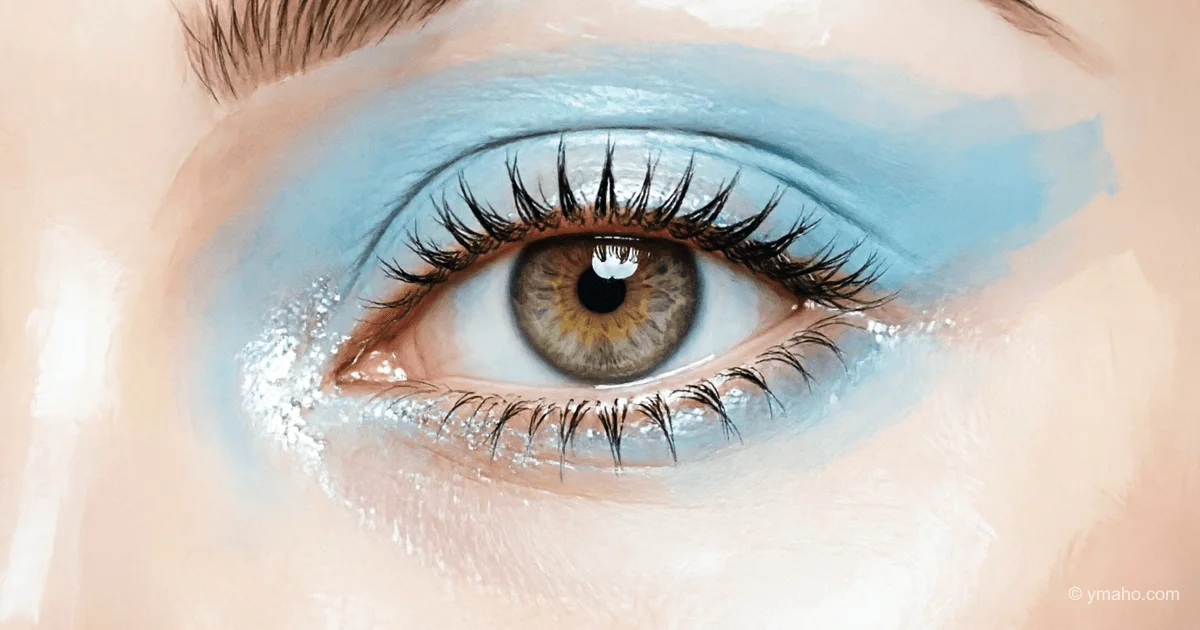
The Return of Blue Eyeshadow: #babyblueeyeshadow Trend Takes Over Runways and Met Gala 2026
Blue eyeshadow and liner are back in fashion, but now in a modern interpretation — a translucent haze, icy shimmer, and accents in the inner corner of the eye. The trend, spotted at SS'26 shows and on red carpets, has replaced the aggressive makeup of the early 2000s.
Blue eyeshadow is back. But not as you might think, looking at retro photos of Christina Aguilera or remembering school discos. I consult beauty brands on strategic development, and this trend is not just nostalgia. It's a well-oiled mechanism for creating multi-million dollar demand at a time when the industry desperately needs a new growth driver. Behind the soft haze of #babyblueeyeshadow lies cold business calculation: overstocked warehouses with pigments, the dead end of "clean aesthetics," and a technological breakthrough in formulas that was kept secret until now.
The Essence: What's Really Happening
We didn't just dig out old palettes from the attic. We witnessed the final stage of minimalism's suppression. The #babyblue trend isn't about color per se. It's about the return of "complex application," which means an increase in average transaction value. Blue eyeshadow, even in the modern "translucent haze" interpretation, requires consumers to purchase additional tools: an eye primer (to avoid patchiness), special blending brushes, and cream bases.
The economics here are simple. Sales of eye makeup pigments stagnated during the era of "clean skin" and BB creams. The cosmetic pigments market was valued at $14 billion in 2024, but the main growth is expected to come from the decorative cosmetics segment, not skincare. Complex color makeup is a high-margin segment. Pat McGrath Mothership palettes cost $128 each, and the limited-edition Dark Star mascara in Azure Allure sold out instantly despite the price tag. The mass return of color is a direct order from the market to shareholders: "We are increasing margins again."
Timeline and Context
The first signals appeared not on runways, but in data centers. Back in December 2025, Pinterest Predicts published a report, recording a 35% increase in searches for "icy aesthetics" and a 150% increase for "frosty makeup." Procurement specialists at major chains like Sephora and Mecca saw these numbers before the glossies.
Key date: January 2026, when Pat McGrath applied "baby blue lids" on a model at the Schiaparelli show. But the insider turning point happened in March 2026. Chanel launched the Denim Blue collection, and marketers call this moment the "point of no return." Denim blue became the bridge between nude fear of color and bold cobalt. Makeup artist Naoko Scintu from Dolce & Gabbana Beauty put it precisely: "Denim sits somewhere between neutral and colored, so it's incredibly flattering and easy to use."
The apotheosis came in May 2026. At the Met Gala, we saw Zendaya with smoky cobalt and Léna Mahfouf with an icy haze. By this time, TikTok Shop recorded a 19% increase in searches for "blue eyeshadow." The trend ceased to be avant-garde and became mainstream.
Who Wins and Who Loses
The main beneficiaries are raw material and technology texture manufacturers, which the media hardly ever mentions. The old blue eyeshadows of the early 2000s were dry, dusty chalks. In 2026, we are dealing with "cream formulas" and "wet shine" created using expensive surface-treated and special effect pigments. Giants like BASF and Clariant win, supplying these components under contracts with huge markups.
Among brands, those who bet on expertise win: Pat McGrath Labs and Fara Homidi, whose products are used by an audience tired of glossy photos. Mass-market brands lose, unable to keep up with technology. Consumers will not forgive crumbling blue pigments from cheap brands when Pat McGrath and Clé de Peau offer creams that layer without "mud."
Luxury brands stuck in minimalism also lose. If your stand still only advertises nude "liquid lipsticks for a lip effect," you're too late. Consumers want "watercolor haze" and "azure lashes."
What the Media Isn't Saying
The most inconvenient fact, known to a limited circle of technologists: the return of blue pigment to mass use became possible only thanks to solving environmental problems. Many bright blue pigments were historically toxic or unstable. The new wave of blue eyeshadow is the result of costly R&D developments, completed only in 2023–2024, to create safe bio-bases and stable almond-shaped particles that do not settle in eyelid creases.
No one in marketing departments will say it outright, but global pigment suppliers, including DIC Corporation and Merck, "pushed" this color through makeup artists. They methodically supplied leading labs with next-generation samples two years before the trend to create the physical possibility for such makeup without compromising comfort. They sell you a "bold look," but in reality, they are selling expensive "smart chemistry" that replaced cheap micas.
Another gap in the media agenda is the connection with demographics. Allure analysts state outright: after the pandemic, people "crave boldness and fun." Blue, especially icy and futuristic, is the color of new technologies, metaverses, and glitch glamour. It's an escape not into nostalgia, but into a digital future. It's makeup that looks perfect in TikTok filters and under ring lights.
Forecast: Next 30 Days and 90 Days
First 30 days. In June 2026, the "cold war of brands" will begin. Gucci Westman has already shown an alternative for those afraid of blue — warm bronze shades to accentuate blue eyes. Mass brands like NYX and Maybelline will urgently release their cream "ice blue" sticks at $9–15. The main intrigue: will SHEGLAM manage to get its denim blue texture line onto Kmart shelves, undercutting prices to $5?
90 days. By September, polarization will occur. The trend will split into "wearable denim" (office option) and radical "digital frost" for parties. Major houses like Christian Louboutin Beauty are already talking about combining blue with mocha tones — this will create a new niche of "warm-cold" eye contouring. By fall, when the SS'27 show season begins, blue will cease to be a "trend" and become a "staple." Analysts expect the cosmetic pigments market to surge in the "special effects" segment to 4.62% CAGR. Then the industry will pull out the next card: perhaps yellow or purple. Get your wallets ready — this is just the beginning of the "color war."
— Editorial Team









