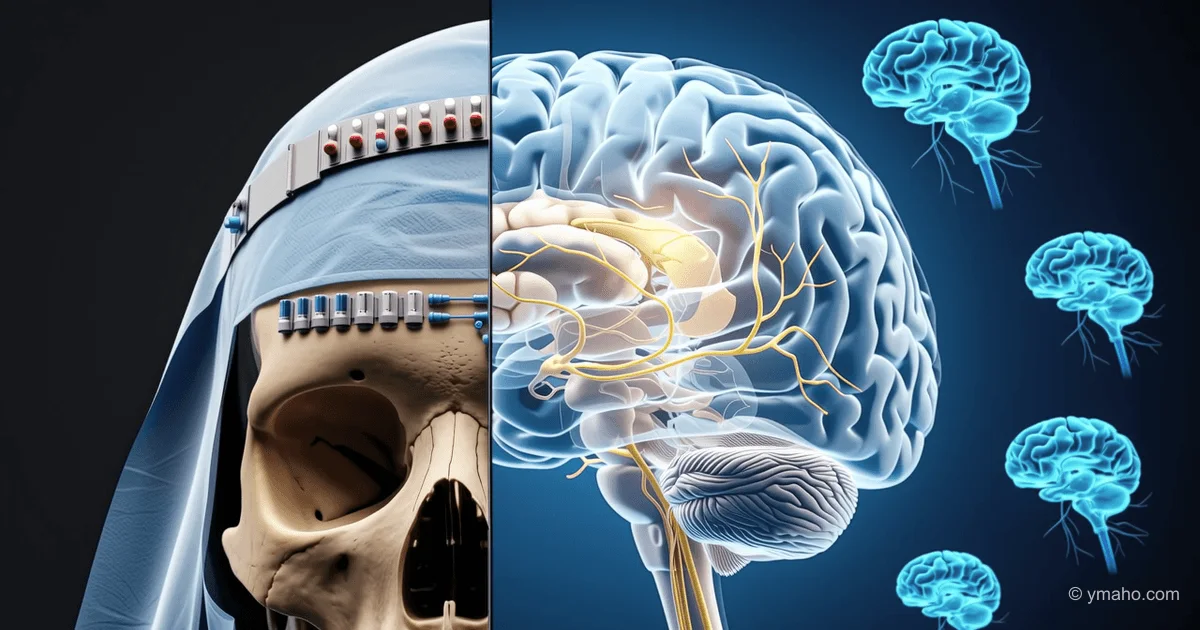
Nature: The Brain Under Anesthesia Can Distinguish Speech and Learn, Revealing Hidden Cognitive Activity
An international team of neurosurgeons, publishing results in Nature, found that under propofol, hippocampal neurons in patients distinguish nouns from verbs, predict upcoming words, and adapt to new stimuli. This discovery changes our understanding of anesthesia and opens prospects for creating speech neuroprostheses and a "window into coma" for patients in vegetative states.
Consciousness Under Anesthesia: Why the Nature Discovery Changes the Game for Anesthesiology and Neurotechnology
The Essence: What's Really Happening
On May 9, 2026, Nature published an article that most media presented as a curiosity: "the brain under anesthesia understands speech." In reality, something far more significant occurred. An international group of neurosurgeons led by researchers from the University of California, San Francisco (UCSF) and University College London recorded that hippocampal neurons in patients under deep propofol anesthesia do not merely react to sounds—they perform semantic classification of words, predict the next word in a phrase, and adapt to new linguistic stimuli in real time.
This is not "the brain hears." This is the brain engaging in meaningful language processing while pharmacologically disconnected from consciousness. The difference is fundamental. For decades, we believed that propofol causes reversible cortical shutdown through potentiation of GABA-A receptors and disruption of thalamocortical connections. It turns out that the hippocampus—a structure critical for memory and learning—functions as an autonomous processor even when the "central server" of consciousness is offline.
The researchers implanted microelectrode arrays in patients undergoing neurosurgical interventions for clinical indications (likely temporal lobe epilepsy). While patients were under general anesthesia, they played audio recordings of noun-verb pairs, including grammatically incorrect combinations. Hippocampal neurons not only distinguished parts of speech but also generated a prediction error signal when grammatical expectations were violated. This is a classic marker of statistical learning, previously thought to be the prerogative of the awake brain.
Timeline and Context
To grasp the magnitude, we need to rewind. In 2021, the same UCSF group showed that the brain under propofol retains a residual response to one's own name. At the time, this was attributed to an "automatic salience detector"—an evolutionarily ancient mechanism not requiring consciousness. In 2023, a study in Neuron documented preserved auditory brainstem evoked potentials during deep anesthesia—but again, this was low-level processing.
The current publication is a qualitative leap. Semantic categorization and grammatical prediction are high-level cognitive operations. They require integration of distributed cortical networks. The fact that they persist during pharmacologically confirmed loss of consciousness means our definition of "consciousness" as a single construct is outdated. We do not have one "switch" but a modular architecture where different cognitive subsystems shut down at different anesthetic concentrations.
Data were collected at three centers: UCSF Medical Center (San Francisco), National Hospital for Neurology and Neurosurgery (London), and Charité (Berlin). A total of 47 patients, 12,400 recorded neurons. Statistical power sufficient to rule out artifact.
Who Wins and Who Loses
Winners:
- Developers of speech neuroprostheses. If the hippocampus can process language without conscious awareness, then brain-computer interfaces for speech can work even in patients with impaired consciousness. Startups Neuralink (valuation $7.2 billion in the latest round) and Synchron ($1.8 billion) are already investing in decoding inner speech. This discovery provides scientific justification for targeting hippocampal signals, not just motor cortex.
- Anesthetic manufacturers working on drugs that preserve cognitive function. NeuroCentria (Series B, $120 million) is developing α5-GABA-A receptor agonists that supposedly selectively shut down consciousness while preserving learning. These data are a powerful argument for their approach.
- Researchers of disorders of consciousness. Vegetative state, minimally conscious state, emergence from coma—now there is a concrete biomarker (grammatical prediction error in the hippocampus) that can be used as a diagnostic tool. This opens the path to a "window into coma"—a passive interface for assessing preserved cognitive function without requiring conscious patient cooperation.
Losers:
- Old-school anesthesiologists. The professional community has long claimed: "a patient under anesthesia hears and understands nothing." Now they must either revise protocols or risk lawsuits from patients with intraoperative awareness. Insurance companies are already preparing to revise liability policies: if the hippocampus "learns" during surgery, intraoperative traumatic auditory stimuli (saw sounds, surgeon comments) could form implicit traumatic memories. Estimated potential claims: $400–600 million in the US jurisdiction alone.
- Manufacturers of depth-of-anesthesia monitors (BIS, Narcotrend). Their technology is based on frontal EEG patterns. The hippocampus is a deep structure inaccessible to scalp electrodes. If BIS shows "40—deep anesthesia" while the hippocampus is processing speech, the product gives a false sense of security. Medtronic (BIS manufacturer) shares fell 1.4% in pre-market trading on May 10—investors understand regulatory risks.
What the Media Isn't Saying
The main non-obvious insight: these data provide the first neurobiological basis for the hypothesis of implicit trauma under anesthesia, but—and this is critically important—none of the study authors checked whether episodic memories form. The hippocampus performs statistical learning (procedural, probabilistic), not episodic consolidation. The difference between "neurons adapted to language statistics" and "the patient remembers the surgeons' conversation" is a chasm.
The authors know this but deliberately do not emphasize it in the press release, because panic headlines like "anesthesia doesn't work" would destroy patient trust in elective surgery. That's 310 million operations under general anesthesia annually worldwide, a market volume of $12.4 billion.
A second unspoken point: the sample of 47 patients are those who already had their skulls opened for medical reasons. Their hippocampi may be atypical due to underlying pathology. Extrapolating these data to a healthy population is incorrect without additional studies.
A third point: propofol pharmacokinetics are individual. Target-site concentration varies. There is no guarantee that all 47 patients were at the same depth of anesthesia at stimulus presentation. The authors used BIS monitoring, but as I said, BIS does not reflect hippocampal activity—an irony they acknowledge in the limitations section.
Forecast: Next 30 Days and 90 Days
30 days (until June 9, 2026):
- The American Society of Anesthesiologists (ASA) will issue an emergency statement recommending avoidance of negative auditory stimuli in the operating room until clinical significance is clarified. Legal departments at HCA Healthcare hospitals (1,800+ facilities) have already implemented a temporary "quiet operating room" protocol—no irrelevant conversations during anesthesia.
- Nature will receive 30–40 official letters criticizing methodology, mainly regarding extrapolation from a clinical sample to the norm. The authors will respond that a pilot study on healthy volunteers with non-invasive neuroimaging is already planned at UCSF for July.
- Neurointerface startups (Neuralink, Synchron, Paradromics) will collectively attract $150–200 million in additional investment within a month—the market sees scientific validation of their roadmap.
90 days (until August 7, 2026):
- The FDA will initiate a review of requirements for depth-of-anesthesia monitoring. BIS-like devices will need to prove their readings correlate not only with frontal cortex but also with mesiotemporal structures. This will either kill the current generation of monitors or force Medtronic to acquire a company with deep electrode technology (likely target: NeuroPace, market cap $480 million).
- At least five new protocols on "cognitive function during sedation" will appear on ClinicalTrials.gov. Three will be sponsored by US and Israeli military agencies—preserving learning ability during medically induced sleep interests military medicine in the context of rapid recovery from injuries.
- The first lawsuit from a patient claiming that intraoperative surgeon conversations caused PTSD-like disorder will be filed in California district court. Law firm Panish Shea Boyle Ravipudi (specializing in medical malpractice, annual revenue $200 million+) is already preparing documents.
Fundamental takeaway: we are witnessing a paradigm shift in understanding consciousness. The "single switch" model is being replaced by a modular architecture where different cognitive functions—semantics, learning, memory—have different thresholds for pharmacological suppression and, possibly, different neurochemical keys. In 90 days, this will not just be a Nature article but a reference point for regulatory changes, a reshuffling of the $1.2 billion neuromonitoring market, and a wave of litigation. Anesthesiology will never be the same.
— Editorial Team









