Long-Awaited Breakthrough in Depression Treatment: New Targets and Neurosteroids
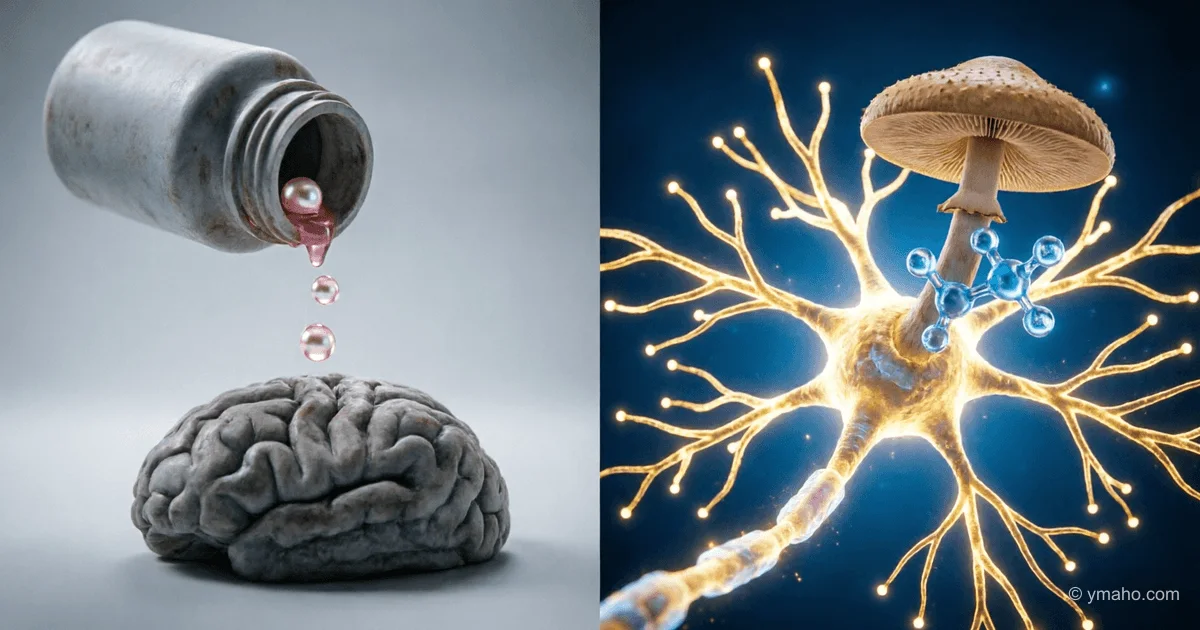
The study describes a shift away from the monoamine hypothesis toward new classes of antidepressants: NMDA antagonists (ketamine), neurosteroids (zuranolone for postpartum depression), psilocybin, and KOR modulators.
Long-Awaited Breakthrough in Depression Treatment: New Targets and Neurosteroids
Introduction
For over half a century, pharmacotherapy for depression has been based on the monoamine theory—the idea that a deficiency of serotonin, norepinephrine, and dopamine plays a key role in the development of the disorder. Selective serotonin reuptake inhibitors (SSRIs) and related drugs became the "gold standard," but they have serious limitations: the effect takes 4–8 weeks to develop, about a third of patients do not respond to therapy, and side effects often force discontinuation of treatment.
In 2026, a comprehensive review was published in the series Advances in Experimental Medicine and Biology, summarizing the paradigm shift in antidepressant development. Researchers from Italian and international centers describe the transition from the monoamine hypothesis to new targets: NMDA receptor antagonists, neurosteroids, psychedelics, and opioid system modulators. These approaches promise rapid onset of action (within hours to days), efficacy in resistant forms, and fundamentally new mechanisms for targeting depressive symptoms.
Event Details and Timeline
From Monoamines to Glutamate: Rapid-Acting NMDA Antagonists
A key breakthrough in recent years is linked to understanding the role of the glutamatergic system in the pathophysiology of depression. NMDA receptor antagonists, such as ketamine and its S-enantiomer esketamine, have demonstrated the ability to relieve depression symptoms within hours—even in patients resistant to traditional antidepressants.
In 2026, the use of esketamine (nasal spray Spravato®) for treatment-resistant depression and suicidal ideation became more accessible. The drug is administered only in certified medical facilities, as it requires monitoring due to possible dissociative effects and risk of abuse.
Concurrently, oral NMDA modulators entered the market. The combination of dextromethorphan and bupropion (Auvelity®) is one of the newest oral antidepressants, acting on both glutamatergic and noradrenergic/dopaminergic systems. Clinical trials showed symptom improvement as early as one week, a stark contrast to the 4–8 weeks for SSRIs.
Neurosteroids: Zuranolone for Postpartum Depression
A separate direction is GABAergic modulation using neurosteroids. In 2026, the U.S. Food and Drug Administration (FDA) approved zuranolone (Zurzuvae®)—the first oral tablet for treating postpartum depression.
Until then, the only option for this severe form of depression was intravenous infusions requiring a 60-hour hospitalization. Zuranolone, developed by Sage Therapeutics and Biogen, is taken once daily for two weeks. This dramatically changes the accessibility of therapy for new mothers, who often cannot afford prolonged hospitalization.
Lumateperone (Caplyta®): A New Serotonin and Dopamine Modulator
In November 2025, the FDA approved lumateperone (Caplyta®) as an adjunct to antidepressants for major depressive disorder. Although this drug partially retains ties to the monoamine system, its mechanism is fundamentally different: it combines antagonism at serotonin 5-HT2A receptors and partial agonism at dopamine D2 receptors.
In January 2026, Johnson & Johnson presented new data at the annual meeting of the American College of Neuropsychopharmacology. An analysis of three Phase III studies showed:
| Outcome | Caplyta + Antidepressant | Placebo + Antidepressant |
|---------|--------------------------|--------------------------|
| Remission (MADRS ≤10) at 6 weeks | 25.5% | 13.6% |
| Full remission (MADRS ≤5) | 10.6% | 5.6% |
| Remission at 6 months | 65.4% | — |
The drug nearly doubles the likelihood of achieving remission, and the effect is maintained for at least six months. Importantly, side effects related to metabolism and weight are minimal, which favorably distinguishes Caplyta® from many other antipsychotics.
Psychedelics: The Return of Psilocybin
Psilocybin—a psychedelic compound from "magic mushrooms"—is experiencing a renaissance in psychiatry. Its action is based on agonism at serotonin 5-HT2A receptors, leading to a rapid and sustained antidepressant response, often after just one or two doses.
In March 2026, the results of EPISODE—a randomized Phase III clinical trial involving 220 patients with treatment-resistant depression—were published in JAMA Psychiatry. Researchers from Germany and the Netherlands studied the efficacy of 25 mg psilocybin combined with psychotherapeutic support.
Simultaneously, trials are underway for CYB003—a deuterated analog of psilocin (the active metabolite of psilocybin). The clinical center Charité – Universitätsmedizin Berlin is participating in a multicenter, double-blind, placebo-controlled Phase III study. Participants with moderate to severe depression who have not responded to standard therapy receive two doses of 8 or 16 mg CYB003 three weeks apart.
A feature of CYB003 is deuteration, which slows the metabolism of the molecule, providing more predictable pharmacokinetics. The study, expected to conclude in September 2026, includes 45 countries and 220 participants.
New Frontiers: KOR, KCNQ, TAAR1 Modulators
The 2026 review also highlights even more innovative targets:
- Kappa-opioid receptor (KOR) antagonists—affect the reward system and may be effective for anhedonia, a key symptom of depression that is poorly addressed by existing drugs.
- Potassium channel (KCNQ) modulators—regulate neuronal excitability.
- TAAR1 agonists—a new class of drugs influencing monoaminergic transmission through the trace amine-associated receptor.
- Orexin modulators—may affect disrupted sleep-wake cycles in depression.
Impact and Significance
For Medical Science
The paradigm shift from the monoamine hypothesis to glutamatergic, GABAergic, opioid, and psychedelic models means that depression is recognized as a heterogeneous disorder with multiple neurobiological mechanisms. Different patients may have different systems predominating in pathogenesis—this opens the door to personalized psychiatry, where drug choice is dictated not by an "average" profile but by individual neurobiology.
Furthermore, the success of rapid-acting antidepressants (ketamine, esketamine) revises the time frame for therapeutic effect. If it was previously thought that changes in neuroplasticity required weeks, it is now clear that key processes can be triggered within hours. This radically changes the approach to treating suicidal patients.
For the Pharmaceutical Industry
Psychiatry has long been considered "poor" in terms of innovation: the last truly new mechanism of action (SSRIs) was introduced in the 1980s. The situation is changing:
- Johnson & Johnson is actively promoting Caplyta® and Spravato®, strengthening its position in neuropsychiatry.
- Sage Therapeutics and Biogen brought zuranolone to market—the first oral drug for postpartum depression.
- Small biotech companies such as Cybin/Helus Pharma (CYB003) and Compass Pathways (psilocybin) are approaching the registration of the first psychedelic antidepressants.
However, regulatory barriers remain high. Psychedelics require controlled administration with psychotherapeutic support, complicating their commercialization compared to "ordinary" pills. Nevertheless, the approval of esketamine (nasal spray) and zuranolone (short 14-day course) shows that the FDA is willing to accept non-standard dosing regimens for severe forms of depression.
For Society and Patients
The main social significance of the breakthrough is hope for millions of patients with treatment-resistant depression who have been cycling through antidepressants with minimal effect for years. According to some data, up to 30–40% of patients do not achieve remission after two adequate courses of therapy.
New drugs offer:
- Rapid onset of action—critical for preventing suicide.
- Efficacy in resistant forms—for example, esketamine is approved specifically for treatment-resistant depression.
- Targets for specific symptoms—anhedonia, sleep disturbances, cognitive disorders.
- Short courses—up to two weeks for zuranolone or 1–2 sessions of psilocybin instead of months of daily intake.
For postpartum depression, the arrival of zuranolone is especially significant: new mothers cannot afford weeks of waiting for traditional antidepressants to take effect or prolonged hospitalization for intravenous infusions. An oral 14-day course changes the game.
Reactions of Key Players
The expert community views the new wave of antidepressants positively, but with cautious optimism.
Dr. Michael Thase, Professor of Psychiatry at the Perelman School of Medicine at the University of Pennsylvania, commenting on the Caplyta® data, stated: "These data reflect not only symptom reduction but also the durability and depth of treatment response, which are critical benchmarks for patients and clinicians seeking sustained relief. The results demonstrate that adding lumateperone can nearly double the likelihood of remission, with benefit maintained for more than six months."
Dr. Bill Martin, Head of the Global Therapeutic Area Neuroscience at Johnson & Johnson, emphasized the need to shift expectations: "Too many patients cycle through treatments for years, settling for 'good enough' because they don't realize that full relief is possible. These data show that remission is achievable and should be the expectation, not the exception."
Regarding psychedelics, the professional community is cautiously wait-and-see. In the 2026 review, the authors note that despite promising data, "the efficacy and safety of psychedelics require further research." Key issues: long-term effects (including possible HPPD—persistent perception disorder), psychological dependence, and the need for psychotherapeutic support.
Regulators (FDA) demonstrate openness to innovation: in 2025–2026, Caplyta® (adjunctive MDD), Zurzuvae® (PPD) were approved, and the use of Spravato® was expanded. However, regulators are not yet rushing to approve psychedelics for widespread practice—they will likely be prescribed under strict protocols in specialized centers.
Forecast and Conclusions
Short-term outlook (1–2 years): Completion of Phase III trials for CYB003 is expected, likely followed by an FDA approval application in 2027. If data confirm efficacy and safety, this would be the first approval of a deuterated psychedelic for depression. Concurrently, clinical experience with Caplyta® and zuranolone in real-world practice will accumulate, allowing refinement of their place in therapeutic algorithms.
Medium-term outlook (3–5 years): An avalanche-like expansion of research into new targets is predicted—KOR antagonists, KCNQ modulators, TAAR1 agonists. Some of these molecules are already in early clinical trials. Additionally, artificial intelligence methods are being actively implemented to discover new antidepressants, analyze response heterogeneity, and personalize therapy.
Long-term challenge: The main problem remains the lack of reliable biomarkers for depression. Even with a dozen drugs with different mechanisms, a physician cannot objectively determine which patient should receive an NMDA antagonist versus a neurosteroid or psychedelic. Solving this problem will require integration of neuroimaging, genetics, proteomics, and likely "digital phenotypes" based on behavioral data from smartphones.
Conclusion
The 2026 review marks the end of the "monoamine era" in psychiatry. New antidepressants—NMDA antagonists (esketamine, dextromethorphan-bupropion), neurosteroids (zuranolone), a 5-HT2A/D2 modulator (lumateperone), and psychedelics (psilocybin, CYB003)—offer rapid onset of action, efficacy in resistant forms, and the possibility of short treatment courses.
The approval of zuranolone for postpartum depression and Caplyta® as adjunctive therapy are already accomplished facts changing clinical practice in 2026. Psychedelics are on the home stretch of clinical trials and will likely become available within the next 2–3 years.
Open questions remain—long-term safety, risk of abuse, need for controlled administration settings for some classes, and lack of biomarkers. However, the direction is clear: psychiatry is moving away from the one-size-fits-all approach and toward personalized, rapid-acting, and short-term therapy for depression. For millions of patients who have been unsuccessfully treated for years, this is truly a "long-awaited breakthrough."
— Editorial Team









