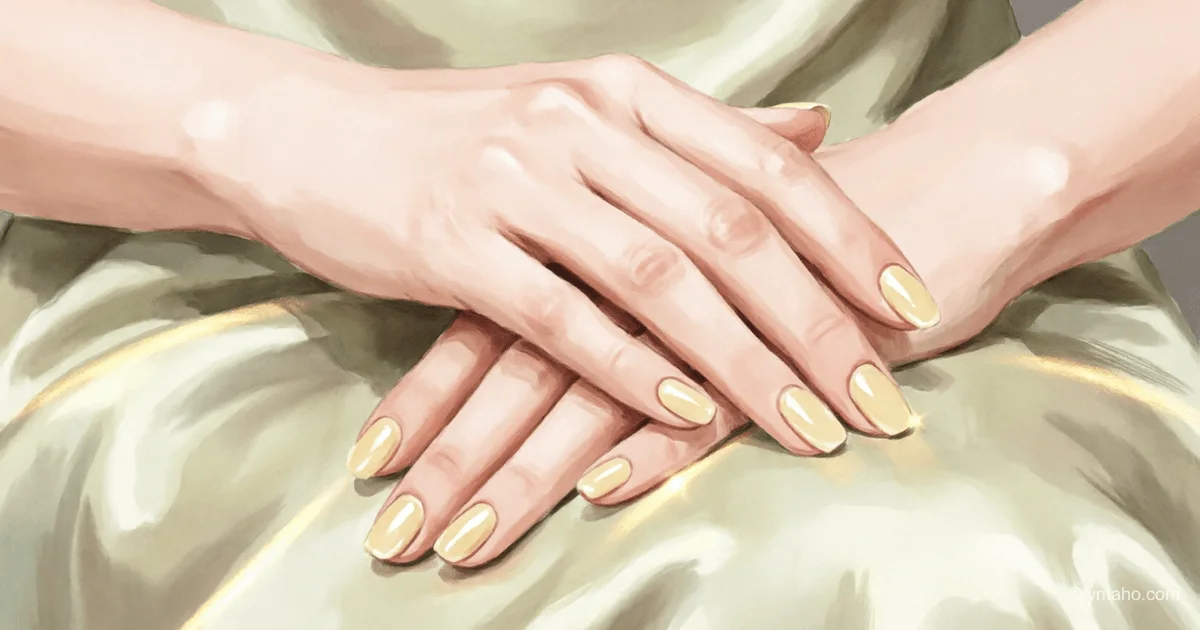
Buttery Yellow Manicure (#butteryellownails) Becomes the Season's Ultimate Neutral Shade
Classic nude and milky pink are being replaced by a creamy yellow polish shade reminiscent of vanilla cream or melted butter. This pastel trend looks expensive and doesn't weigh down the look if the right tone is chosen.
As a color strategy consultant for beauty corporations, I see the so-called #butteryellownails trend not as a seasonal whim, but as a masterfully planned operation to rescue the nail industry from the "beige trap." We are witnessing not just a shade change in the palette, but a fundamental shift in defining what a neutral color is. Behind the soft creamy tone lies hard economics: the dead end of minimalism, massive overstocking of white and black polishes, and a clever reinvention of "nude" for a generation that wants to stand out on social media without losing the aura of an expensive "clean" aesthetic.
The Essence: What's Really Happening
The core issue is that classic neutral manicures have stopped selling themselves. The gel polish and regular polish market is oversaturated. The global nail polish market reached an estimated $112 billion USD in 2025, with projections to grow to $205 billion USD by 2034, but the main driver is not volume—it's innovation and color palette shifts. Gen Z and millennials are rejecting boring beige, which they associate with their parents' "office dress code." However, they are not ready to return to the neon shades of the 2010s.
The answer was an injection of color into the "neutral" category. Butter Yellow is the perfect "spectral Trojan horse." Technically a pastel, its density and creamy texture make it wearable in the same situations as classic nude. This is not just a replacement for pink or white, but a complete reformatting of the "invisible" manicure category. As Pantone aptly noted, Butter Yellow is "a neutral with character," offering warmth absent from pure white and freshness lost by milky pink.
Timeline and Context
The global calibration point was spring 2026. On the runways, denim blue and buttery yellow shared attention equally, but yellow gained the status of "the new neutral." The key business trigger occurred in March 2026, when giant essie collaborated with bakery Baked by Melissa, releasing a limited edition shade called Unsalted—an unsalted buttery yellow. This signaled to the entire mass market: yellow was no longer niche and entered the product lines of giants.
Beauty booking platform Fresha recorded a 467% year-over-year increase in searches for "butter yellow nails" as of May 2026. This is not just a viral spike, but an indicator of client traffic shifting from the "minimal manicure" category (which grew 250%) into "color minimalism." Nail Inc., which created the "It's Topless" line with holographic finishes, quickly added buttery yellow shades, merging the texture trend with the color trend. In Russia and Asia, polish sellers already label this color as "Gel Polish VSP Butter Yellow," emphasizing its versatility.
Who Wins and Who Loses
The main beneficiaries are gel polish manufacturers and salon businesses. Buttery yellow is a technically complex pigment; in cheap versions, it yields a muddy shade or requires five coats for coverage. Professional brands selling "gel" systems at $25 to $45 per bottle win because they guarantee that one-coat "creamy" density.
Luxury houses like Hermès and Chanel also benefit: they market this color as "melted butter" or "vanilla," creating an illusion of old money apart from classic red. LED lamp manufacturers also profit: dense pastel textures require more powerful polymerization, driving salon dryer upgrades.
Losers include small studios and mass-market brands that couldn't keep up with the chemistry. Cheap Butter Yellow from unknown brands almost always turns greenish or looks like wall paint. A client coming in with a Pinterest photo and not getting the right shade will go to competitors. Pure white and gray polish manufacturers also lose—their warehouse stock risks becoming obsolete faster than planned.
What the Media Isn't Saying
Media push a narrative of "sunny carefreeness and relaxation," but omit a key physical property that makes this color commercially advantageous for salons: buttery yellow uniquely enhances tan while concealing the natural yellowness of the nail plate. This means the manicure looks expensive on both pale and dark skin, and nails appear healthier without harsh whitening agents.
A second non-obvious insight known to Essie and OPI technologists, but not glossy magazines: this shade is an ideal background for micro-nail art. On creamy yellow, micro air bubbles and tiny fibers that are catastrophically visible on black or dark red are not noticeable. Salons promote it as a "clean color" because it radically reduces redo rates and complaints from perfectionists.
Forecast: Next 30 Days and 90 Days
First 30 days. In June, we will see the trend fully migrate from nails to pedicures and take over beach season. All luxury brands will launch limited summer collections in this shade, adding pearlescent and opalescent finishes, as Nails Inc. has already done. Salon prices will rise: buttery yellow will be offered as a premium option with a 20–30% markup over standard coating, justified by "pigment complexity."
90 days. By September 2026, inevitable trend segmentation will occur. The luxury segment will shift to "dirty" buttery yellow—more muted, with hints of gray or khaki—to match the fall palette. Mass market will try to undercut prices but face a wave of quality criticism. The main battle will revolve around "apple" and "peach" shades: once market saturation with yellow peaks, the next iteration will be a move into buttery-fruit pastels. But the foundation is laid: yellow has ceased to be accidental and has taken its place in the basic wardrobe, alongside red and beige. Brands that haven't understood this will have to sell off old collections at steep discounts.
— Editorial Team









