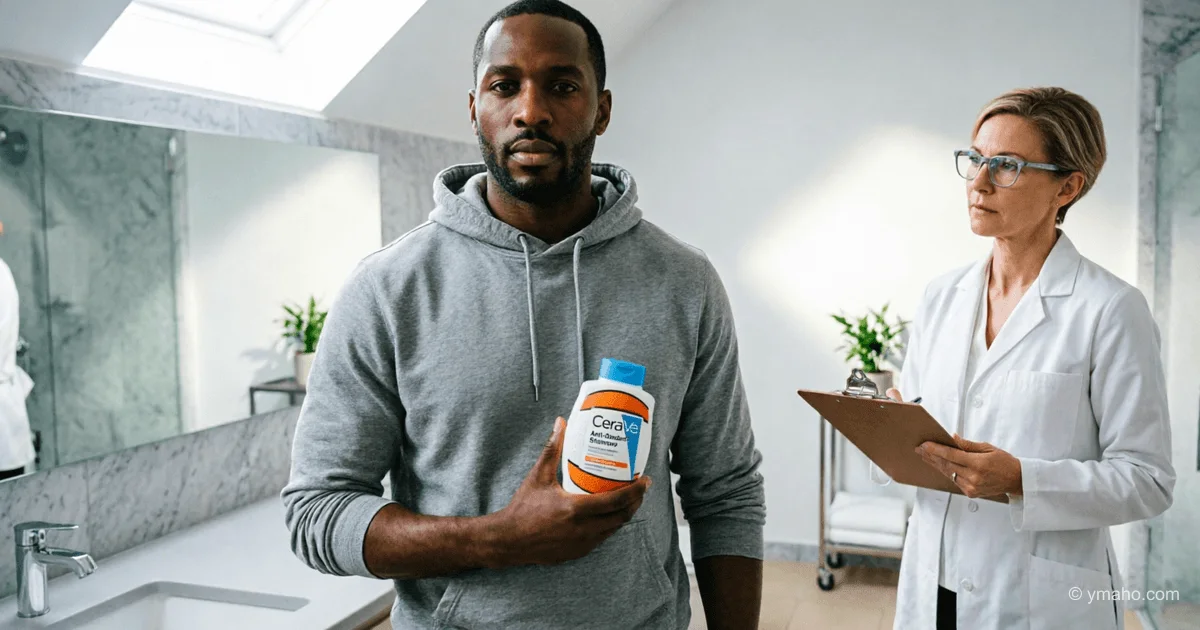
CeraVe Appoints NBA Legend Carmelo Anthony as 'Head Coach' for Scalp Health
The brand CeraVe launched a social campaign featuring basketball player Carmelo Anthony to reduce the stigma around dandruff and normalize discussions about scalp health, blending sports and dermatology.
The Gist: What's Really Happening
CeraVe's campaign with Carmelo Anthony is not just a creative attempt to sell dandruff shampoo, nor is it a run-of-the-mill collaboration with a sports star. It's a surgically precise strike by the brand at one of the most overlooked and stigmatized areas in the male consumer basket: scalp health. And the chosen weapon works flawlessly: nostalgia, humor, and sports authority.
The real essence of the "Head Coach" campaign lies in recoding a medical issue into a cultural meme. Agency Ogilvy didn't rely on clinical dermatologist recommendations (though they are included as "assistant coaches"), but instead used internet folklore as its foundation. The "Hoodie Melo" era—a period when Anthony wore hoodies during practices and off the court—was reimagined not as a fashion statement, but as a way to hide dandruff. This is a brilliant example of a brand rewriting an existing legend to fit its product goal.
Timeline and Context: From NBA Partnership to the 'Hoodie Melo Conspiracy Theory'
The sequence of events unfolded logically and strategically.
October 2025: CeraVe becomes the official partner of the NBA in the "skin and hair care" categories. This granted access to the youngest and most ethnically diverse fan base among all major US sports leagues: 56% of fans are under 44, and 40% identify as non-white. This is the core audience that traditionally avoids talking about dandruff.
February 2026: Launch of the first campaign under the NBA partnership featuring Kevin Durant. The "Moisturize Like a Derm" campaign targeted another issue—dry skin (Durant's famous "ashy legs"). Result: "cultural traction," as CeraVe US General Manager Esther Garcia put it, confirming that NBA stars can drive sales.
May 2026: Launch of the "Head Coach" campaign with Carmelo Anthony. The campaign unfolded in three phases:
- May 6-8 — Teasers via Instagram accounts @thepeoplegallery_ (1.1M followers) and @leaguefits (1M followers): Anthony appears in a hoodie printed with his own hooded image, and strolls through New York in a hooded bathrobe, recreating a viral moment from 2016.
- May 8-13 — Rapper Fat Joe sits at a playoff game in a hoodie with "Hoodie Melo" branding; active NBA players Isaiah Hartenstein and Jose Alvarado appear in similar hoodies in the tunnels before games.
- May 14 — Official announcement with a video where Anthony throws the famous "three to the dome" gesture, reimagined in the campaign as a reminder of the three ceramides in the CeraVe formula.
Concurrently, CeraVe backs the campaign with statistical data: one in five Americans struggles with dandruff (data from Nielsen and Procter & Gamble Dandruff Study, 2019-2020). This is a $1.2 billion anti-dandruff market in the US—large enough to justify investment in a multi-layered social campaign.
Who Wins and Who Loses
Winners:
CeraVe and L'Oréal Group. The brand gains not just shampoo sales, but a long-term association with male scalp care. CeraVe's line includes an anti-dandruff shampoo and conditioner with Pyrithione Zinc (1% in shampoo, 0.5% in conditioner) and three essential ceramides. The margins on such products exceed standard facial care—and CeraVe knows it.
Male audience aged 18-34. They get a "socially acceptable" reason to talk about dandruff. The campaign removes stigma through humor: if legendary Hoodie Melo was hiding dandruff, then an average guy has nothing to be ashamed of.
Ogilvy and the WPP Onefluence model. The case confirms the viability of the "little fires everywhere" strategy—instead of one big video, dozens of micro-touchpoints are created with different audiences.
NBA. The league gains additional legitimacy as a lifestyle brand extending beyond sports.
Losers:
Traditional anti-dandruff brands (Head & Shoulders, Selsun Blue). They still communicate with audiences through clinical promises of "dandruff elimination" and don't use cultural insights. CeraVe is hijacking the narrative, attracting audiences who previously ignored this category.
Dermatological brands avoiding sports marketing. They lose an entire generation of men for whom sports is the main cultural code.
Luxury hair care manufacturers. CeraVe, with a price tag of $9–$12 per bottle (mass-market), offers "dermatological quality," blurring the line between pharmacy and premium segments.
What the Media Isn't Saying
The key non-obvious insight: Behind the campaign is not just marketing luck, but a structural shift in how beauty brands engage with male audiences. Before CeraVe, no mass-market skincare brand had used internet folklore as the basis for a beauty campaign. Ogilvy essentially applied the logic of Supreme streetwear collaborations to beauty marketing.
Second point: The choice of scalp care over facial care is no accident. The face is too intimate an area where men are not yet ready to admit problems. The scalp is a "safe" entry point. CeraVe is testing the hypothesis: if a man starts buying the brand's anti-dandruff shampoo, he is more likely to later pick up a moisturizer and cleanser. This is an "entry product" strategy—and it works flawlessly in mass market.
Third blind spot: The campaign skillfully sidesteps the racial aspect. Dandruff and scalp health are sensitive topics in the African American community, where seborrheic dermatitis and scalp psoriasis are common. Anthony's involvement (an African American with 7.8M Instagram followers) and players like Hartenstein and Alvarado give CeraVe "permission" to speak to the Black audience on this topic without falling into toxic paternalism.
Forecast: Next 30 and 90 Days
30 days (until June 20, 2026):
The campaign will reach peak coverage. Anthony's videos will total 15-20 million views across platforms. CeraVe Anti-Dandruff Hydrating Shampoo sales will increase 25-30% compared to the previous month—a standard spike for social campaigns of this scale.
The hashtag #HeadCoach will go viral on TikTok, generating user-generated content: men will jokingly "confess" that they too wore hoodies because of dandruff. This will boost organic reach without additional costs.
90 days (until August 20, 2026):
CeraVe will solidify the scalp care category as a permanent focus. Likely line extensions: dry shampoo, scalp scrub, serum. The brand has already invested in clinical trials for the Pyrithione Zinc formula—it's logical to maximize returns.
Competitors will rush to copy the model. Expect similar collaborations from other mass-market brands with athletes. But the problem is that CeraVe and Ogilvy have skimmed the cream: the Hoodie Melo story is unique; repeating it with another player would be secondary and less effective.
Long-term forecast: By the end of 2026, the male scalp care category in the US will grow 12-15% year-over-year—and CeraVe will capture a significant share of that growth. L'Oréal Group, which owns the brand, will strengthen its position in the "accessible dermatology" segment and will likely use the same "sports + culture + dermatology" model for other portfolio brands (La Roche-Posay, Vichy).
And most importantly: The CeraVe campaign will become a case study for business schools and marketing conferences as an example of how a beauty brand can reinvent an entire category using not product features, but the audience's cultural code. Other brands will try to replicate it—but without a true understanding of internet folklore, simply by hiring celebrities. And here lies the key lesson: It's not the star that sells the product, but the story the audience already knows and loves. Hoodie Melo existed long before CeraVe—the brand simply took a ready-made narrative and made it its own.
— Editorial Team









