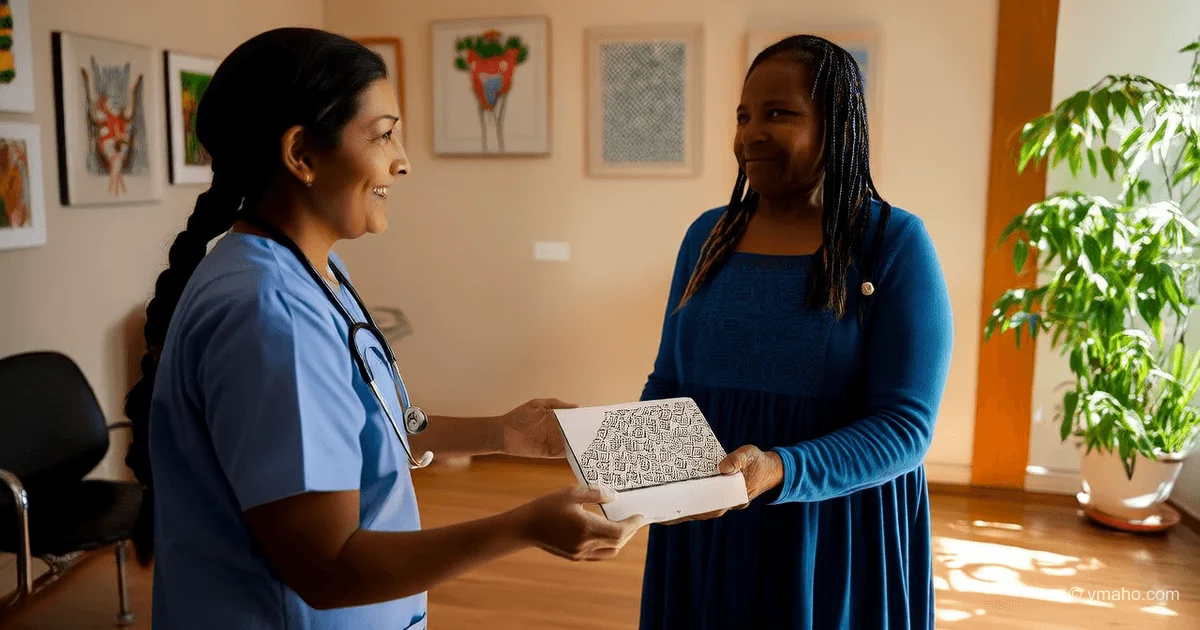
NSW Health Invests $500,000 in Cervical Cancer Fight for Aboriginal Women
New research shows that without urgent measures, elimination of cervical cancer among Aboriginal women will be delayed by 12 years. The campaign focuses on culturally safe self-screening and the work of local health workers.
At first glance, $500,000 is a modest sum for a government program. On second glance, it's exactly the kind of investment that changes the game in women's health, because it targets not the symptom but the root of systemic failure. I look at this news not as a medical journalist but as an analyst of market and behavioral shifts, and I see a signal far more powerful than just fighting one disease.
[The Core]: What's Really Happening
This is not just a charity campaign or a routine health department initiative. It is a strategic dismantling of the "design of distrust" embedded in the healthcare system.
Let's call a spade a spade. Australia is a world leader in cervical cancer elimination, with a target of 2035. But Aboriginal women die from this preventable disease three times more often, and are diagnosed at late stages. Why? Because the screening system was historically designed for white women who visit clinics at convenient times. For women in remote communities who have endured generations of medical racism, visiting a stranger for an intimate procedure is not "healthcare" but an act of overcoming cultural trauma.
The essence of the initiative is that it flips the model: not "we will examine you," but "you take control, and we create a safe space." The bet on self-collection and "culturally safe" screening through local health workers and trusted services is an acknowledgment that medical technology without cultural context is useless.
Timeline and Context
The chain of events leading to this decision was relentless:
- 2007. Australia becomes the first country to launch a national HPV vaccination program, laying the foundation for future elimination.
- 2017. The country switches from the traditional Pap test to primary HPV testing every 5 years — a more accurate and convenient method.
- July 2022. Self-collection is massively rolled out in the program. Result: explosive growth in coverage among "invisible" groups — women who hadn't been screened for 10+ years, remote residents, the elderly. The share of self-collection jumps from 1.2% to nearly 27% in one year.
- March 2026. NSW Health injects over $1.2 million through grants to expand access for vulnerable groups, including LGBTQ+ and migrant communities. That was the groundwork.
- May 2026. New modeling shows a 12-year gap in elimination for Aboriginal women. The response: targeted $500,000 and launch of the "Cervical Screening for Mob" campaign, created with Aboriginal creative agency Blackfisch.
This is not a reaction to a scandal. It is a planned escalation of efforts as overall statistics improve, exposing the "last miles" of inequality.
Who Wins and Who Loses
Winners:
- Aboriginal communities and their health providers. Investments go directly to Aboriginal Medical Services and local nurses, strengthening the infrastructure of trust. The gain is not only in extended lives but also in growing community control over their own health.
- The self-testing market. Giants like Roche, Abbott, and Hologic, which invested in HPV tests with self-collection capability, get a powerful case for global scaling. The HPV test market grows at 10% per year, and the self-collection segment at nearly 11%, heading toward parity with clinical collection. Australia's experience is their main argument when entering Asia and Africa, where screening coverage is still 4%.
- Inclusivity-based campaigns. The Blackfisch x Cancer Institute NSW partnership sets a precedent: health communication ceases to be a "translation" from medical to layman's terms and becomes co-creation with cultural bearers. This is a new benchmark for the entire public health industry.
Losers:
- Proponents of "universal" solutions. The idea that creating an effective test is enough and everyone will rush to use it is finally dying. Without customization for cultural code, language, and psychological barriers, technology does not work.
- Private clinics not ready for inclusion. As the government invests in safe environments at Aboriginal Medical Services, the private sector that ignores these standards loses a growing patient segment.
What the Media Isn't Saying
Insider: $500,000 in NSW is a testing ground for a global reshaping of women's health.
All the hype around "breakthroughs in cancer treatment" misses the dry market fact: WHO has set a goal of eliminating cervical cancer by 2030. That requires 70% screening coverage. The world is not ready. Traditional methods fail to reach isolated, traumatized, or simply busy women — from reservations in Canada to slums in Mumbai.
What NSW Health is doing with Aboriginal women is a "pilot" for the world on the "last mile" method. They are testing the combination of "self-collection + culturally safe environment + community engagement" on the most challenging audience. If the 12-year gap can be closed, it will become a template replicated from Canada to New Zealand, opening a market for turnkey solution providers worth billions of dollars. The fact that the study confirming the effectiveness of self-collection was published in The Lancet Public Health in early 2026 is no coincidence — it's preparation of the evidence base for this global rollout.
Forecast: Next 30 Days and 90 Days
- Next 30 days (by June 11, 2026). The "Cervical Screening for Mob" campaign will gain momentum in the media. We will see a spike in downloads of "Yarning about women's health business" materials. Key: on the back of NSW's success, other states (Queensland, Northern Territory) will announce reviews of their programs in favor of similar culturally adapted models.
- Next 90 days (by August 10, 2026). A link-up with private capital will occur. I expect one of the major players in the laboratory diagnostics market (e.g., Labcorp or Thermo Fisher) to announce a partnership with the Australian government or Aboriginal Medical Services to create an export-ready educational module "Equity by Design." The price tag: at least $2-3 million in R&D investment for new forms of self-testing that will finally remove the "fear of the gynecological chair" from the women's health equation.
— Editorial Team









