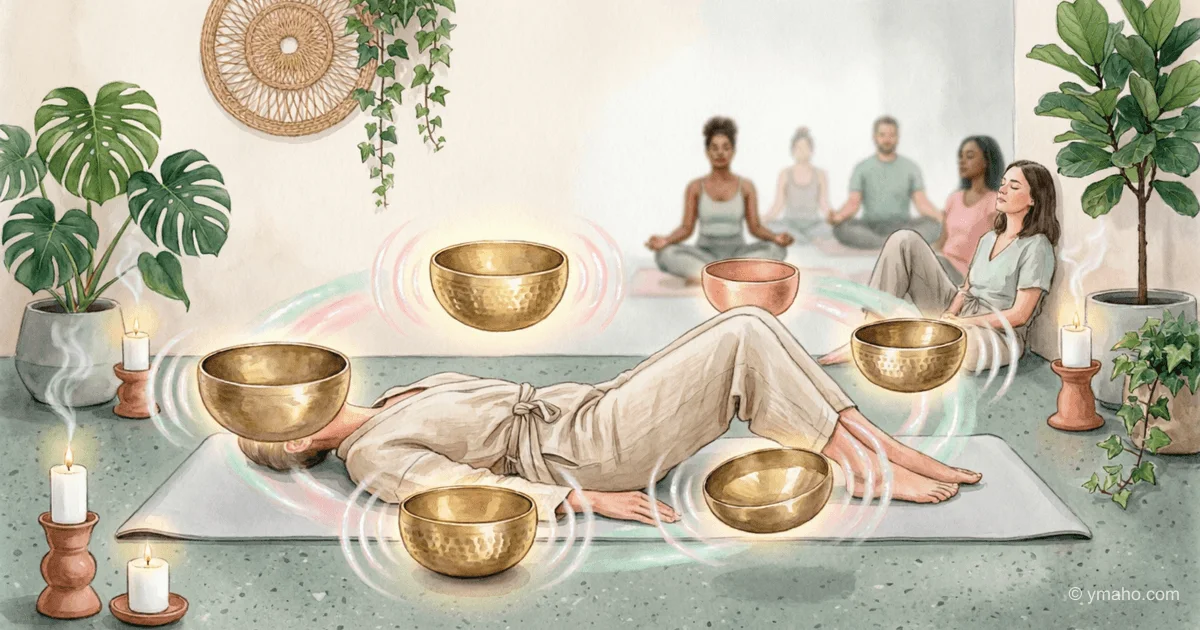
Chakra Healing and Sound Baths Go Mainstream for Anxiety Relief
In 2026, Americans are turning en masse to spiritual wellness practices for emotional alignment. Meditation, chakra work, and sound therapy are replacing rigid fitness regimes.
Analytical article based on the provided news and current market data.
Title: Sound Baths as a Corporate Standard: The End of the 'No Pain, No Gain' Era and the Birth of Vibrational Medicine
If you think the news about chakra healing and sound baths is just another report on hippies in yoga studios, you're wrong. We are witnessing not just a trend in the wellness industry. We are witnessing the systemic legitimization of energy medicine and its integration into the mainstream, including corporate boardrooms and investment portfolios.
Insiders call this phenomenon 'Democratization of Neuroimaging' and 'The End of the HIIT Militarism Era'. The 2026 consumer is tired of pushing themselves. They want to be treated passively, pleasantly, and with scientific backing. And sound baths are the perfect product for this demand.
Let's break down what actually lies behind this 'mystical' trend.
## The Core: What's Really Happening
The news captures a mass shift away from intense fitness regimes toward spiritual wellness practices. But the real mechanism is a shift in the wellness industry's economic model from 'selling effort' to 'selling recovery'.
The key figure the media doesn't show: the global bio-harmonic wellness therapy market (including sound baths, vibrational medicine, and chakra healing) is valued at $2 billion USD in 2026 and growing at a CAGR of 10%, reaching $5 billion by 2033. This is not a marginal sector. It is already a full-fledged industry with projected growth higher than many traditional medical segments.
Why is this happening now? Because science has caught up with esotericism. The mechanism of sound baths has been termed brainwave entrainment. Studies from 2020-2023 (including randomized controlled trials) showed that Tibetan singing bowls reduce tension, anxiety, and anger more effectively than some classical clinical relaxation methods.
## Timeline and Context
- 2020-2022: Pandemic anxiety boom. Explosive growth of meditation apps (the spiritual apps market grew from $2.56 billion in 2025 to $2.99 billion in 2026, CAGR 16.6%).
- 2023-2024: Emergence of corporate interest. Companies like Calm and Headspace begin introducing VR meditations and business content (Headspace XR launched in March 2024).
- May 2026: A bifurcation point. Sound baths move out of yoga studios into corporate conference rooms, hotels, and even churches. People pay to lie on the floor and listen to vibrations—and call it not escapism, but 'nervous system treatment'.
Reason: the spiritual apps market has reached saturation. Users are tired of screens and gadgets. The next logical step is offline, tactile, vibrational. This is a shift from visual content (watching a meditation) to audio-bodily (feeling a frequency).
## Who Wins and Who Loses
(+) Winners: Corporate wellness providers and luxury hotels.
The biggest gains are going to companies that have packaged sound therapy into a B2B product. A prime example is The Sirius Sound®, an Asian sound therapy academy accredited by the CMA (UK) and awarded the SME500 prize in 2025. They sell not 'relaxation' but 'precision frequency medicine' for teams and corporations—neuromuscular regulation, cognitive function recovery, and productivity enhancement.
This is a very smart move. In 2026, corporate wellness programs are no longer a 'bonus of Friday yoga'. They have become a retention tool and KPI. Six sound bath sessions per quarter for top management cost around $500-1000 per person, but if it reduces turnover by 10-15%, HR directors sign off without a second thought.
Luxury hotels (Six Senses, Canyon Ranch) also benefit. They add sound baths to their spa menus as a premium service, boosting average check by 30-40%.
(-) Losers: Traditional fitness clubs and cardio equipment manufacturers.
Chain gyms without a 'passive recovery' segment are losing clients. The female audience aged 25-35, who used to do HIIT and CrossFit, now chooses sound baths as an alternative. The reason is simple: after an hour with bowls, you feel rested and happy. After an hour of burpees, you feel broken and guilty (because you ate pizza afterwards).
The market understands this. The Body, Mind and Energy Healing sector is already valued at $78 billion globally (2025) and will grow to $142 billion by 2033 (CAGR 6.9%). This money is moving away from gyms and treadmills.
## What the Media Isn't Saying
The most non-obvious insight that most readers don't know: the geopolitical crisis of February 2026 became a catalyst for the sound bath boom.
The escalation of the conflict between Iran, the US, and Israel in late February 2026 created a wave of global anxiety and fear. People are massively seeking ways to cope with the anxiety from watching the news. And they find it in sound baths and mindfulness retreats.
Paradox: the conflict destroyed tourist flow to the Middle East (airlines canceled flights, insurance skyrocketed, bookings in the UAE and Jordan plummeted by 40-75%), but led to a shift in demand to safe havens—Southeast Asia, Pacific Islands, and Southern Europe. These regions are now reporting record bookings for mindfulness programs.
Thus, sound baths are not just a fad. They are an adaptive mechanism of the psyche to an era of permanent crisis. People haven't become more spiritual. They have become more anxious, and they need cheap (or not so cheap) ways to calm down that require no effort.
The second hidden factor is the tactile deficit in the digital age. We live in a world where 90% of communication is through a screen. A sound bath offers a rare permission to lie on the floor surrounded by strangers, feel vibrations, and do nothing. It is a legalized form of collective regression and care that psychologists call 'a hug through frequency'.
## Forecast
Next 30 days (June 2026):
The market will be flooded with a wave of 'sound snobs'. The first apps offering 'home sound baths' through headphones with binaural beats will appear. But these will be weak imitations. The real money is in hardware: production of singing bowls, gongs, and tuning forks for professionals. Demand for them will grow by 30-40% in June, as every second coach wants to add 'sound therapy' to their price list.
Next 90 days (August 2026):
- Integration into medicine. The first integrative medicine clinics will begin including sound baths in rehabilitation programs for patients with PTSD, chronic pain, and insomnia. This will happen because studies from 2025-2026 confirmed that sound frequencies lower cortisol and activate the parasympathetic nervous system faster than some medications.
- Certification scandal. Many charlatans will appear who, after two-day courses, pose as 'sound therapy masters'. This will trigger the first lawsuits from clients who got worse (for example, people with epilepsy and pacemakers are contraindicated for sound vibrations). As a result, professional associations (CMA, The Sound Therapy Association) will start actively lobbying for government regulation.
- Growth of the spiritual apps market to $5.5 billion by 2030. But with a twist: apps with VR meditations (like Headspace) will push out simple audio guides. Consumers will want 'immersion', not just a voice in headphones.
Conclusion for investors and analysts: Investing in traditional fitness and cardio equipment is yesterday's news. Invest in passive recovery with scientific backing: manufacturers of certified singing bowls, B2B providers of corporate sound sessions, and brainwave entrainment apps. The 2026 consumer doesn't want to suffer. They want to be 'treated with frequencies' while lying on a mat. And they are willing to pay for it.
— Editorial Team









