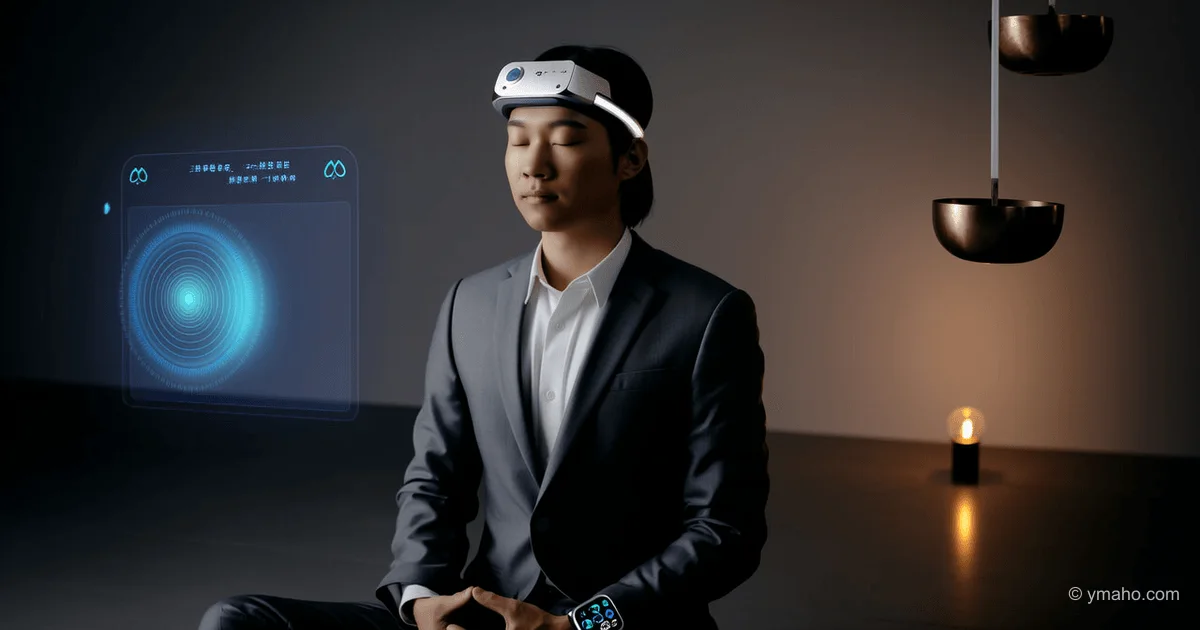
Health Without Perfectionism: Spiritual and Chakra Wellness Go Mainstream in the US
Americans are replacing productivity culture with nervous system care: chakra meditations, sound baths, and breathing practices are becoming daily routines to combat anxiety and burnout.
The shift toward "spiritual wellness" and nervous system care in the US is usually presented as a sign of the nation's enlightenment and maturation. However, as an analyst tracking financial flows in the health industry, I see not so much a fad for chakras as a large-scale and entirely rational attempt by the economically active US population to independently fill the health gaps created by the "productive" collapse of the traditional economy and medicine. We are witnessing not a rejection of productivity, but a transformation of self-healing into a new, extremely expensive form of employment.
The Essence: What Is Really Happening
What the media calls "health without perfectionism" is in fact forced self-funded rehabilitation. The energy and spiritual healing market, valued at $98.9 billion in 2024, is projected to grow to $360.7 billion by 2030, with a compound annual growth rate of 24.1%. This is not a hobby, but a redistribution of financial flows from classical pharmaceuticals and psychiatry to alternative practices.
The root cause is not a trend for mindfulness, but an objective dysfunction of the nation's nervous system. Data from wearable devices has revealed a "chronic overload of the nervous system": persistently low sleep scores, fragmented rest—these point to autonomic dysregulation of the autonomic nervous system (ANS), stuck in "fight or flight" mode. The wellness industry, analyzed annually by the Global Wellness Summit, records a fundamental shift: after years of obsession with tracking and biometrics, a "great market correction" worth $6.3 trillion has begun, driven by the "analysis paralysis" effect. Americans simply broke from self-tracking and are now spending their savings on attempts to calm their amygdala.
Timeline and Context
From January to May 2026, we see the consolidation of the "NeuroCalm Tech" market, already valued at $0.9 billion with a projected growth to $3.1 billion by 2034 (CAGR 15.7%). This includes EEG headsets, smart sleep optimization systems, and AI cognitive platforms. Importantly, in early 2026, Flow received FDA approval for neuromodulation devices, giving the niche clinical credibility and opening the door to insurance reimbursements. In March 2026, analytics show that sound and vibration healing have been identified as a separate fast-growing segment of the alternative medicine market.
It is at this turning point, on May 11, 2026, that a pool of media articles emerges claiming that "spiritual and chakra wellness" is the new routine. In reality, this is not a spontaneous trend but the result of investments in developing wearable-compatible wellness apps and the significant presence of North America (the largest market in the spiritual apps segment, worth $2.99 billion).
Who Wins and Who Loses
Winners:
- Neurotechnology startups and developers of "energy healing" apps. The market for chakra-balancing apps and Reiki sessions is experiencing explosive growth, valued within a multi-billion dollar market alongside yoga and meditation. This is a cheap entry ticket to wellness without the therapist's personal presence.
- Corporate America. Corporate wellness programs are actively absorbing meditation, sound bathing, and mindfulness under the guise of improving employee efficiency. The cost of a Sound Bath at the workplace can reach an additional $300 per session. Companies save on sick leave by shifting stress management onto the workers themselves.
- Hospitality and spa sector. Traditional breathing practices and somatic therapies are increasingly integrated into the hotel business, becoming a new standard unique selling proposition (USP).
Losers:
- Classic productivity and labor. While some retreat to retreats, the share of labor in US national income has fallen to a record low of 53.8%. Workers are not abandoning productivity for chakras—they are being displaced by AI and automation, which take their share of the economy, and wellness becomes a consolation prize for the laid off. Over 78,000 tech specialists lost their jobs in Q1 2026 alone, with 48% of layoffs directly related to AI.
- Pharmaceutical giants (in the mild-to-moderate anxiety segment). When neuromodulation and sound baths receive FDA approval, demand for tranquilizers drops.
- Middle Eastern and Indian pilgrimage centers. North America is emerging as a leader in the spiritual apps market. The Western user no longer needs a guru in the Himalayas; they need a "chakra status" on their Apple Watch.
What the Media Isn't Saying
The biggest secret is that this "spiritual" turn is a direct response to the "AI layoff trap." A research paper titled "The AI Layoff Trap" from April 2026 mathematically proved that corporations, by ruthlessly automating jobs, destroy aggregate consumer demand. Laid-off people lose wages and therefore purchasing power. To somehow keep them as consumers, capital repackages their rehabilitation into expensive "chakra detoxes" and "sound baths." This is not care, but extracting the last money from people the economy has spat out.
The second important point: forced "psychiatrization" through gadgets. "NeuroCalm Tech" is a huge market with a CAGR of 15.7%, where vagus nerve stimulation devices are positioned as must-haves. But this means a healthy person must sleep with an EEG headset to prove they have overcome anxiety. There has been a shift from "measurement" to "meaning," but this meaning is imposed by an algorithm. The irony is that resistance to "productivity culture" has led to the emergence of productive rest, which is just as tracked, monetized, and causes anxiety from not matching the tracker.
Forecast: Next 30 Days and 90 Days
Next 30 days (until June 10, 2026):
A boom in sales of Saged and similar chakra apps will begin, and we will see integrations of crypto payments and trendy directions like astro-tarology with medicine. In response to the rise of "analysis paralysis," aggregator apps will appear that disable notifications for 72 hours with a paid "absolute silence" feature for $19.99.
90 days (August 2026):
The "great correction" will peak. As analysts predict, "optimization" will finally go out of fashion. This will lead to the first high-profile bankruptcy of a major wearable device brand that fails to transition to the "mindfulness" track and remains stuck in the old "productivity tracking" model. More importantly, legal action will begin against employers for implementing AI without a "humanitarian package." Wellness practices (morning meditations) will be written into collective bargaining agreements by court order as compensation for the inhuman pace of automation. Mantra and sound bathing will become your mandatory occupational hygiene, not an act of rebellion.
— Editorial Team









