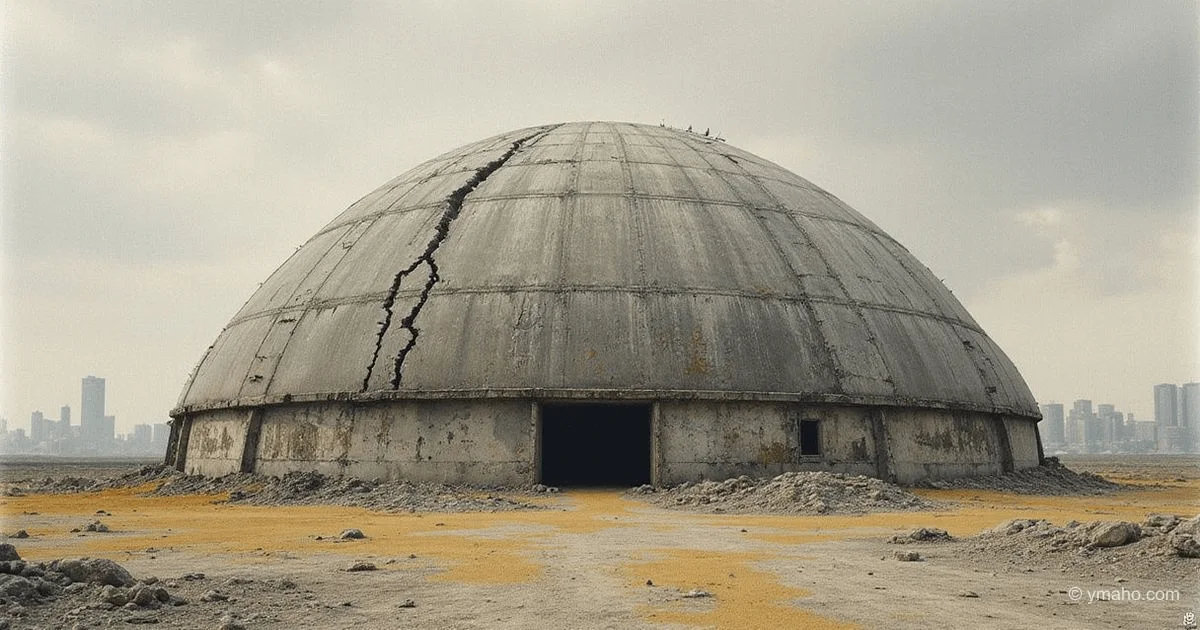
Chernobyl's Sarcophagus Damaged: Why This Threatens the Entire World
In February 2025, a drone strike damaged the protective dome over the ruined reactor at the Chernobyl Nuclear Power Plant. This isn’t just a local incident—it jeopardizes decades of international efforts to prevent another nuclear disaster. If the dome collapses, the consequences could extend far beyond Ukraine’s borders.
What Is the New Safe Confinement and Why Does It Matter?
Imagine a house fire leaves behind a pile of scorched beams still emitting toxic smoke. To protect neighbors and prevent reignition, you’d cover it with an airtight shield. That’s exactly what the New Safe Confinement (NSC) does—an enormous steel dome built in 2019 over the wreckage of Unit 4 at Chernobyl.
Standing at $2.5 billion and constructed with support from over 30 countries, the NSC is designed not only to contain radiation leaks but also to enable the safe, gradual dismantling of the original makeshift sarcophagus built hastily after the 1986 disaster. That old structure is now unstable and could collapse at any moment.
Why Is This Damage a Global Crisis?
The February 2025 drone attack compromised the outer shell of the NSC. While no radiation leak has been detected yet, the damage has effectively halted all decommissioning work on the old sarcophagus—increasing the risk of collapse by the day.
This isn’t just a Ukrainian issue. Radioactive clouds don’t respect borders. In 1986, traces of Chernobyl fallout were found as far away as Sweden and Italy. Today, Europe’s economies are deeply interconnected through transport, trade, and energy networks—contamination in one region could cripple supply chains, agriculture, and power grids across the continent.
Moreover, repairing the NSC will require massive international funding. Estimates range from €100 million to half a billion euros. These funds must be raised by donor nations—but progress is stalled by political disagreements.
Who’s Blocking the Recovery?
Greenpeace Ukraine reports that attempts to impose strict sanctions on Rosatom—the Russian state nuclear corporation—are being blocked by several countries, including France and Hungary. These nations continue to collaborate with Rosatom despite its role in occupying the Zaporizhzhia Nuclear Plant and supporting the war effort.
Meanwhile, billions in contracts with Rosatom—directly or indirectly—fuel military operations. This creates a vicious cycle: one part of the world pays for nuclear safety while another undermines it.
In March 2026, G7 foreign ministers discussed a recovery plan for the NSC. The total project cost is estimated at $575 million. But without unified action and swift response, funding may arrive too late.
Key Takeaways
- Damage to the Chernobyl containment dome makes dismantling the aging sarcophagus impossible—risking a sudden collapse.
- Repair requires hundreds of millions in funding and coordinated global action.
- Political disputes, especially involving Rosatom, are slowing aid.
- A potential collapse wouldn’t be localized—radiation could spread across Europe.
- Chernobyl remains a stark reminder: a local accident can become a global catastrophe.
What This Means for Everyday People
Even if you live thousands of kilometers from Chernobyl, this crisis affects you. First, your country’s taxes might end up funding cleanup efforts that could have been prevented. Second, any new radiation threat in Europe would impact food prices, insurance rates, and public trust in nuclear energy. Finally, Chernobyl teaches us: safety isn’t a one-time investment—it’s an ongoing responsibility that can’t be handed to those who are actively undermining it.
— Editorial Team









