Clean Energy Finally Keeps Pace with Growing Electricity Demand
For the first time, all the extra electricity the world needed last year was met by clean sources like solar and wind, leaving no room for fossil fuels to grow. This means the global energy system is starting a fundamental shift that could affect everything from your utility bill to the stability of the climate.
A think tank called Ember found that in 2025, global electricity demand grew by 849 terawatt-hours—a massive amount of power. To put that in perspective, it's roughly equivalent to adding the entire annual electricity consumption of Germany to the world's grid. Remarkably, solar power alone supplied about three-quarters of that new demand, with wind power providing almost all the rest. This marks a historic tipping point where clean energy growth is finally matching the pace of our increasing hunger for power.
How the Energy Mix Is Changing
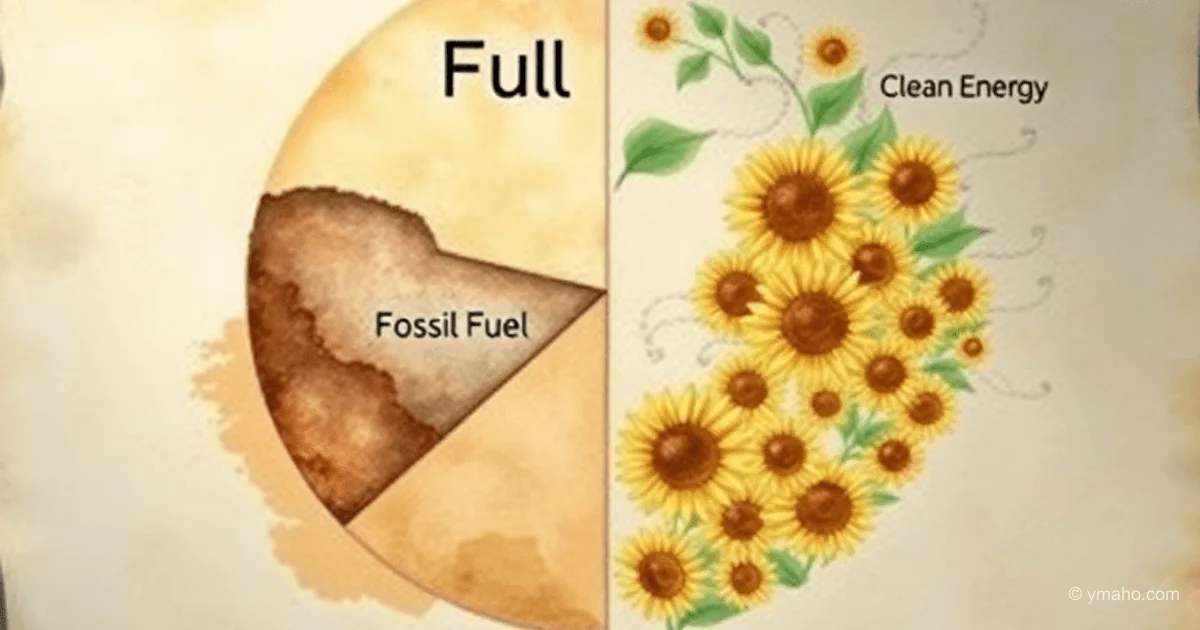
Think of the world's electricity supply like a giant pie. For decades, the biggest slice was always fossil fuels—coal, oil, and natural gas. Last year, the combined slice from all low-emissions sources (solar, wind, hydroelectric, nuclear, and biofuels) reached a record 42.6% of the total pie. While fossil fuels still provided the majority, Ember believes 2025 was the year their share peaked and will now begin to shrink. Their senior analyst explained that clean power deployment has reached such a high level that it can now structurally meet increases in demand. In the coming years, they expect it not only to meet all new demand but also to start pushing fossil fuel generation into decline.
This shift wasn't guaranteed. The previous year, 2024, saw a summer of record heat that drove enormous demand for air conditioning, allowing fossil fuels to grow alongside renewables. However, 2025 demonstrated a new stability. Analysts point to two major drivers: geopolitical shocks and the actions of the world's largest economies.
- Geopolitical Pressure: Events like Russia's invasion of Ukraine in 2022 led European countries to accelerate their renewable energy rollout by about 5% annually. By 2025, Europe produced 71% of its electricity from clean sources.
- Major Emitters Changing Course: For the first time this century, China and India—two of the world's biggest carbon emitters—both scaled back the amount of electricity they generated from fossil fuels in the same year. This collective action was crucial in reaching the global tipping point.
The Debate Over Reliability and Future Shocks
Not all experts are convinced this trend is locked in. Some argue that an energy system must prove itself under extreme conditions—like bitterly cold winters or scorching hot summers—because grids are designed to meet peak demand, not just average yearly demand. A hydrocarbon industry consultant emphasized that renewables can meet new demand but cannot yet guarantee stability without better energy storage and stronger grids. He cited Europe, Japan, and Korea's continued structural dependence on imported natural gas for system stability.
However, other analysts see recent events as reinforcing the shift. The current conflict in the Gulf, for instance, has led some countries to replace gas-fired electricity with renewables rather than coal when prices spike. The International Monetary Fund has advised governments to shield only the most vulnerable households from such price rises to avoid inflation, a policy that could further lower demand for fossil fuels. History also suggests that fossil fuel shocks often change the direction of energy policy, as seen since the 1970s.
Key Takeaways
- A Historic First: In 2025, 100% of new global electricity demand was met by low-emissions energy sources, primarily solar and wind.
- Major Economies Pivot: China and India simultaneously reduced fossil-fuel electricity generation for the first time in this century, a critical factor in the global shift.
- Growth is Accelerating: Over 80% of all wind and solar generation growth since 2000 occurred in just the last decade.
- Emissions Are Decoupling: The growth in carbon emissions (0.4%) was far below global economic growth (3.1%), showing the economy is starting to separate from CO2 output.
- The Road Ahead: While impressive, this progress is still not enough to meet the international goal of limiting global warming to 1.5°C. Fossil-generated electricity would need to drop by about 25% by 2030.
What does this mean for regular people?
This shift towards cleaner electricity can lead to more stable energy prices in the long run, as renewables become less vulnerable to geopolitical shocks that spike fossil fuel costs. It also means the global effort to combat climate change is gaining tangible, measurable momentum, which affects everything from weather patterns to food security. For most people, it signals that the world's energy foundation is being rebuilt, one solar panel and wind turbine at a time.
— Editorial Team









