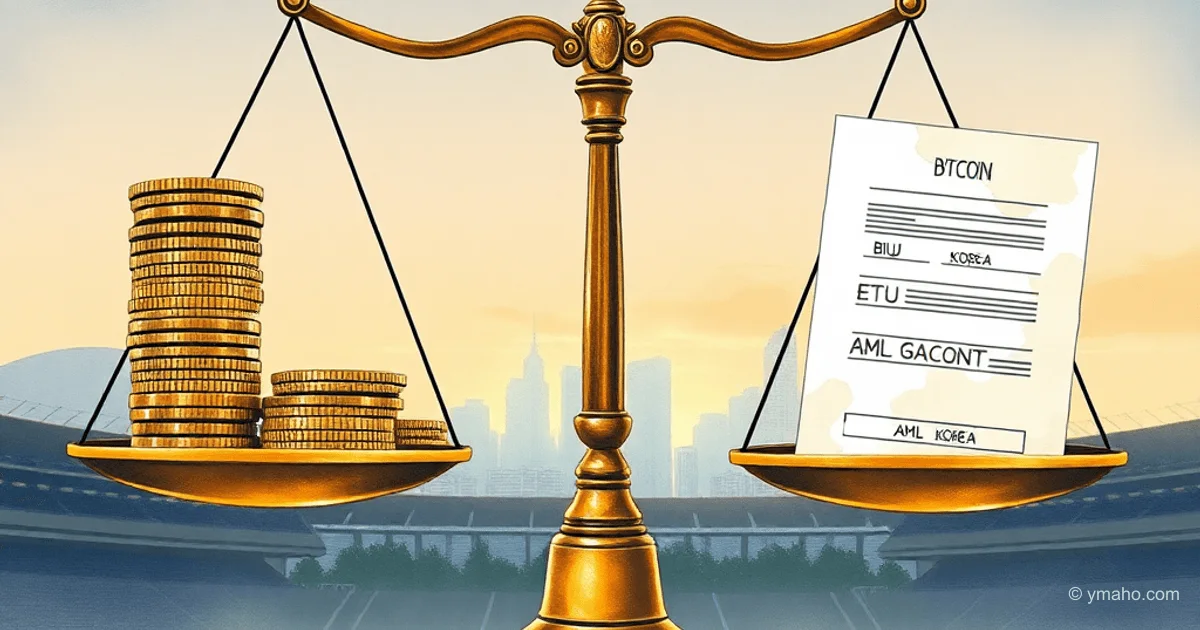
South Korea Sanctions Coinone Exchange for Weak Customer Due Diligence
A major South Korean crypto exchange, Coinone, has been fined $3.5 million and subjected to temporary operational restrictions. Regulators found that the exchange had inadequately verified tens of thousands of users, creating risks of money laundering and other financial crimes. For everyday users, this highlights a critical point: if exchanges don’t prioritize security, your funds and personal data could be at risk.
Why Did Regulators Intervene?
South Korea’s Financial Intelligence Unit (FIU) conducted an audit and determined that Coinone had violated key anti-money laundering (AML) and counter-terrorist financing (CTF) regulations. These rules mandate thorough identity verification for every customer—much like a bank requests identification when opening an account. Without such checks, platforms can easily be exploited for illicit activities.
Here’s what regulators uncovered:
- Approximately 70,000 accounts underwent insufficient verification.
- In 40,000 cases, user data was incomplete or inconsistent.
- Another 30,000 accounts executed transactions without completing mandatory verification steps.
- The exchange processed nearly 10,000 transactions with 16 foreign platforms not registered in South Korea—actions explicitly prohibited under local law.
This isn’t just about paperwork. Imagine walking into a pharmacy and purchasing prescription drugs without a doctor’s note—anyone could abuse the system. Similarly, in the crypto space, lax due diligence allows fraudsters to move funds freely.
What Are the Consequences for Coinone and Its Customers?
The FIU has imposed partial restrictions for three months:
- New users will be unable to deposit funds or withdraw assets.
- Existing customers can continue trading as usual; their assets remain unaffected.
Coinone’s CEO, Cha Moon-hoon, received an official warning, and the company must address the regulator’s concerns within 10 days. The final penalty amount will be finalized afterward.
Interestingly, this isn’t the first incident. In March of the same year, the FIU fined another major exchange, Bithumb, $24 million and imposed six-month restrictions. That case stemmed from a technical glitch: 620,000 bitcoins (worth approximately $42 billion) were accidentally sent to customers, triggering panic and drawing scrutiny from oversight bodies.
What Does This Mean for the Market?
South Korea is one of the world’s leading crypto markets, home to millions of active traders whose trading volumes often rival those of the United States. When regulators begin enforcing strict penalties, it sends a clear message to all exchanges: “Follow the rules—or step aside.”
While these measures bolster long-term market confidence, they may spark short-term selling pressure if investors fear other exchanges could face similar consequences. Platforms that have yet to comply with new requirements are particularly vulnerable.
Key Takeaways:
- This isn’t a hack or a loss of funds—it’s a regulatory violation.
- Current Coinone customers retain access to their assets.
- South Korea is tightening oversight of its crypto market, following the lead of the U.S. and EU.
- Such fines are becoming the norm rather than exceptions.
- Exchanges that fail to adhere to AML/CTF standards risk losing their licenses.
What Does This Mean for Everyday Users?
If you use crypto exchanges, especially in Asia, it’s wise to ensure the platform complies with local laws. Exchanges that neglect identity verification could suddenly restrict withdrawals or even shut down. Opting for a platform with transparent security policies might take a bit more time during onboarding, but it ensures your funds stay safe. Moreover, these regulatory actions help mature and secure the crypto market for everyone in the long run.
— Editorial Team









