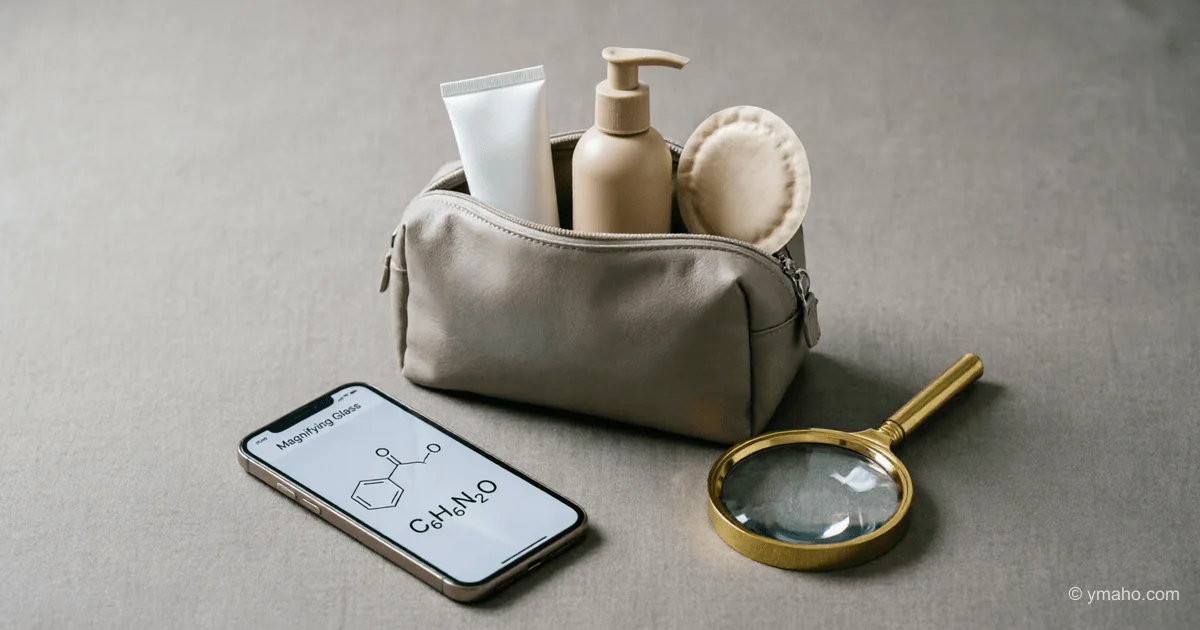
Toward Conscious Cosmetics: The Trend of Rationality and a New Consumption Ethic
The Russian beauty market is transitioning to a model of rational consumption: 89% of Russians acknowledge the value of eco-friendliness, but few are willing to pay for it. Consumers, especially Generation Z, demand transparency and clinical proof of efficacy.
Here is a detailed analytical article based on the provided news and trend.
Toward Conscious Cosmetics: How Rationality and Skepticism Are Reshaping the Russian Beauty Market
Introduction
The Russian consumer is on the verge of a major psychological shift. Just a few years ago, the word "eco-cosmetics" was associated with fashion, high prices, and a vague sense of benefit. Today, in 2026, the trend toward conscious consumption is entering a new phase—a phase of mature rationalism. According to recent studies, 89% of Russians acknowledge the value of eco-friendliness, but not everyone is willing to open their wallet. Moreover, the younger generation (Gen Z) is issuing a new, tough ultimatum to the industry: "Prove efficacy and tell the truth about ingredients, or we won't buy."
This paradox—high declared value but low willingness to pay—reveals the true nature of the beauty market's evolution. "Green enthusiasm" is being replaced by "critical minimalism," where transparency, clinical evidence, and rational packaging design become the main currencies.
Event Details and Timeline
The transition to conscious cosmetics in Russia took about five years, but key changes occurred in the last 18 months. The timeline can be broken down into three stages:
- 2020–2022: The Boom of Intuitive Eco-Friendliness. Consumers mass-purchased products labeled "Eco," "Bio," and "Natural," often overpaying for pretty labels and stories about saving bees. Brand loyalty was high, skepticism low.
- 2023–2024: Disillusionment and Greenwashing Scandals. High-profile investigations revealed that up to 60% of "green" claims on packaging lack evidence. Consumers, burned by buying ineffective but expensive "organic" products, start studying ingredient lists. Around the same time, the first EU law against greenwashing appears, indirectly influencing sentiment in Russia.
- 2025–2026: The Era of Rational Choice. Buyers clearly separate "caring for the planet" from "caring for their skin." 89% of respondents say eco-friendliness is important, but 76% admit they would choose a cheaper plastic product if it is clinically proven more effective than an expensive eco-alternative.
The key trigger for this stage is Generation Z entering the active purchasing phase (ages 18–27). These are digital natives who are used to checking facts via ingredient analysis apps (e.g., Ecogolic or SkinCarisma). They don't believe ads; they believe data.
Impact and Significance
For the entire beauty community, this shift has been shock therapy. Rational consumption has killed two birds with one stone: superficial eco-activism and blind consumerism.
For the world: Russia is following the path of Europe and the US, but with national specifics. In the West, "clinical transparency" was a response to market saturation with "clean cosmetics" (free of parabens, sulfates, etc.) that often spoiled within a month. In Russia, an economic factor was added: declining real incomes forced people to count every ruble and demand from a cream not ideology, but measurable results—hydration, smoothing, or protection.
For the industry: The marketing department is no longer king. Power has shifted to R&D and legal teams. Every claim about "biodegradable packaging" or "hypoallergenic" must be backed by a certificate. Brands that cannot provide clinical trial data on 50+ volunteers lose out to budget mass-market brands with simple, old, and well-studied formulas.
For society: This is the birth of a new type of consumer behavior. People stop hoarding 10 unopened jars "for a rainy day." The trend is to use cosmetics down to the last milliliter. A subculture of "beauty ascetics" emerges, who pride themselves on knowing the chemical formula of every ingredient in their routine.
Reactions of Key Players
The market responded with instant and sharp segmentation.
- Mass Market (L'Etoile, Rive Gauche, chain brands like Cherny Zhemchug): Betting on "honest minimalism." Long lists of 30 plant extracts disappear. Short ingredient lists (sometimes just 10–15 ingredients) appear, focusing on proven components: panthenol, niacinamide, glycerin. Packaging becomes recyclable or made from recycled plastic, and this is prominently displayed on the front.
- Luxury and Niche (L'Occitane, Weleda, Russian brands like Natura Siberica): Going on the offensive through transparency. They publish open clinical trial reports, invite bloggers not to parties but to factory tours. The main feature is "eco without fanaticism": acknowledging that some preservatives (e.g., phenoxyethanol) are necessary for safety, and that's okay.
- DIY and Local Brands (Mi&Ko, Botanika): Using the trend as their main advantage. They offer cosmetics on tap with reusable containers (zero-waste store principle) and full breakdowns of the origin of every liter of oil. These brands, lacking budgets for massive advertising, grow through word-of-mouth in Telegram channels run by ingredient analysts.
A new type of influencer has even emerged—the "myth-buster" who publicly debunks fake-natural brands, garnering millions of views.
Forecast and Conclusions
The movement toward rational consumption in cosmetics is irreversible. In the next 2–3 years, we will witness the following processes:
- The Death of Greenwashing as a Mass Strategy. Clinical evidence will become a mandatory requirement for survival. Unsubstantiated "eco-claims" will be penalized like false drug advertising.
- Rising Popularity of "Smart" Additives and Pharmacy Cosmetics. The rational consumer will go where ingredients are described in medical language—the pharmacy. Brands like La Roche-Posay, Vichy, and their Russian counterparts will gain new momentum.
- Social Stratification in Beauty. The "luxury" segment will clearly split into two parts: a) conspicuous luxury (gold, caviar, platinum) for status display; b) scientific luxury (skin gene maps, personalized 3D-printed cosmetics) for true connoisseurs of efficacy.
- Legislative Changes. In Russia, amendments to the Advertising Law regarding eco-labeling are already being discussed. Likely, by 2027, a mandatory GOST standard for the terms "bio," "eco," and "natural" will appear.
Conclusion. The Russian market's transition to conscious cosmetics is not a fashion fad but a forced, mature response to economic instability and information overload. Consumers no longer want to buy a "story"; they want to buy a "result in a test tube" and "respect for the planet in numbers." Brands that learn to speak to Gen Z in the language of evidence and to millennials in the language of rational care will become leaders of the next decade. The rest will remain in the past, where a pretty label weighed more than clinical research.
— Editorial Team









