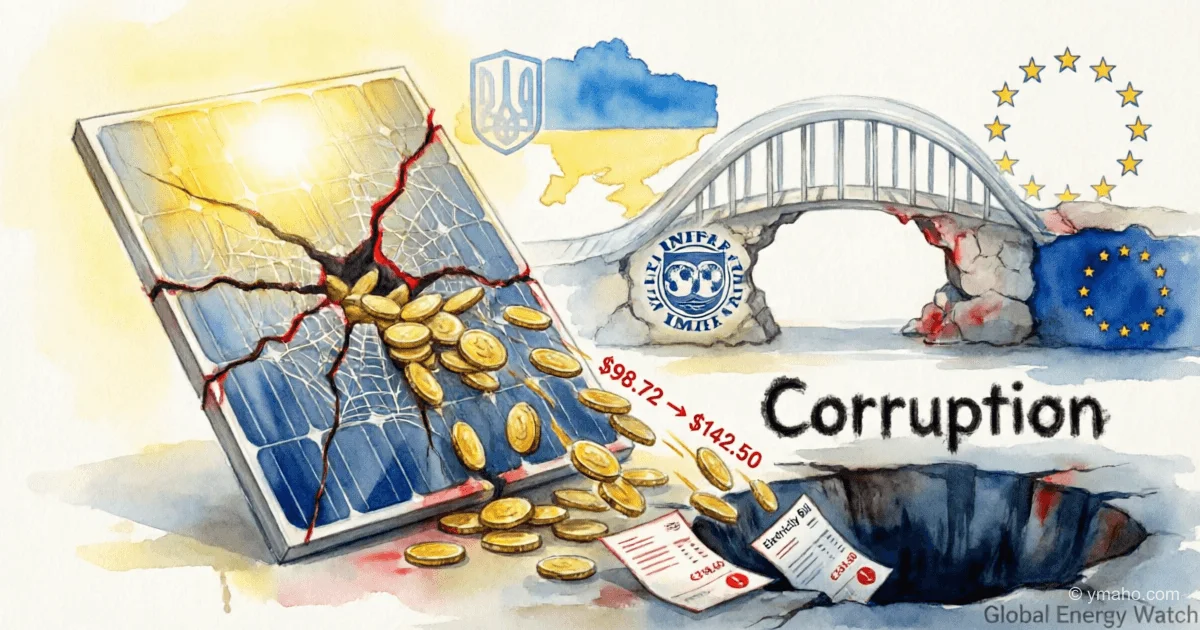
The Shurma Corruption Case: How Ukraine’s “Green Tariff” Impacts Global Markets
Why does a Ukrainian court’s ruling in the Shurma brothers’ case draw attention far beyond Kyiv, reaching London and Washington? Because billions in international aid to Ukraine hinge on whether the country can root out energy sector theft—a move that directly ties into fuel pricing and European stability.
A court has ordered the detention of Rostislav Shurma, former deputy head of the Presidential Office, along with his brother, Oleg. They are accused of embezzling 141 million UAH through the “green” tariff system, which guarantees above-market rates for renewable energy. But the real issue isn’t the sum itself; it’s that these funds were paid for electricity generated at solar facilities on Russian-occupied land in the Zaporizhzhia region. Picture this: you’re footing the bill for power in an apartment that no longer belongs to you because it’s been seized by hostile forces. That was the mechanics of the scheme.
Why the “Green Tariff” Matters Globally
The “green” tariff operates like a government subsidy for renewable energy. Producers lock in a guaranteed, premium rate for every kilowatt-hour they generate, regardless of market fluctuations. The goal is straightforward: incentivize solar and wind development. However, when these installations are built on occupied territories, it creates a glaring paradox: Ukraine ends up subsidizing its adversary with payments for “clean” energy that isn’t actually being produced.
This loophole has long raised eyebrows among international lenders. Kyiv receives billions from the IMF and EU, but those funds come with strict strings attached: crack down on energy sector corruption. If the green tariff framework isn’t overhauled, financial support could freeze. And that wouldn’t just hurt Ukraine; an economic downturn would exacerbate Europe’s energy crunch and drive up global grain prices, given Ukraine’s status as the world’s second-largest agricultural exporter.
How Energy Corruption Hits Your Wallet
International analysts often liken the situation to a leak in an oil pipeline. Funds earmarked for clean energy are siphoned off by middlemen, forcing Ukraine to borrow more to keep the lights on. The national debt compounds rapidly, already surpassing $130 billion. The deeper the corruption, the costlier each loan becomes, and the more volatile European fuel markets grow.
Here’s how the domino effect plays out:
- Embezzlement via green tariffs → Stalled reforms → IMF funding pauses
- Ukraine’s budget shortfall → Hryvnia depreciation → Higher costs for imported goods
- Energy grid instability → European market volatility → Increased residential electricity and gas bills
The Hidden Context Behind the Arrests
A crucial detail: the suspects have been residing in Germany for two years. This isn’t coincidental. European authorities demand the extradition of corruption suspects but carefully vet cases to rule out politically motivated prosecutions. Shurma claims the court’s ruling is merely “preparing the ground for an international manhunt.” In a way, he’s correct: failing to extradite these individuals jeopardizes Ukraine’s credibility with Western partners. That trust is vital, especially since nearly 40% of Kyiv’s state budget relies on foreign assistance.
Meanwhile, the occupied solar farm scheme is just the tip of the iceberg. Investigative reports suggest up to €1 billion annually has been funneled out through the green tariff mechanism. To put that in perspective: imagine someone stealing 100 railcars of gold every single month—and you’re effectively covering the loss through your monthly utility statements.
Key Takeaways
- International lending hinges on energy sector integrity: Without decisive anti-corruption measures, foreign aid could dry up, destabilizing Europe in the process.
- Occupied territories act as a fiscal drain: Subsidizing “phantom” power generation drains critical wartime resources.
- Your household bills are indirectly linked: A weakened Ukrainian economy intensifies Europe’s energy strain and pushes fossil fuel prices higher.
- Extradition serves as a credibility benchmark: Resolving the Shurma case will demonstrate Ukraine’s commitment to transparent, independent judicial processes.
— Editorial Team









