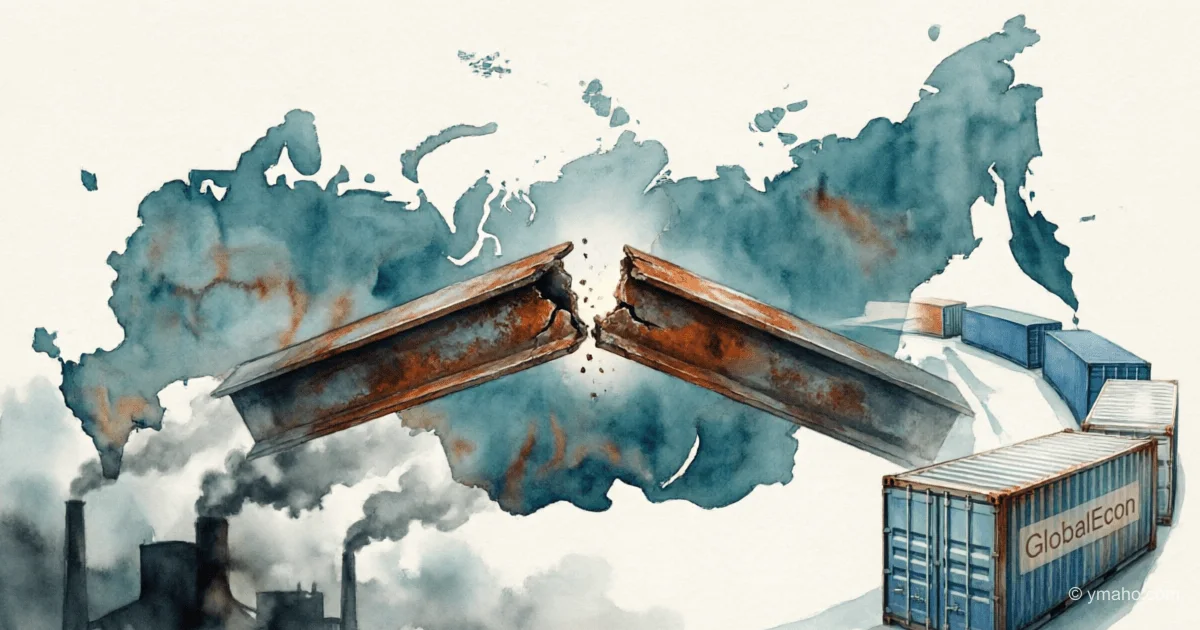
The Steel Crisis in Russia: How Falling Demand Is Hitting Global Prices and Your Wallet
Imagine steel as the backbone of everything around us: from bridges to refrigerators. When consumption in Russia—one of the world’s largest steel producers—plunges by 15%, it’s not just their problem. It’s a signal that the foundations of global industry are shaking, and soon you’ll feel it in the cost of gas, building materials, and even clothing.
Why Steel Is the Pulse of the Global Economy
Steel is the lifeblood of industry: when its circulation slows down, the whole system gets sick. Every car contains a ton of steel, every skyscraper hundreds of tons. When demand drops, it means fewer homes are being built and fewer cars are rolling off assembly lines. In Russia, this downturn accelerated in the first quarter of 2026, hitting a 15% year-over-year decline compared to 14% in 2025. This marks the first time we’ve seen such a sharp drop since 2022, when the world rapidly restructured trade flows in response to sanctions.
The Central Bank of Russia is keeping interest rates high to curb inflation. It’s like riding a bicycle while squeezing both brakes: safe, but much harder to pedal forward. Businesses struggle to secure loans, factories sit idle, and demand for steel continues to fall. Even Severstal, one of the industry’s giants, reported a 7% drop in domestic prices.
Exports Provide Temporary Relief
This highlights how interconnected global markets truly are. While Russian mills struggle with weak domestic demand, their export prices are climbing. Why? China, the world’s top steel supplier, has scaled back shipments, and freight costs have surged. It’s like walking into a grocery store and finding they’ve stopped importing apples from one major country—the prices on the remaining stock immediately skyrocket.
But this lifeline is fragile. Severstal’s revenue fell by 19% (down to $1.9 billion), and profits cratered by 54%. Profit margins dropped to 12%—the worst in the company’s history. For context, healthy metallurgical operations typically run margins above 20%. It’s akin to a retail store selling products at break-even, leaving nothing left for maintenance or payroll.
The Crisis Is Spilling Into Other Sectors
Steel isn’t the only sector feeling the pain. The Russian economy is contracting like a deflated balloon:
- The country’s largest supermarket chain posted a loss for the first time in two decades (a hit of 22.5 billion rubles)
- Twenty coal mining companies have halted production, with another fourteen preparing to do the same
- Rosneft saw profits plummet by 73% due to soaring interest rates and sanctions
This isn’t a localized setback—it’s a systemic breakdown. Sanctions have cut Russia off from modern technology, while high borrowing costs have strangled investment. Picture your paycheck suddenly shrinking while loan rates climb. You’d start cutting back everywhere, including home renovation supplies.
Key Takeaways
- Steel is a barometer for industrial health: Falling demand in Russia signals a slowdown in global manufacturing
- Export prices are rising due to Chinese supply constraints: This offers a temporary reprieve for Russian mills
- The crisis has spread to retail and energy: The fallout extends far beyond metallurgy
- High interest rates are crushing business: The central bank is fighting inflation, but recession is the price
- Sanctions are working indirectly: Technology restrictions are stalling factory upgrades
What Does This Mean for Everyday Consumers?
Global prices for building materials and vehicles could climb as steel supplies tighten. If your country relies on Russian imports, those costs will likely rise too. Most importantly, a downturn in a major economy destabilizes the entire global landscape: reduced trade volume translates directly into higher risks for your savings and job security.
— Editorial Team









