Nature Medicine: CRISPR-Modified Gut Bacteria Used for the First Time to Treat Short Bowel Syndrome in Humans
A genetically engineered strain of Lactobacillus reuteri, programmed to continuously produce glucagon-like peptide-2 in the gut, led to increased absorption area and a 70% reduction in dependence on parenteral nutrition in a pilot study.
We are witnessing a moment when CRISPR is no longer just a petri dish tool but becomes a platform for creating living therapeutic factories inside the human body. The entire previous logic of treating short bowel syndrome relied on administering drugs from the outside—daily injections of teduglutide, twice-weekly glepaglutide, or once-weekly apraglutide costing hundreds of thousands of dollars per year. The group from Nature Medicine did something fundamentally different: they programmed a bacterium that already lives in the gut to continuously produce GLP-2 right at the site of action. This is not a drug; it's a biological implant that the patient takes once and that then works for years.
The Core: What Is Really Happening
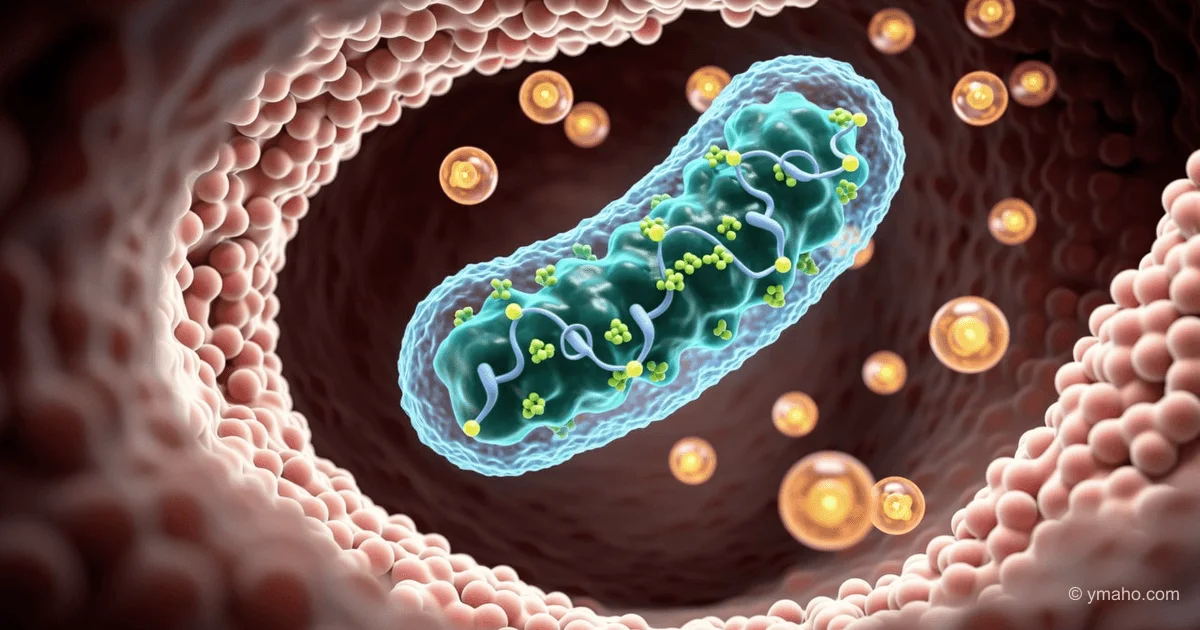
Lactobacillus reuteri is not a random choice. It is a commensal bacterium that naturally inhabits the human gastrointestinal tract, and it was chosen as a chassis for delivering glucagon-like peptide-2 precisely because it does not trigger an immune response and can stably colonize the gut. The engineers used CRISPR not to cut out a gene but to insert the GLP-2 gene with a constitutive promoter that works continuously and never shuts off. The bacterium becomes a miniature pharmaceutical factory, producing GLP-2 directly in the mucous membrane. Unlike injectable teduglutide, which the patient must receive daily, the bacterial vector ensures continuous hormone production, fundamentally changing pharmacokinetics—instead of peaks and troughs after injections, there is a steady physiological background that better stimulates intestinal epithelial proliferation.
The result—a 70% reduction in dependence on parenteral nutrition—means that patients who have spent their lives hooked up to IV drips for 12-16 hours a day suddenly gain nearly normal lives. And parenteral nutrition costs between $100,000 and $150,000 per patient per year, not counting complications like catheter infections, sepsis, thrombosis, and liver failure.
Timeline and Context
The roadmap for GLP-2 therapy did not start today. Teduglutide (Gattex), a GLP-2 analog with an alanine-to-glycine substitution at position 2, was approved by the FDA in 2012 as the first drug for short bowel syndrome. It works: a 2025 meta-analysis summarizing four randomized trials involving 283 patients showed a significant reduction in parenteral support volume compared to placebo. However, teduglutide has two fatal flaws: its half-life requires daily subcutaneous injections, and its price in the US is around $300,000 per year, limiting real-world use—post-marketing surveillance data from Inserm/Paris showed that out of 331 patients with short bowel syndrome, only 56 (16.9%) received teduglutide. The rest either could not afford the drug or could not manage daily injections.
The next generation—glepaglutide from Zealand Pharma and apraglutide from Ironwood Pharmaceuticals—addresses the dosing frequency issue. Glepaglutide is administered twice weekly and completed Phase 3b, showing an increase in wet weight absorption of 398 g/day and a reduction in parenteral support volume of 800 mL/day after 52 weeks. Apraglutide in the STARS study showed that patients gained additional days without parenteral support each week. But both drugs are still injections, still expensive recombinant peptides, and require lifelong use.
Now the Nature Medicine group offers a third path. CRISPR-modified Lactobacillus reuteri programmed for continuous GLP-2 production is not an improvement of an existing molecule but a complete paradigm shift in delivery. Investors who can read between the lines in press releases already understand: if bacterial GLP-2 is as effective as peptide analogs, the multi-billion-dollar market for oral GLP-2 peptide drugs will begin to shrink before it even peaks.
Who Wins and Who Loses
The main beneficiary is not named in the article, but it is easy to deduce from the patent landscape. Takeda Pharmaceutical, which acquired Shire-NPS in 2019, holds key patents on teduglutide, including US 9,974,835 covering treatment of patients with a colon in continuity. More importantly, Takeda also holds patents on GLP-2 peptide bodies—Fc-fusion versions of GLP-2 with extended half-lives. If the bacterial approach works, Takeda can leverage its GLP-2 patent portfolio to license or buy the bacterial platform as an alternative to its own peptide drugs.
Zealand Pharma and Ironwood Pharmaceuticals lose on a 5-7 year horizon. Both companies have invested hundreds of millions of dollars in clinical trials for glepaglutide and apraglutide, respectively, and both count on the growing SBS-IF market, estimated at $1.2 billion by 2028. But bacterial GLP-2, administered once and producing the hormone continuously, undermines the very economics of chronic therapy. Why pay for lifelong injections when you can take a bacterium once?
An unexpected loser: companies developing Fc-fusion and albumin conjugate technologies for GLP-2. Hanmi Pharm, AstraZeneca, and Novo Nordisk are actively patenting extended-release forms of GLP-2. But a bacterial vector providing continuous in situ hormone production makes half-life extension less relevant. The bacterium lives in the gut and produces GLP-2 on site, bypassing peptide degradation in plasma and hepatic clearance. This is a classic example of an innovation that renders an entire development direction obsolete.
What the Media Isn't Saying
The Nature Medicine journalists wrote about clinical results but sidestepped the regulatory nightmare awaiting CRISPR-modified probiotics. According to a review in Microbial Cell Factories from April 2026, engineered probiotics expressing foreign genes (and human GLP-2 is a foreign gene for lactobacilli) fall under the strictest safety assessment requirements, including quantitative evaluation of horizontal gene transfer. Regulatory heterogeneity between the FDA and EMA remains unresolved: EFSA has issued guidance that modifications involving only deletions or reinsertions of native sequences may qualify for a simplified procedure, but a construct with transgenic GLP-2 clearly falls outside these bounds.
This means the manufacturer must prove three things: that the modified bacterium will not transfer the GLP-2 gene to other gut microbes; that long-term GLP-2 expression in the mucosa will not cause hyperplasia with malignancy risk; and that the immune system will not develop antibodies to human GLP-2 presented by the bacterium in an unusual context. The last risk is especially relevant for the pediatric population, which constitutes a significant portion of short bowel syndrome patients—a study at Meyer Children's Hospital using intestinal organoids is precisely aimed at investigating variability in GLP-2 response in children.
The true cost of bringing such a product to market will include not only GMP production of bacteria but also years of post-marketing environmental safety monitoring—making bacterial GLP-2 an investment with a payback horizon of at least 8-10 years, completely excluding venture funds focused on 3-5 year exits.
Forecast: Next 30 and 90 Days
In the next 30 days, expect Zealand Pharma to issue a press release highlighting the unique advantages of glepaglutide over "experimental approaches"—a defensive communication aimed at calming investors after the Nature publication. Ironwood Pharmaceuticals, which presented STARS data on apraglutide at DDW 2026, will also ramp up its information campaign, especially regarding long-term safety—the only area where peptide analogs currently have an edge over CRISPR bacteria.
Within 90 days, we will see something more explosive: one of the major players in peptide GLP-2 analogs—likely Takeda or Novo Nordisk—will announce a strategic partnership or acquisition of a stake in a biotech startup working on engineered probiotics. The deal size will be in the range of $150-200 million upfront, and this will be a turning point that transforms CRISPR probiotics from an academic curiosity into the next big battlefield in pharma. Peptide GLP-2 analogs, which today cost $200,000-$300,000 per year and require lifelong injections, will suddenly become yesterday's technology—and this will happen not in 20 years, but faster than anyone expects.
— Editorial Team









