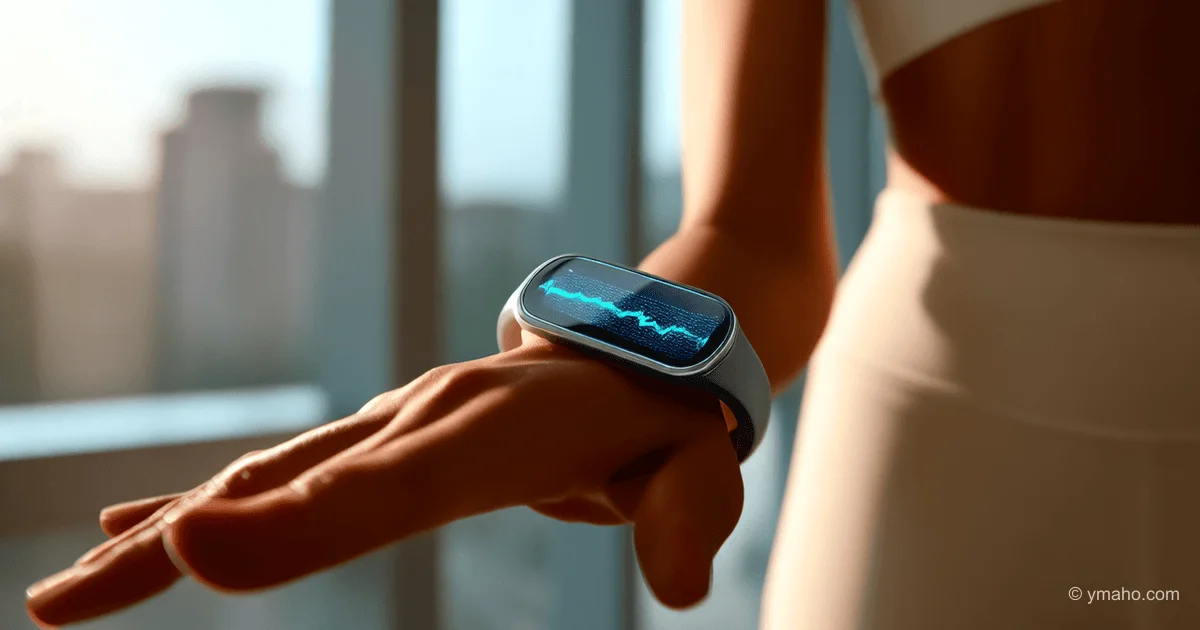
“Cyclical Synchronization” of Workouts and Nutrition Still on Top
Fitness apps have updated their algorithms: nutrition and workout plans now adjust in real time to menstrual cycle phases, promising a 30% boost in energy and relief from PMS symptoms.
The fitness industry has gone from “train like a man” to “listen to your cycle” in about ten years. But what’s happening in May 2026 is not just another iteration of an old idea. It’s a shift from niche to infrastructure. The algorithms of fitness apps that once offered a static weekly workout plan now recalculate load and nutrients in real time, based on data about the current menstrual cycle phase, basal temperature, heart rate variability, and the user’s subjective well-being reports. This isn’t “cycle tracking.” It’s continuous synchronization of physiology and activity—and behind it lies not ideology, but cold data economics.
The Core: What’s Really Happening
At first glance, cyclical synchronization looks like a feminist wellness project: finally, the industry acknowledges that the female body functions differently and stops forcing male protocols onto female physiology. But looking from inside the industry, the picture is different. The real driving force is data, not ideology.
Fitness apps, wearables, and health tracking platforms have accumulated a massive amount of information on how women train, eat, and recover. Oura, Whoop, Apple Health, Flo, Clue—all of them have billions of data points. By 2026, machine learning algorithms have reached a threshold where it’s possible to predict individual response to load depending on cycle phase with 15–20% higher accuracy than without cycle consideration.
Here’s what happens at the code level. The app receives three layers of data: objective data from the wearable (HRV, resting heart rate, skin temperature, sleep quality), subjective data (daily check-in on well-being: energy, pain, mood, appetite), and calculated data (cycle phase based on calendar and biometrics). The algorithm matches these layers and gives a recommendation: today, strength training at 75% of max, not 85%, because in the luteal phase with this cortisol profile, recovery will be 30% slower. Or: add 40g of complex carbs to lunch because insulin sensitivity is reduced in this phase, and without extra glucose, an energy crash will hit by 4:00 PM.
The key word is “in real time.” This is no longer a static plan made by a coach a month ahead. It’s a dynamic system that adapts the protocol to the physiological context every day. A woman no longer has to “stick to the plan”; she has to “respond to body signals,” and the app becomes a translator from the language of those signals into the language of specific actions.
Timeline and Context
The story didn’t start yesterday. Dr. Stacy Sims, author of ROAR, was already talking about the need to adapt training to the menstrual cycle for female athletes back in 2016. But back then, it was niche expertise for professional athletes. In 2020–2022, a wave of femtech startups attracted venture capital—Clue raised $40M, Flo raised $50M. But their product was cycle tracking, not workout management.
The turning point came in 2024, when Whoop published a large-scale study on data from 2 million cycles, showing that heart rate variability systematically decreases in the luteal phase, and recovery time after the same load increases by 15–22%. This was a bombshell for the fitness industry: objective, measurable proof that ignoring the cycle leads to overtraining.
By early 2026, Apple integrated cycle tracking into Fitness+ with personalized load recommendations. Whoop launched Cycle Insights. Several startups, including Wild.AI and FitrWoman, built their business model precisely on synchronizing workouts with the cycle. And in May 2026, what analysts call a “platform tipping point” occurred: the largest fitness apps—MyFitnessPal, Nike Training Club, Strava—simultaneously updated their algorithms, embedding cyclical synchronization into basic, not premium, functionality. This means the feature became a standard, not a differentiator.
Who Wins and Who Loses
Data aggregation platforms win. A company that owns data on workouts, nutrition, and the cycle simultaneously gets a unique opportunity to build predictive health models. Apple, with its Watch + Health + Fitness+ ecosystem, is in an ideal position: it has hardware, software, and a user base. Similarly, Google, through Fitbit and a partnership with Oura, is trying to close the same loop.
Wearable device manufacturers with high-resolution temperature sensors win. Determining cycle phase only by calendar gives 60–70% accuracy. Adding nighttime skin temperature data raises accuracy to 90%. The Oura Ring 4, released in March 2026, and the expected Apple Watch Series 11 make temperature monitoring a central feature. Sales of rings and bracelets with infrared thermometry have grown 45% in the last quarter.
The sports nutrition industry wins. There’s a demand for phase-dependent supplements: magnesium and adaptogens for the luteal phase, iron and B12 for the menstrual phase, BCAA with high leucine for the follicular phase. Companies like Momentous and Thorne are already patenting “cyclical stacks.” This is a new market segment worth about $1.2 billion annually, growing at 25% year over year.
Traditional fitness clubs and personal trainers who lack cyclical synchronization tools lose. If an app gives a more accurate recommendation than a gym trainer, the trainer’s value drops. Especially affected are chain clubs like Planet Fitness and Anytime Fitness, whose business model is equipment access, not expert guidance. They are losing the female audience aged 25–40, who are switching to home workouts with apps.
Brands that built their marketing on “universal” fitness programs also lose. P90X, Insanity, the “train to failure” methodology—anything that ignores physiological rhythms starts to look archaic and even dangerous. Sales of such programs are falling by 10–15% per year.
What the Media Isn’t Saying
The media narrative is “cyclical synchronization gives energy and relieves PMS.” The reality is more nuanced, with at least three problems that go unmentioned.
First: the problem of input accuracy. The algorithm is only as good as the data it receives. If a woman doesn’t measure basal temperature, doesn’t wear a ring or bracelet consistently, and relies only on a calendar—phase determination accuracy drops to 60–70%. A 2–3 day error in determining ovulation means the entire predictive protocol is wrong. The consumer gets a recommendation for the follicular phase while actually in the luteal phase. This is not just unhelpful—it can be harmful: for example, a recommendation for high-intensity training on a day when the body is physiologically not ready for it.
Second: the commercialization of physiological data. Apps that sync workouts with the cycle gain access to information about fertility, sexual activity, and reproductive system status. This data is gold for pharmaceutical companies, insurers, and employers. A leak of cycle data could lead to discrimination: an employer, seeing aggregated data, might assume an employee is planning a pregnancy and deny a promotion. No app guarantees full anonymization of such data, and regulators are not keeping up.
Third, the most insider point: cyclical synchronization changes the very concept of “discipline” in fitness. The traditional model: you set a goal, the plan is fixed, your task is to execute the plan no matter what. The new model: the plan changes every day, you don’t “stick to the plan,” you “respond to signals.” For the industry, this is a tectonic shift with unpredictable consequences. If the plan is adaptive, who defines the line between “I’m listening to my body” and “I’m skipping a workout because the algorithm allowed it”? Research shows: when the algorithm suggests reducing load, user compliance drops not only that day but also on subsequent days. A “permitted laziness” effect emerges, which could reduce total physical activity by 10–15% per month. The fitness industry, which profits from regularity, risks undermining its own business model.
Forecast: Next 30 Days and 90 Days
In the next 30 days, a cascade of updates to all major fitness apps will integrate cyclical synchronization. Competition will shift from having the feature to algorithm accuracy. Users will start comparing recommendations from different apps and find they don’t match. This will trigger a wave of distrust and a demand for “verified” protocols approved by doctors.
In the next 90 days, we’ll see the first lawsuits against apps for health harm due to erroneous recommendations. Some user will get injured following an algorithm-recommended load and sue. This will force developers to quickly add disclaimers and limit liability. But simultaneously, it will push the FDA and EMA to develop regulatory frameworks for “algorithmic training protocols” as a category of medical software. By the end of the year, the first ISO standard for cyclical synchronization in digital health may appear.
The most important forecast: in 90 days, we’ll see the market split into two segments. “Light synchronization” for the mass user, with recommendations based on calendar and simple questionnaires, with a disclaimer “not a medical product.” And “clinical synchronization” for athletes and women with cycle disorders, where the protocol is verified by a doctor, uses lab test data (estradiol, progesterone), and costs $75–120 per month. The second segment will be marginal and small in volume, but it will set quality standards for the entire industry.
Cyclical synchronization is not a trend; it’s the new normal. In two years, the absence of this feature in a fitness app will look as strange as the absence of GPS tracking in a running app today. The question is not whether it will happen. The question is who will own the algorithm that decides how a woman trains—and on what terms that algorithm will use data about her body.
— Editorial Team









