Giant Cargo Ship Brings Quantum Experiments and Stem Cell Tech to Space Station
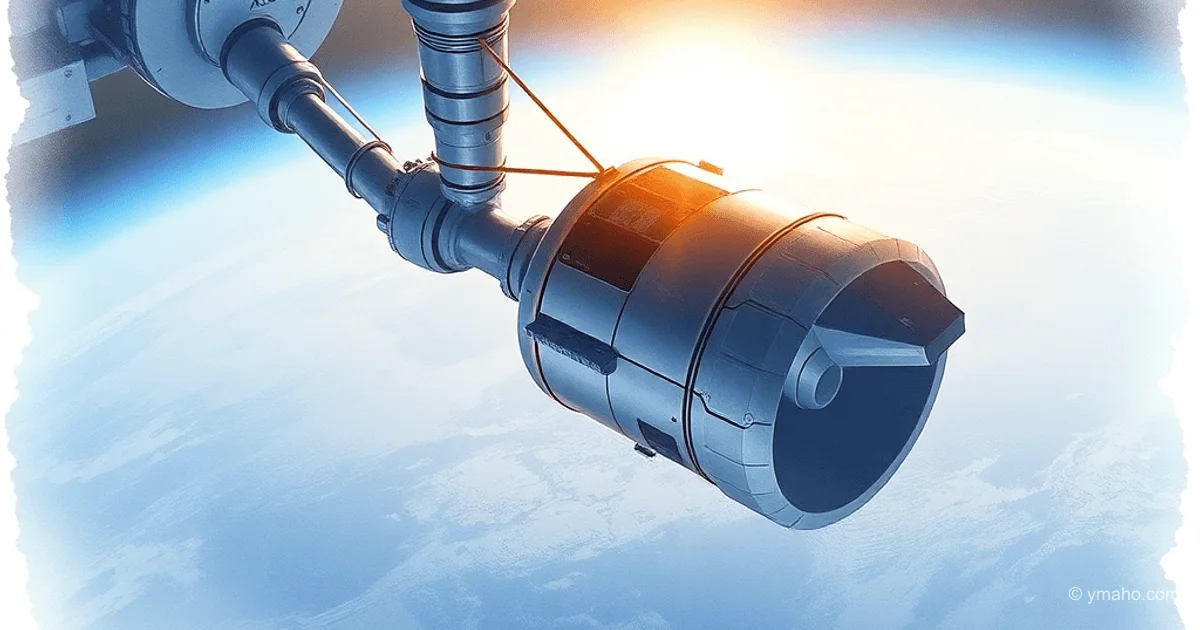
A massive robotic arm reached out from the International Space Station this week and gently grabbed a silver spacecraft filled with cutting-edge science gear—like a cosmic delivery van arriving just in time. This isn’t just another supply run: it’s carrying experiments that could help us detect invisible dark matter, grow life-saving stem cells, and even protect GPS signals from solar storms.
Why This Delivery Matters More Than You Think
Most people picture space missions as rockets blasting off or astronauts floating in zero gravity. But the real magic often happens in quiet cargo holds like this one. The Cygnus XL spacecraft—named the S.S. Steven R. Nagel after a veteran shuttle astronaut—brought about 11,000 pounds of equipment to the station. That’s roughly the weight of two adult rhinos, all packed into a cylinder no bigger than a small school bus.
Unlike flashy launches, these resupply missions are the unsung backbone of space science. Without them, the space station would run out of food, spare parts, and—most importantly—fresh experiments. Think of it like restocking a remote research lab on a mountain peak, except the mountain is orbiting Earth at 17,500 miles per hour.
What’s Inside the Cosmic Care Package?
The cargo includes several high-stakes science projects:
- A quantum science module designed to hunt for dark matter—the mysterious stuff that makes up about 27% of the universe but has never been directly seen. On Earth, vibrations and gravity interfere with ultra-sensitive detectors. In space, they can operate in near-perfect stillness.
- Equipment to boost therapeutic stem cell production. Growing these cells in microgravity may help scientists create more effective treatments for cancer and blood disorders—because without gravity pulling things down, cells can organize in ways impossible on Earth.
- A gut microbiome study examining how spaceflight changes the trillions of bacteria living inside astronauts’ digestive systems. Since these microbes affect immunity and mood, understanding them is key to keeping crews healthy on long missions.
- A new space weather receiver that could improve forecasts of solar storms. These eruptions from the sun can knock out satellites, disrupt GPS, and even cause power grid failures on Earth—so better prediction equals better protection.
How It Got There—and What Happens Next
The Cygnus XL launched atop a SpaceX Falcon 9 rocket from Florida on April 11, 2026. Two days later, NASA astronaut Chris Williams used the station’s 58-foot-long Canadarm2—a robotic limb built by Canada—to snag the spacecraft as it drifted nearby. It’s like threading a needle while both your hand and the needle are moving at highway speeds.
Now berthed to the Unity module, the ship will stay docked until October. During those six months, astronauts will unpack its contents, run experiments, and eventually fill it with trash. When full, Cygnus will undock, burn up safely in Earth’s atmosphere, and vanish like a shooting star—taking waste with it.
Key Takeaways
- The Cygnus XL delivered 11,000 pounds of science gear and supplies to the International Space Station on April 13, 2026.
- Experiments onboard aim to detect dark matter, improve stem cell therapies, and predict dangerous solar storms.
- Microgravity allows unique biological and quantum research impossible on Earth.
- This mission is Northrop Grumman’s 24th cargo flight under NASA’s Commercial Resupply Services contract.
- The spacecraft will remain attached until October 2026, then dispose of station waste by burning up on reentry.
Why Should You Care?
You might never go to space, but the science happening there could touch your life sooner than you think. Better stem cell techniques might lead to new cancer treatments. Improved space weather forecasts could prevent your phone’s GPS from glitching during a solar storm. And understanding dark matter? That’s about figuring out what most of the universe is actually made of—which reshapes our entire cosmic story.
Space isn’t just about exploration; it’s a high-altitude laboratory helping solve problems right here on Earth.
— Editorial Team









