US Prepares 'Final Strike' on Iran with Dark Eagle Hypersonic Missiles
US military command is considering deploying new weapons if negotiations on Tehran's peace plan reach a dead end.
'Dark Eagle' vs. Persia: What the 'Final Strike' on Iran Means for the World
Introduction
As the embers of diplomatic hope smolder in Pakistan, Washington D.C. is preparing to turn the page on military history. According to global news agencies, the US Central Command (CENTCOM) has asked President Trump for authorization to deliver a 'final strike' against Iran using the latest hypersonic weapon, Dark Eagle.
The ceasefire regime established on April 9 was shattered by the failure of talks in Islamabad, and now the Trump administration appears ready to shift from a strategy of containment to one of total destruction of the Islamic Republic's military potential. But is the US Army itself ready for this? And how will Tehran respond, given that its new military doctrine has already proven highly effective against a technologically superior adversary on the Gulf's ground?
Event Details and Timeline
The idea of a decisive strike did not emerge from nowhere. The first phase of the conflict, which began on February 28 with a joint US-Israeli operation, inflicted serious damage on Iran's infrastructure and military leadership but did not lead to Tehran's capitulation.
The main tactical problem for the Americans today is the inaccessibility of targets. Iran, learning from the first weeks of the war, has moved its mobile ballistic missile launchers beyond the range of the standard US PrSM missile, which can only strike targets at distances of up to 480–500 km.
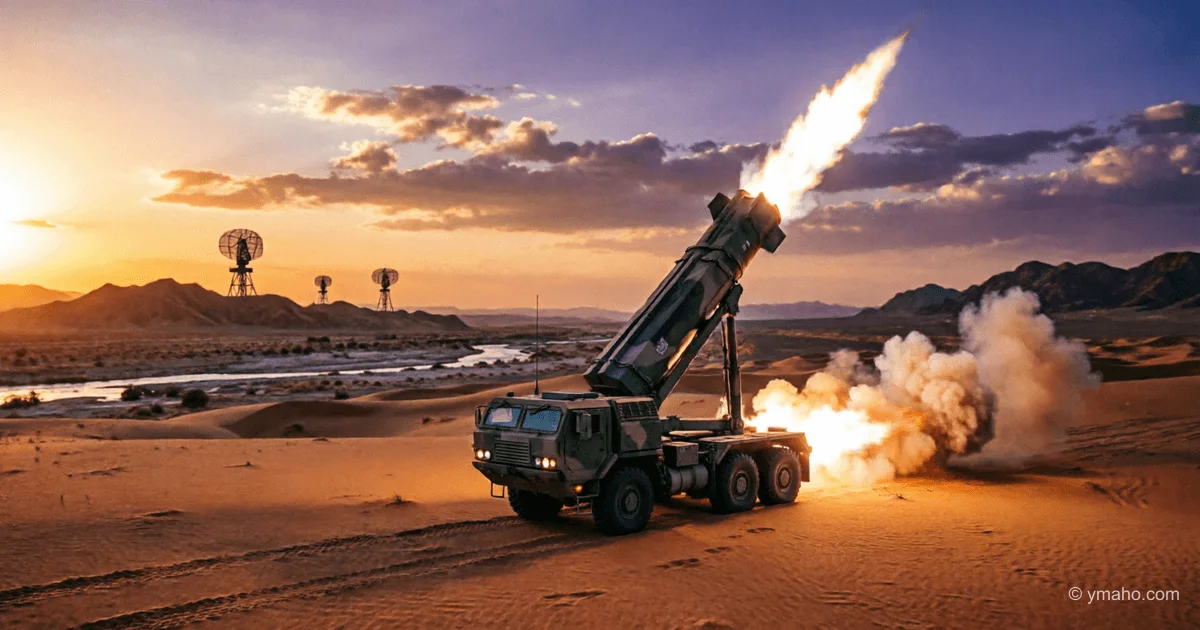
To 'reach' launchers deep inside Iranian territory, CENTCOM has requested permission to deploy the LRHW (Long-Range Hypersonic Weapon), a strategic system known as Dark Eagle.
Key Characteristics of Dark Eagle:
- Range: 2,700 to 3,700 km, theoretically covering any point on the map of Iran.
- Speed: Up to Mach 17 (over 20,000 km/h), making interception by existing missile defense systems virtually impossible.
- Warhead: Paradoxically small—only about 13.6 kg of explosives.
Status and Timeline:
As of now, no decision has been made. Moreover, CENTCOM's request reveals an open secret: the Dark Eagle system has not yet been officially adopted and is still in the experimental combat phase. Production is extremely limited: about 12 missiles per year, with a total stockpile possibly less than a dozen.
The Middle East is turning into a testing ground for the Pentagon. If Trump gives the green light, Dark Eagle will mark the first time hypersonic weapons are used in actual combat (excluding Russia's Kinzhal in Ukraine).
Impact and Significance (for the World / Industry / Society)
This move changes the rules of the game on several levels.
1. Effectiveness vs. Reality.
In destroying a missile base, the difference between an expensive hypersonic missile ($15–20 million per unit) and a Tomahawk cruise missile ($1–2 million) is not obvious. Military experts are already questioning tactical feasibility: even if a storage facility is hit, the US cannot eliminate the very idea of a retaliatory missile strike from Iran.
2. 'Overton Window' for Iran.
As analysts note, using hypersonics is a desperate attempt to intimidate. However, Iran claims to have its own hypersonic weapons (presumably the Fattah missile). Using Dark Eagle would provoke Tehran to deploy these systems in response, opening a Pandora's box of new, even more destructive technologies aimed at US aircraft carriers and allied bases in the Gulf.
3. Demonstration for Moscow and Beijing.
For the US, the operation against Iran is a chance to synchronize watches with Russia and China in the hypersonic arms race. While Russia uses Kinzhal and Zircon in Ukraine, and China tests the Dongfeng-17, the US is desperately trying to prove it is not falling behind.
Reactions of Key Players
USA: President Trump, according to media reports, is actively negotiating with Congress, as the formal authorization for war expires on May 1. The lack of an official decision on Dark Eagle indicates a split in the establishment: some want war to the bitter end, while others fear being dragged into a quagmire.
Israel: The IDF and Israeli Ministry of Defense are ramping up power. The ports of Ashdod and Haifa have received 6,500 tons of military equipment and ammunition from the US, the largest replenishment of arsenals in recent years. Israel is ready to act both alone and in coordination with the Americans, viewing Iran's nuclear program as existential threat number one.
Iran: New Supreme Leader Mojtaba Khamenei, in his first address, stated that Americans 'have no place in the future of the Persian Gulf region.' Iran has decentralized its command system and prepared for decapitation by replacing killed generals with new personnel. If a strike is carried out, Tehran has promised to make it 'long and painful.'
Forecast and Conclusions
The likely scenario for developments is as follows:
- Political knife: If Trump approves the 'final strike,' it will be an attempt to solve the Iranian problem in one fell swoop: destroy the leadership, nuclear infrastructure, and remnants of the military-industrial complex.
- Price of success: Even a perfectly executed operation does not guarantee peace. 'Winning' in Iran through military means is impossible—this is a country with a deep history and tradition of resistance. Especially while Hamas in Gaza and Hezbollah in Lebanon are still alive.
- Price of failure: Using 'raw' weapons in large quantities could lead to technical failures or interception of debris. But the main danger is retaliatory escalation. Iran could strike Israeli cities not just with missiles but with chemical or biological weapons (if available), inevitably leading to a full-scale war involving ground forces.
The world stands on the brink. Information about Dark Eagle is not so much a military plan as a final psychological pressure on Iran before the choice between peace and World War III in the region is made. As long as no decision has been made, diplomacy still has one last chance.
— Editorial Team









