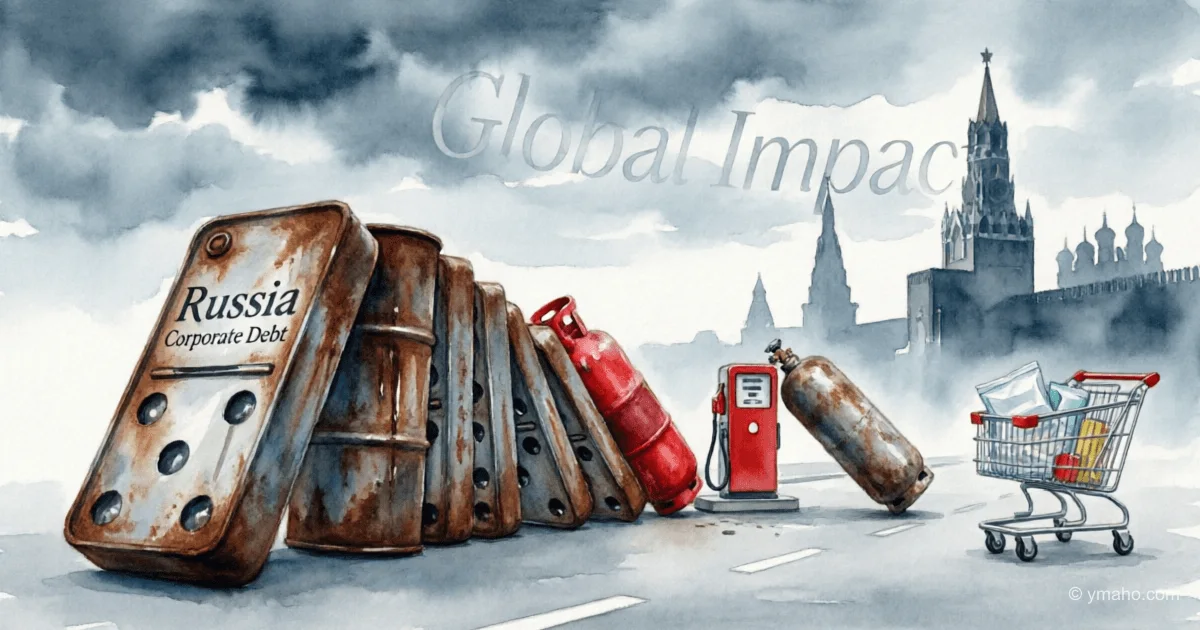
Russia’s Debt Collapse: How Kremlin Troubles Will Hit Your Wallet
Overdue corporate debt in Russia has hit a record high since 2008—$100 billion. This isn’t just an internal crisis for Russia: if the country’s economy starts to unravel, you’ll feel it at the grocery store checkout and the gas pump within months.
Imagine you run a small café. You buy coffee from a supplier but don’t pay them because you’re waiting on payments from customers. When everyone does this, the chain breaks: the supplier can’t pay the farmer, and the farmer can’t pay the fertilizer manufacturer. Russia is facing exactly this scenario, just on a macroeconomic scale. Companies are deliberately delaying payments to each other because parking cash in the bank yields better returns than settling invoices with partners.
Why Are Companies Ignoring Their Debts?
According to data from Ukraine’s Foreign Intelligence Service, overdue payments in the corporate sector have climbed to 10.3%—the highest level in 15 years. Total debt has reached $1.6 trillion, but the real issue lies in the details: intercompany payables (what businesses owe each other) stand at $650.9 billion, with delinquency rates jumping from 6.9% to 8.2%.
The root cause is brutal arithmetic. Business loans in 2025 carry interest rates of 18–25% annually, while profitability across most sectors sits at a mere 8–12%. Meanwhile, short-term deposits yield 14–16%. The math is clear: companies lose money paying suppliers early but profit by keeping funds in the bank. It’s like earning 15% annual returns just by stuffing cash under your mattress instead of paying your rent.
Global Ripple Effects: Why This Matters to You
Russia remains one of the world’s top oil and gas exporters. If payment chains in the energy sector start snapping, supply disruptions could follow. Picture a refinery that suddenly stops receiving feedstock because its suppliers aren’t getting paid. The result? Fuel shortages and skyrocketing gasoline prices worldwide.
Additionally, Russian firms may be forced to liquidate foreign assets quickly to raise cash. This would trigger a wave of sell-offs in emerging market equity and bond markets. For instance, if Russian banks default on loans to Western investors, it could spark a confidence crisis reminiscent of the 1998 ruble default.
Key Takeaways
- Record Delinquencies: Unpaid debt has peaked since 2008, hitting 10.3% of total obligations
- Vicious Cycle: Sky-high borrowing costs (18–25%) make paying suppliers unprofitable, while hoarding cash in banks pays off
- State Sector Culprit: 31% of small businesses report non-payments specifically from government entities
- Economic Deterioration: The share of companies citing payment delays as their primary challenge jumped from 27% to 42.3% in a single year
- Global Exposure: A Russian economic breakdown could destabilize energy markets and financial stability across Europe and Asia
What does this mean for everyday consumers? If Russia’s economy continues drowning in debt, expect volatile spikes in natural gas and crude oil prices by autumn. You’ll pay more for home heating and fuel. Furthermore, instability in one of the world’s largest economies could trigger a broader loss of confidence in global markets, ultimately impacting your savings and paycheck within 12 to 24 months.
— Editorial Team









