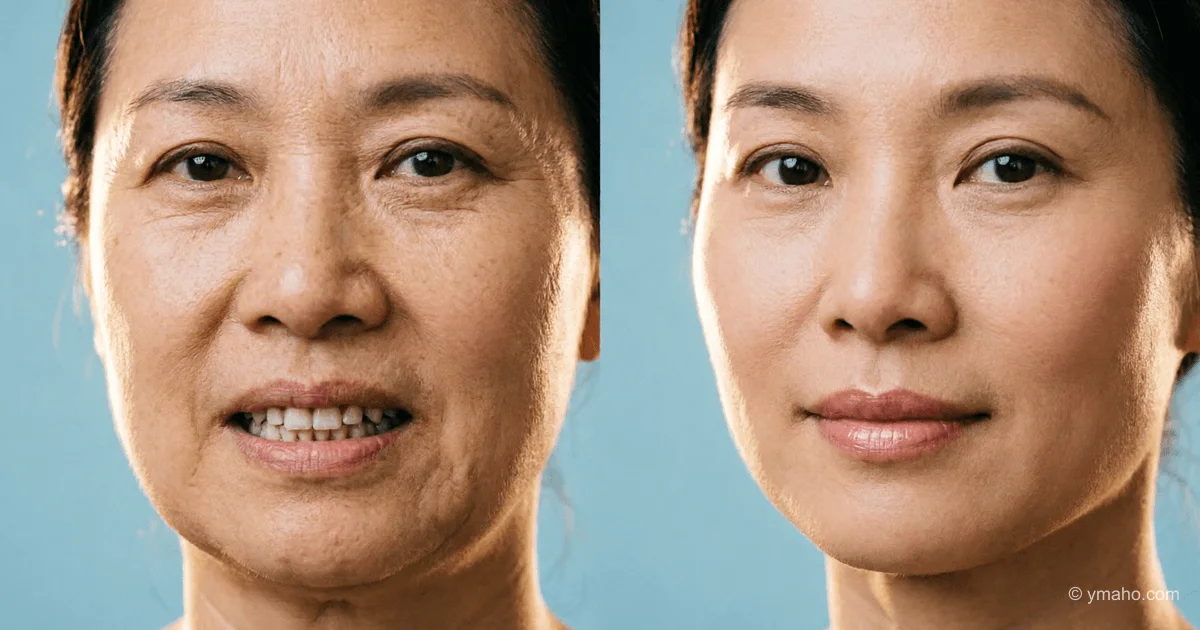
Dental Anti-Age: Why Bite Height Became the Foundation of Facial Youth
Aesthetic medicine is focusing on restoring bite height as the primary tool for rejuvenation without fillers. Tooth wear leads to a reduction in the lower third of the face, so orthodontic restoration of the "vertical" is becoming the primary anti-age strategy, providing a framework for soft tissues.
Just yesterday, high cheekbones, a smooth forehead, and a defined oval achieved in a cosmetologist's office seemed like the gold standard of beauty. However, 2026 has shattered this established order, uncompromisingly shifting the focus from soft tissues to hard structures. The year's major breakthrough in aesthetic medicine occurred not in a filler development lab, but in the dentist's chair. The beauty industry has officially acknowledged what physiologists have long known: it is impossible to maintain facial youth while ignoring its foundation—the dentofacial system. The trend of dental anti-age, centered on restoring bite height, has become not just an addition to cosmetology, but its primary and non-negotiable foundation.
The Anatomy of Aging: Why the Face "Sags"
The traditional view of aging focused on the skin and subcutaneous fat. It was believed that the face ages due to loss of collagen and elastin, gravitational ptosis, and resorption of fat pads. This spawned a multi-billion dollar industry of fillers and thread lifts, with a market volume estimated at $8.5 billion by 2026. However, advanced aesthetic medicine has recognized that these methods treat the symptom, not the cause. The key trigger of age-related facial changes lies much deeper—in the disruption of the dentofacial system's biomechanics.
With age, teeth inevitably wear down. Enamel thins, crown height decreases, especially in the lateral areas that bear the main chewing load. This process, known as pathological tooth wear, leads to a reduction in bite height—the distance between the upper and lower jaws when closed. Normally, this distance is a few centimeters and ensures harmonious proportions of the lower third of the face. When it decreases by 3–5 mm, or more in clinical cases, a cascade of aesthetically destructive consequences is triggered.
The lower jaw assumes a more posterior and superior position, essentially "sinking" into the joint. Soft tissues, having lost the support of teeth and bone, sag. The angle of the jaw loses definition, jowls appear, nasolabial folds deepen, and the distance from the nose to the chin visually shortens—one of the most reliable markers of an aging face. This is why attempts to compensate for this volume deficit with fillers yield only temporary and often unnatural results: the cosmetologist tries to "inflate" tissues without restoring their bone and dental support. As Andrey Zhuk, an orthodontist and candidate of medical sciences, notes, "cosmetic procedures such as injections or thread lifts are temporary and do not address the root cause."
Technological Breakthrough: Orthopedics as Facial Architecture
The answer to this challenge has been dental rehabilitation within the anti-age concept. This is not about aesthetic smile improvement per se, but about a full reconstruction of the dentofacial framework. The procedure, known as Full Mouth Reconstruction or Full Mouth Rehabilitation, involves restoring the integrity of the dental arches and, critically, the lost bite height. It is carried out through total prosthetics: crowns, veneers, inlays, and onlays that not only cover defects but build a new, anatomically correct vertical.
A clinical case described at the Australian clinic ArtSmiles demonstrates the potential of this approach. A patient with a long history of bruxism and pathological tooth wear exhibited characteristic signs of premature aging: a "sunken" appearance of the lower third of the face, thinned lips, and loss of oval definition. Treatment included opening the bite by 4 mm using a combination of ceramic and zirconia crowns and veneers. The result, according to doctors, was perceived by the patient and those around her as a "non-surgical facelift." The cost of such a full reconstruction in the premium segment of the US or Europe ranges from $35,000 to $50,000 and above, comparable to comprehensive surgical lifting, but offering a much more physiological and long-term path.
The Russian market is also integrating into this global trend. According to RBC, in 2026, anti-age dentistry became the starting point for developing a rejuvenation plan in multidisciplinary clinics. Orthopedic dentists are increasingly working in tandem with cosmetologists, using techniques such as condylography—a study of temporomandibular joint movements—to determine the optimal bite height and redesign the face. 3D modeling technologies and digital smile design protocols allow virtual "try-on" of the new bite height and visualization of how facial proportions will change before treatment begins.
Market and Societal Impact
The "dentistry as anti-age" trend carries enormous economic and social consequences. First, it redistributes financial flows. The cosmetology market, focused on quick filler corrections, is for the first time facing serious competition from dental rehabilitation. Experts predict that in the segment of patients aged 45+, dentistry will capture an increasing share of budgets previously allocated to cosmetology. Investments in dental-tech startups developing solutions in CAD/CAM modeling and 3D printing of ceramic restorations are growing, as these technologies allow reproducing natural tooth anatomy with micron precision.
Second, there is a shift in consumer consciousness. The smile is no longer just a matter of hygiene and whiteness; it becomes a key marker of "wellbeing status" and an integral part of the longevity philosophy. As noted in the VML report "Future 100: 2026," oral health is turning into a "biometric gateway" to overall vitality, and dental procedures into a key tool for "joyspan" (the period of active and joyful life). Society is moving away from the imposed aesthetic of the "Hollywood smile"—unnaturally white and identical teeth—in favor of natural harmony and function.
Finally, it changes the very paradigm of aging. Old age, visually associated with a sunken mouth and drooping chin, ceases to be a fatal inevitability. It becomes a condition that can be controlled and delayed by restoring what nature gave—proper dental anatomy. Orthodontists already directly state that even without wrinkles, a person will look older than their years if they have reduced bite height and incisors are not visible when speaking. This statement overturns the classic beauty hierarchy and places a visit to the orthopedist above a visit to the dermatologist.
Forecast and Conclusions
Dental anti-age is not a local trend but a fundamental shift in understanding the human face. In the next five years, we will witness a complete merger of dentistry and aesthetic medicine into a single discipline of "facial architecture." The gold standard will be a protocol: before injecting fillers or performing SMAS lifting, the patient must undergo a dental diagnosis of biomechanical age and, if necessary, restore bite height. Without this step, any aesthetic result will be either incomplete or short-lived. The market awaits a wave of educational programs for cosmetologists, teaching them to "read" dentofacial pathologies, and dental clinics will begin to actively compete with cosmetology centers, offering "Total Face Rejuvenation" packages. Investing in the long-term architecture of the face through dental restoration is becoming the most sensible anti-age strategy, confirming the old truth: beauty begins not with an injection, but with a smile—and with the right support beneath it.
— Editorial Team









