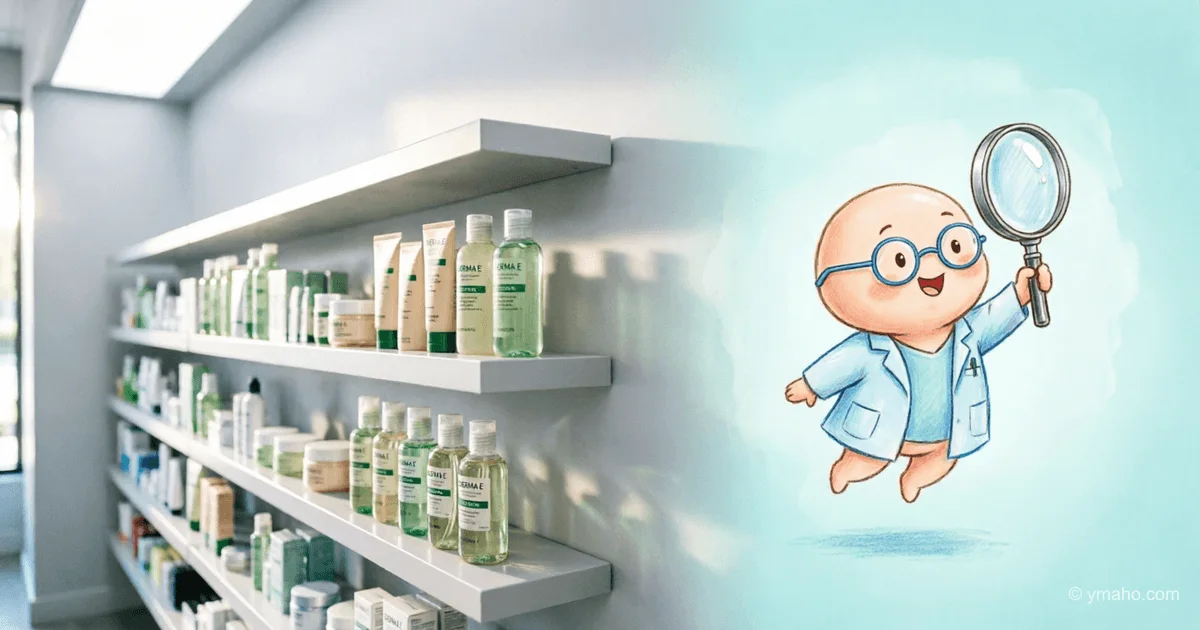
DERMA E Conducts Dermatological Rebranding in Line with the Expertise Trend
DERMA E has refreshed its identity, emphasizing dermatological recommendations and simplicity to stand out in a market oversaturated with complex ingredients and trends.
The news about DERMA E's dermatological rebranding and the launch of the "A Lil' Derm Goes a Long Way" campaign may seem like a local event at first glance, but it marks a fundamental shift in the entire "affordable pharmacy cosmetics" niche.
The Essence: What's Really Happening
DERMA E isn't just "refreshing its design." The brand, which has been around since 1984, is undergoing a surgical operation to change its consumer code, moving away from the "natural eco-brand for insiders" niche into the mainstream of "evidence-based dermatology." The key marker is the campaign slogan: "A Lil' Derm Goes a Long Way." Formally, we see an emphasis on recommendations from certified doctors (e.g., Dr. Kunal Malik) and clinically proven efficacy. But the real subtext is much more cynical: it's an attempt by mass-market to capture territory traditionally belonging to premium pharmacy chains and luxury derm brands.
In reality, DERMA E is trying to pull off a trick that only CeraVe and The Ordinary have managed before: becoming a "people's dermatological brand" while maintaining the margins of professional products, but without sky-high price tags on the Ulta Beauty shelf.
Timeline and Context
- 1984–2020: DERMA E exists in the narrow niche of "clean" plant-based care, positioning itself as the "#1 facial care brand in the natural market."
- 2021–2024: The market overheats with indie brands and celebrity lines; DERMA E begins to lose its identity amid competitors' complex formulations.
- Early 2026: General Manager Katie Gild decides on a complete visual and positional relaunch. The focus is on collaboration with practicing dermatologists—Dr. Anna Karp and Dr. Kunal Malik.
- May 12, 2026: Official campaign launch. In addition to doctors, mascots called "Lil' Derms" are created, playfully conveying dermatological advice.
- June 8, 2026: Strategic rollout of the updated packaging design begins at Ulta Beauty.
Who Wins and Who Loses
Winners:
- DERMA E. The brand gains "officially recommended" status, allowing it to painlessly raise the average price by $2–$5 per bottle, justifying it with "expertise."
- Chains like Ulta Beauty. For them, this is a ready-made tool to switch customers tired of expensive luxury creams to a budget "pharmacy alternative."
- Gen Z consumers. They've been overwhelmed with complex ingredients. DERMA E gives them a simple navigator, blending science with the playful aesthetic of "Lil' Derms."
Losers:
- "Clean" luxury brands without a dermatological legend. Brands that rely solely on naturalness (without clinical studies) get crushed by the new trend of "simple expertise."
- Independent pharmacy brands. DERMA E bursts into their territory with a national ad campaign budget, making it hard for them to compete with "playful positioning" for retail shelf space.
What the Media Isn't Saying
Press releases focus on innovation, but the main non-obvious insight is protection against "ingredient inflation." Consumers are tired of paying for their skin to become a "laboratory" of dozens of components.
By using simplicity as a weapon, DERMA E not only clears the shelf but also "offloads" the brand's warranty obligations. Simple, stable molecules (e.g., vitamin C with vitamin E) cause less irritation and fewer returns than exotic high-tech complexes. This isn't just aesthetics—it's reducing the percentage of dissatisfied customers and customer service costs.
A second blind spot: the visual "playfulness" (Lil' Derms) is insurance for complex products, such as those with retinol or Matrixyl. By making the images cute, the brand neutralizes fear of active ingredients that sting and cause purging. This is brilliant psychological packaging for strong but irritating formulas.
Forecast: Next 30 and 90 Days
30 days (until June 20, 2026):
The launch wave at Ulta Beauty will cause a significant sales spike for two focus lines: Anti-Wrinkle and Vitamin C. I expect growth in these categories of at least 25–30% compared to last month, driven by the visibility of new displays. Simultaneously, Drs. Karp and Malik will start actively promoting products on social media, generating viral content in professional circles.
90 days (until August 20, 2026):
The "simple expert brand" effect will kick in. Competitors (especially other natural brands in the $15–$25 price range per unit) will frantically seek their own "pocket dermatologists" for similar collaborations. Retail giants will start allocating special "Verified by Derm" zones in stores.
And the main forecast: by the end of summer, DERMA E will establish itself as a Trojan horse of evidence-based medicine in the mass market. This will long-term reshape customer expectations: "simple" will no longer mean "ineffective," and "cute" will no longer mean "frivolous." The "A Lil' Derm Goes a Long Way" campaign will become a marketing classic—an example of how, with a couple of cartoon characters, you can successfully capture a niche of professional expertise and make it accessible to everyone.
— Editorial Team









