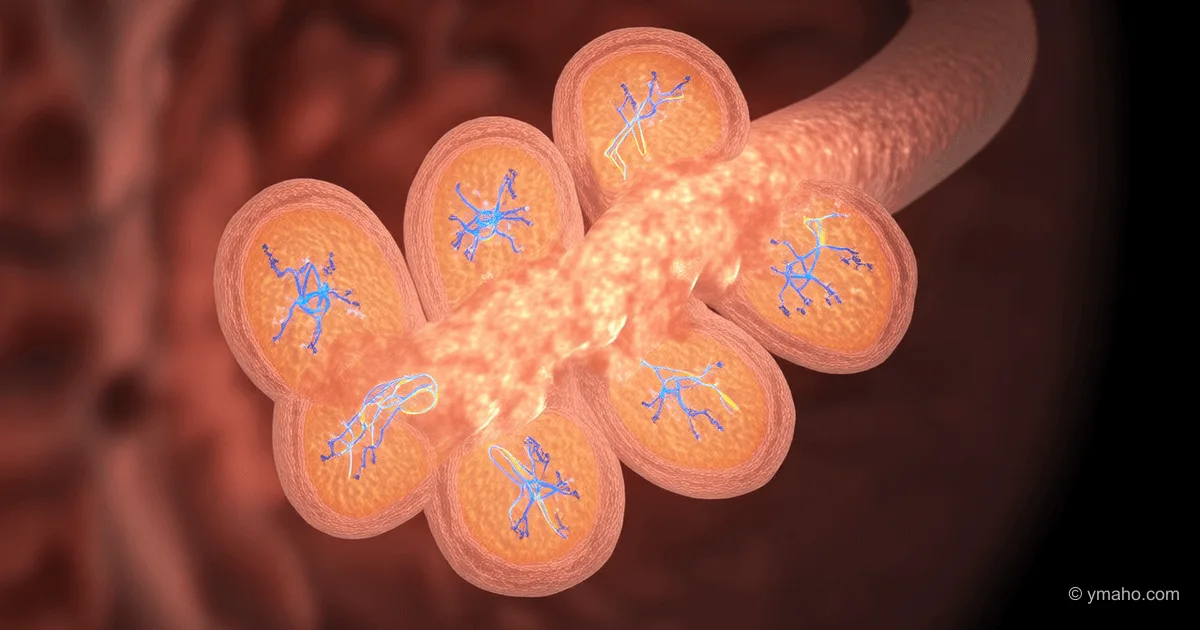
First Digital Atlas of the Human Liver Created with Unprecedented Resolution
Scientists from the Weizmann Institute and Mayo Clinic published in Nature an atlas that overturns previous understanding of liver function and identifies eight distinct functional zones, paving the way for new treatments for fatty liver disease.
We stand on the threshold of a total shift in the hepatology paradigm. The publication in Nature by Professor Shalev Itzkovitz's team from the Weizmann Institute is not just a pretty picture with eight zones instead of three. It is a technological blow that divides the history of hepatology into "before" and "after." As an analyst working with assets in precision medicine, I see here not academic excitement but a tectonic shift in how we will treat, diagnose, and, more importantly, fund liver research.
The Essence: What Is Really Happening
The true essence of the work lies in exposing the "dirty" reference. For decades, we modeled liver diseases based on mice or on "conditionally healthy" tissue adjacent to tumors. It turned out that this is like studying the structure of a Ferrari using a broken Ford Focus. Tissue adjacent to pathology expresses genes of stress, hypoxia, and immune response, while the liver of neurological death donors (NDD) is subject to an ischemic storm that explains up to 40% of RNA-seq data variability. The atlas, however, is built on tissue from living donors who underwent strict health screening. This is the "zero patient" in a good sense, a true reference point.
The main bombshell is not the eight zones but the inversion of the metabolic axis. Mice, pigs, and cows are arranged logically for survival in the wild: their lobule periphery is the center of metabolism, and the center is a dump. In humans, it is the opposite. Our pericentral zone is the Silicon Valley of the organ: here gluconeogenesis (via the mitochondrial gene PCK2, which mice lack in this role), fat synthesis (FASN), and glucose uptake via GLUT2 occur. This is the "curse of efficiency": we built an energy processing plant right at the point with the poorest oxygenation. This is brilliant for survival during starvation but deadly on a diet of burgers and soda.
Timeline and Context
The path to this atlas did not start yesterday. It is a reincarnation of ideas about liver zonality from the 1970s (Rappaport et al.), but back then technology allowed only a "blurred spot." The key entry point was access to clinical material: Professors Ido Nachmani and Niv Penkovich from Sheba Medical Center organized tissue collection from living donors during transplantation. This is a unique situation where a healthy person donates part of an organ. Technically, the study combined 10x Visium, MERFISH, and PhenoCycler, providing 2-micron resolution and allowing spatial mapping to be combined with single-cell images. The result: 1,141 out of 1,724 hepatocyte genes showed significant zonal differences (q < 0.25).
Who Wins and Who Loses
Winners:
- Big Pharma with siRNA/ASO pipelines. Now it is possible to create "GalNAc-drug" conjugates targeting strictly pericentral hepatocyte receptors. This reduces systemic side effects and increases efficacy. Investments in NASH assets get a clear navigator.
- Spatial transcriptomics labs. Citing this atlas, they can demand a revision of all old hypotheses. EU grants for 2027 will be tailored for "revalidation of animal models using the human atlas."
- Transplantology. Understanding the true healthy profile will allow instant assessment of donor liver quality before transplantation, reducing the risk of primary non-function.
Losers:
- Researchers relying on mouse models. Data on fatty liver disease accumulated in mice is now questionable. C57BL/6 mice do not reproduce human centralization of lipogenesis. This devalues the portfolios of some biotechs that have already spent up to $100 million on developing NASH therapies that failed due to incorrect zone targeting.
- Proponents of biopsies "adjacent to pathology." Comparison showed that adjacent normal tissue is actually deeply diseased: it has elevated SAA1, CRP, TIMP1, and plasma cell genes. This discredits thousands of publications where this tissue was used as a control.
- Diagnostic startups building tests without spatial context. A simple blood biomarker signal without understanding its zonal origin now looks like reading tea leaves.
What the Media Are Not Saying
The media write about eight zones and benefits for treating fatty liver disease. They omit the "mitochondrial trap." In early steatosis, hepatocytes try to protect themselves: they silence fat synthesis genes but simultaneously drop the expression of nuclear-encoded mitochondrial proteins. In response, mitochondria try to compensate with their own mtDNA transcription. It turns out that the cell shuts down its own "power plants" precisely when it needs to burn fat. This is an elegant explanation for why simple antioxidants or free fatty acid traps do not work in the clinic. The disease protects itself at the level of organelle dialogue.
A non-obvious insight concerns immune relocation. Kupffer cells (resident macrophages) in all mammals sit at the lobule periphery, at the entrance, like customs. In humans, they have relocated to the center. Why? Most likely, this is emergency cleaning. Central hepatocytes are so active that they die like flies from processing toxins and fats. If you give a patient powerful systemic anti-inflammatory drugs, you can paralyze this "central cleaning crew," increasing the risk of fibrosis.
Forecast: Next 30 Days and 90 Days
30 days (by June 13, 2026):
A frenzy will begin in scientific social networks and closed meetings of medical directors. All Big Pharma NASH programs will launch internal audits. The key question: "Are we hitting the right zone with our drug?" Citations in Index/Medline will skyrocket with references to Itzkovitz et al. Venture capital investors in Silicon Valley will demand biotechs show spatial data in addition to histology. Without confirmation of hitting zones 3-6, a project will not get Series B.
90 days (by August 13, 2026):
The technology for creating living donor atlases will become the "gold standard" for the NIH and Wellcome Trust. Expect the start of a race for a "healthy" pancreas and kidney atlas (they have the same problem with a lack of truly healthy reference). Arvinas and other players with PROTAC technologies may evaluate protein degradation strictly in the pericentral zone. But the toughest forecast is regulatory. I expect that the EMA and FDA will issue draft guidance stating that for NASH therapy registration, data on drug distribution in various functional zones of the human liver (not mouse) become mandatory. The old games are over; welcome to the era of spatial medicine.
— Editorial Team









