Digital Skin Twin: How AI Simulations Are Changing Cosmetics Selection
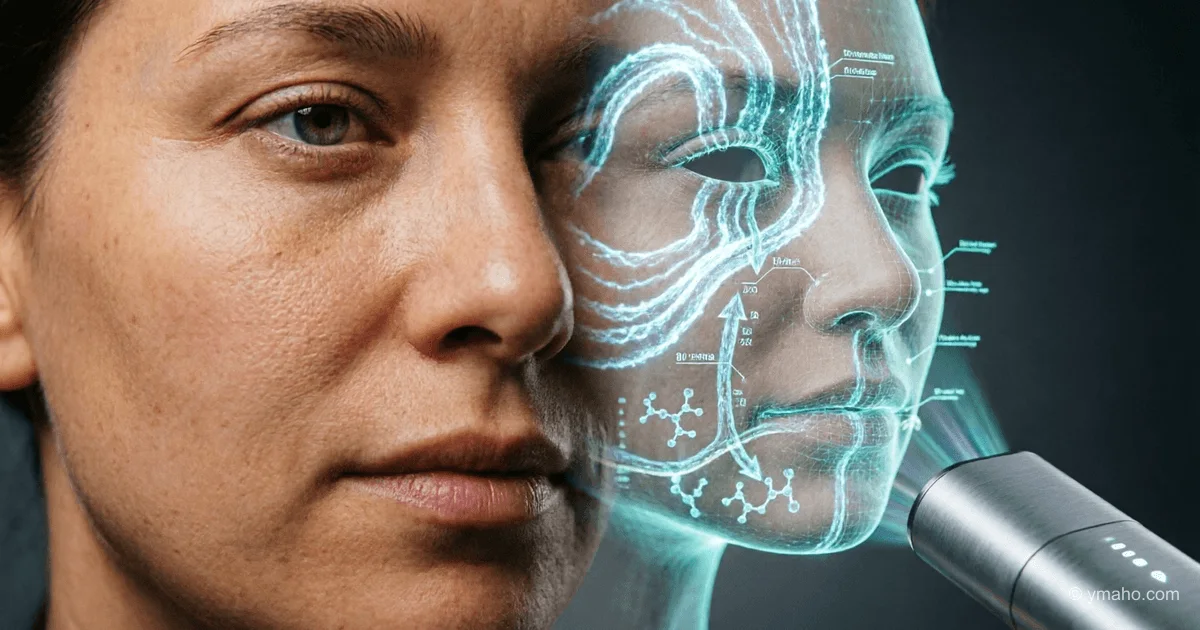
Artificial intelligence technologies now make it possible to create a 'digital twin' of the skin to predict its reaction to various ingredients. This replaces the trial-and-error method, making personalized care even more precise and safe.
Digital Skin Twin: How AI Simulations Are Changing Cosmetics Selection
Introduction
Imagine that before applying a new cream to your face, you already know exactly how your skin will react—where irritation will occur, how deeply active ingredients will penetrate, and what the result will be after three weeks. What until recently sounded like science fiction is becoming a reality in 2026: the concept of a 'digital twin'—a virtual copy of the skin that models its behavior—is rapidly entering the beauty industry, promising to end the era of trial and error in skincare.
Event Details and Timeline
The key milestone for the mass adoption of the technology was April 2026. The French cosmetics group Groupe Rocher, together with Dassault Systèmes, announced the launch of a project in which virtual twins test the interaction of active ingredients with the skin at the molecular level. The platform, combining generative AI, 3D modeling, and chemical reaction simulations, reduces the number of laboratory tests by 20% and accelerates product time-to-market. The first object for digital modeling was the 'ice flower'—an extremophile plant whose anti-aging properties are used in the Yves Rocher Lift Pro Collagene line.
A month earlier, in March 2026, the journal Discover Artificial Intelligence published a seminal paper involving dermatologists from Harvard Medical School and Yale School of Medicine, which for the first time proposed a clinical framework for deploying digital twins in dermatology. The authors described how generative AI can simulate a psoriasis patient's response to various biologic drugs, initializing the model based on genetic profile, comorbidities, and treatment history.
In parallel, at CES 2026 in January, Korean giant Amorepacific presented the Skinsight platform—a wearable device that measures skin aging signals in real time and uses AI to predict aging trajectories. And in April 2026, a research group from Peking University published a paper in Cell Metabolism about the AURORA system, which can reconstruct a complete multimodal health picture—including the molecular composition of the skin—from a 3D facial image or blood test data.
Impact and Significance
For consumers, the technology solves one of the most acute problems of personalized care: the unpredictability of skin reaction to a new product. Today, the average buyer acts blindly—relying on reviews, a simplified skin type classification, and hope that it 'will work.' The digital twin turns this process from a lottery into an engineering calculation. The consumer receives not a recommendation 'for oily skin,' but a simulation of how a specific formula will behave on their own epidermis, taking into account pH, microbiome, transepidermal water loss, and dozens of other parameters.
For the industry, the shift to digital testing means a fundamental acceleration of R&D. Groupe Rocher explicitly states: virtual twins reduce the formula development cycle from 30 laboratory tests to a handful of validation checks. The economic impact is expressed not only in speed but also in reduced costs for failed prototypes. The digital twin market in healthcare is projected to reach USD 530 billion by 2032, and the cosmetics sector claims a significant share.
For medicine, the significance is even higher. Digital twins can model not just cosmetic effects but therapeutic responses. In dermatology, this means predicting the efficacy of biologic drugs for psoriasis or atopic dermatitis before they are prescribed. For patients with severe forms who spend years cycling through therapies, such technology could shorten the path to remission.
Reactions of Key Players
Market reactions have clearly split into three directions.
Large cosmetics corporations are investing in their own virtual testing infrastructure. Dassault Systèmes is deploying a cloud platform for Groupe Rocher based on 3DEXPERIENCE, where interactions of patented plant extracts with various skin layers are modeled. This is not a one-time service but a long-term bet on the digital transformation of the entire product creation chain.
Technology companies are moving from the hardware and platform side. Amorepacific with Samsung created an ecosystem where diagnostics (AI Beauty Mirror with 450,000+ cases) are connected to wearable devices and LED masks. The 'closed-loop' concept implies that the digital twin not only makes a diagnosis but also manages treatment in real time.
The academic community and startups focus on fundamental verification. The AURORA study showed an unexpected result: aging clocks built on AI-generated multimodal data predict biological age more accurately than models on real data—because the algorithm cleans information from noise and technical artifacts. This is a strong argument that a digital twin can be not just a copy but an improved analytical version of the real patient.
Forecast and Conclusions
The trajectory of digital twins in the beauty industry is quite clear.
In the short term (1–2 years), the technology will become the standard for the premium segment. Major brands will integrate simulations into the consultation process: a customer in a store or via an app will receive not just a 'skin analysis' but a prediction of the product's reaction. Startups will begin offering a 'digital skin passport' on a subscription basis.
In the medium term (3–5 years), the line between cosmetic and clinical digital twins will begin to blur. Systems like AURORA, capable of reconstructing a metabolic profile from a single photo, will make dermatological screening accessible without a doctor's visit. Regulators—FDA and EMA—will likely develop frameworks for validating such systems, following the already adopted PROCOVA program.
The main conclusion: the digital skin twin marks a transition from personalization 'by type' to personalization 'by simulation.' This is not an evolution but a paradigm shift. If before the consumer was the tester on themselves, now tests occur in a virtual environment, and the person receives a verified solution. Democratization of this technology is a matter of time, and when it reaches the mass market, the trial-and-error method in skincare will finally become a thing of the past.
— Editorial Team









