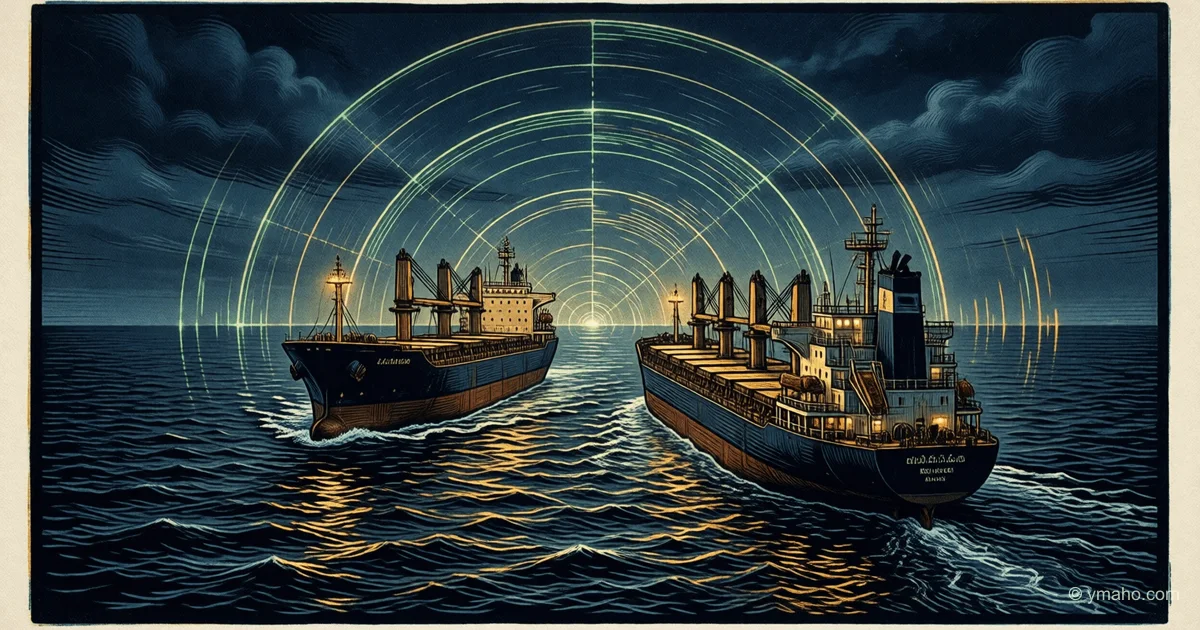
Two Bolivian-Flagged Vessels Lose Contact in the Persian Gulf
The General Company for Iraqi Ports reported that contact with two vessels flying the Bolivian flag has been lost, but no distress signals have been received from them. Authorities in Iraq and regional countries have launched a search and rescue operation.
Shadow Fleet in the Crosshairs: What Lies Behind the Disappearance of Bolivian Vessels in the Persian Gulf
The Core: What Is Really Happening
The disappearance of the vessels Bridge 1 and Bridge 2 from radar is an event that at first glance appears to be a local maritime incident, but in reality exposes a critical vulnerability in the global shadow fleet system. This is not just about two commercial ships flying the Bolivian flag, but about a structural problem that has been brewing for the past three years and has now produced the first visible failure in the context of real geopolitical confrontation.
Bolivia is a classic convenient jurisdiction for ship registration, or a "flag of convenience." The country is landlocked, which means its ship registry is nominal, with virtually no capacity to track, service, or protect vessels registered under its flag. The fact that both ships disappeared simultaneously in an active combat zone without sending a distress signal or activating emergency beacons rules out the possibility of a technical malfunction. The scenario of forced transponder shutdown—whether coerced or voluntary—is the most likely.
The Iraqi side immediately distanced itself from the incident, stating that the vessels did not enter the country's territorial waters and that no distress signals were received. This is classic behavior for a coastal state in incidents involving shadow tankers: everyone understands the ships are involved in shadow operations, and no one wants to take responsibility for searching for them.
Timeline and Context
The incident occurred on the night of May 22, 2026. The vessels Bridge 1 and Bridge 2 completely disappeared from satellite monitoring in the Persian Gulf waters. Communication was lost suddenly—neither the crew nor automatic systems managed to send an alert. The ship owners contacted security services of several regional ports requesting any information on the location of the missing assets.
To understand the context, we must go back to the events of May 20. Two days before the disappearance, Iran announced the creation of the "Persian Gulf Authority" and published a map claiming military control over 22,000 square kilometers of waters extending into the territorial waters of Oman and the UAE. In the same statement, Tehran demanded that all transit through the Strait of Hormuz be coordinated with the new authority. The US immediately responded: vessels were instructed not to comply with Iranian demands. On May 21, US CENTCOM released footage of Marines boarding the tanker Celestial Sea, suspected of attempting to break the blockade and proceed to an Iranian port.
The disappearance of Bridge 1 and Bridge 2 occurred precisely at the moment when the confrontation between Iran and the US over control of the strait reached its peak intensity.
Who Wins and Who Loses
Beneficiaries:
The Iranian regime benefits from every such incident, regardless of whether it is directly involved. The disappearance of two vessels creates exactly the level of uncertainty that the IRGC needs to assert its logic: shipping in the Gulf without coordination with Tehran is impossible. If the vessels were indeed detained by Iranian forces, it demonstrates capability. If the vessels voluntarily went dark for illegal cargo transport, it discredits the US maritime control system. Both scenarios work in Iran's favor.
Military insurance brokers specializing in conflict zones also gain. Given that the US $40 billion shipping insurance program proved non-functional due to non-compliance with requirements and reliance on military escort that was never implemented, each new incident will drive war risk premiums higher.
Losers:
Shadow fleet owners bear direct losses. Losing a vessel without the ability to file an insurance claim is a classic risk of operating under a flag of convenience in a combat zone. If Bridge 1 and Bridge 2 were involved in transporting sanctioned cargo, their owners are unlikely to turn to official insurers, and financial losses will be written off as operating costs of the illegal business.
Iraq, as a coastal state, suffers reputational damage. The fact that the General Company for Iraqi Ports was forced to publicly report the incident indicates pressure from regional security services demanding some kind of response.
What the Media Is Not Saying
The most important untold story is the function of the Bolivian flag in the Iranian logistics chain. Bolivia is not among the typical flags of convenience recognized by the International Transport Workers' Federation—those include Panama, Liberia, the Marshall Islands, and others. The Bolivian registry is a niche tool used precisely when a shipowner wants to avoid not only tax burdens but also any international oversight.
Why this matters: according to maritime intelligence, Bridge 1 and Bridge 2 were making voyages between ports in the UAE and Oman—two countries that publicly reject Iranian claims to control the strait. Their route passed in close proximity to the area over which Tehran has asserted territorial claims. Most likely, the vessels were carrying cargo subject to US sanctions—petroleum products, Iranian LNG, or components for the petrochemical industry.
Forecast: Next 30 Days and 90 Days
30 days. The incident triggers a chain reaction: shipowners operating under flags of convenience in the region will begin mass rerouting. I expect an increase in the number of vessels voluntarily turning off transponders to mask their movements. The US will respond by tightening inspections: by mid-June, CENTCOM will expand its interdiction zone for suspicious vessels to include the Gulf of Oman waters. Insurance rates for any vessel under a flag of convenience in the region will rise by 15–20 basis points.
90 days. By August, the incident will set a precedent for creating a two-tier shipping system in the Persian Gulf. Vessels flying flags of NATO countries and their allies will receive security corridors. Vessels under flags of convenience without military escort will end up in a gray zone where their disappearance will not be considered an emergency. De facto, this will mean a victory for the Iranian model of selective shipping control.
It is impossible to predict the fate of Bridge 1 and Bridge 2 based on open data. However, their disappearance has already changed the rules of the game for the entire shadow fleet in the region.
Editorial Forecast
Brent crude oil futures expiring in July will rise by $1.5–2.5 in the next 48 hours, testing resistance at $107 per barrel. The disappearance of two vessels occurred simultaneously with Iran's introduction of claims to control shipping, which will be interpreted by algorithmic traders as an escalation signal. Key support level is $104, a break of which is unlikely given the uncertainty surrounding the incident. The main risk to the forecast is the rapid discovery of the vessels with confirmation of a technical nature of the accident without external interference. Confidence level: medium. This is an editorial opinion, not investment advice.
— Editorial Team









