Kuwait Reports Drone Attack from Iraq, Threatening to Expand Conflict Geography
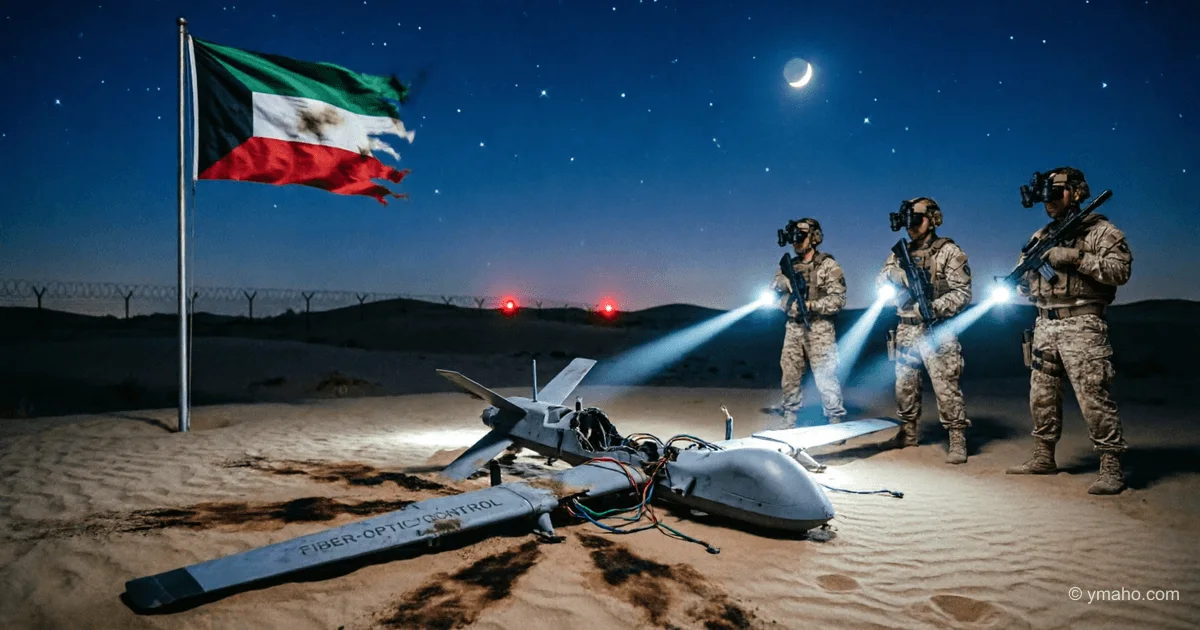
Kuwait's Ministry of Defense reported that two northern border posts were attacked by explosive drones from Iraq. The attack caused material damage but no casualties, yet this event expands the geography of instability beyond Iran and the Persian Gulf waters.
Analytical Article: "Shadow over Kuwait" — Why the Drone Attack from Iraq Changes the Rules of the Game
What analysts have feared since the early days of the Gulf War has come to pass. The conflict, which until now was limited to Iranian territory, the Strait of Hormuz, and US bases in the region, has crossed another "red line." On the morning of April 24, 2026, two unmanned aerial vehicles equipped with explosives and fiber-optic guidance systems attacked northern border posts in Kuwait. The source of the attack was the territory of neighboring Iraq. This attack, which caused no casualties but resulted in material damage, has sounded an alarm for the entire Persian Gulf region. The geography of instability is expanding, and now not only US military bases but also the sovereignty of the small Gulf monarchies are in the crosshairs.
Event Details and Timeline
In an official statement from Kuwait's Ministry of Defense released on the morning of April 24, it was stated that two northern border checkpoints were subjected to a "sinful, aggressive attack." The weapons used were two explosive drones with fiber-optic cable control, indicating high-quality equipment and difficulty in signal interception. According to military data, the launch source was located on the territory of the Republic of Iraq.
It is important to understand the chronological context. This attack was not the first such incident. As reported by The Wall Street Journal, it is part of a larger "shadow war" waged by Iran-backed Iraqi armed groups against Gulf states. Previously, these same forces attacked Kuwait's only civilian airport and struck diplomatic missions of Kuwait and the UAE in Iraq.
No group has yet claimed responsibility for the incident, but according to Western intelligence, these formations operate under the direct command of Iran's Islamic Revolutionary Guard Corps (IRGC) and are part of Tehran's strategy to expand the strike zone without directly involving its own army.
Impact and Significance
This event has three levels of consequences that go far beyond a simple "border incident."
1. Escalation of the "Hybrid War." In recent months, the main theater of military operations has been Iran and maritime communications. Now Iraq is turning into a full-fledged launchpad for attacks. Exploiting the weakness of the central government in Baghdad (which effectively does not control many Shiite militias), Iran is creating a "second front" on land. This demonstrates the vulnerability of Kuwait and Saudi Arabia to attacks not only from the south (via the Gulf) but also from the north.
2. Blow to Investment Climate and Security. Kuwait, striving to remain an "island of stability" for international business, now must reassess its security strategies. The attack on civilian infrastructure (the airport earlier) and border posts undermines confidence in the state's ability to protect critical assets. As noted by Investing.com analytics, such incidents directly correlate with oil price volatility, as Kuwait is a key OPEC player.
3. Threat of Regional War. Previously, experts assumed that Gulf states might enter the conflict if the threat became existential. A direct attack on their sovereign territory by drones launched from a neighboring state brings this probability closer. Saudi Arabia is already viewing Iraq not as a buffer zone but as a legitimate arena for retaliatory actions.
Reactions of Key Players
- Kuwait reacted with restraint but firmly. The Ministry of Defense stated that "necessary measures" would be taken but did not specify whether these would be military actions in Iraq. Based on behind-the-scenes signals, Kuwait likely requested US reinforcement of air defense systems to protect its northern borders.
- Iraq found itself in an extremely awkward position. Official Baghdad has not yet commented on the incident. This demonstrates the impotence of the legitimate government in the face of armed Shiite formations that have effectively turned part of Iraq's territory into a launchpad for attacks on neighbors.
- The US sees this escalation as another challenge. Trump previously stated he would sink any ships mining the strait and would not tolerate threats to allies. Regarding Iraq, the US position is uncompromising: Washington demands that Baghdad disarm pro-Iranian groups, threatening otherwise to take measures independently. This puts the Iraqi government before a tough choice: war with militias inside the country or war with American (and Kuwaiti) forces on its soil.
- Saudi Arabia and the UAE are closely monitoring the situation. As noted earlier by a former US ambassador to Riyadh, the monarchies are trapped: they cannot openly support Israel but can no longer ignore strikes on their territory. They will likely provide Kuwait with intelligence and logistical support.
Forecast and Conclusions
The attack on Kuwait is a demonstration of Iran's new strategy: "burning" the region through proxies when direct confrontation is impossible or disadvantageous.
Short-term forecasts:
- Normalization of attacks. Such strikes from Iraqi territory may become the "new normal." Further attacks on Kuwait, Bahrain, and Saudi Arabia are likely.
- US response. America may conduct pinpoint strikes on militia positions in Iraq (as was done in 2024). This is risky as it could collapse the fragile ceasefire.
- Economic shock. Markets have already priced in $106 per barrel. Expanding the conflict to Kuwait's land borders creates risks for ground logistics and oil fields in the north of the country (Rumaila), which could push Brent to $150.
Conclusion: The world has entered a phase where old rules of deterrence no longer work. Drone strikes across borders have become a tool of political pressure. For investors and analysts, this means only one thing: the era of "local wars" is over, and the era of "regional chaos" has begun, where no Gulf state feels safe. The Kuwaiti border has become another front line in this undeclared world war.
— Editorial Team









